A greens powder can be a convenient way to add a labeled blend of plant ingredients to your routine. Its value depends on what is actually in a serving and what you expect it to do. It should not automatically be counted as a vegetable serving, a multivitamin, or a replacement for a meal.
Green Scene offers a useful example: its pictured label lists a 4.5 g proprietary greens blend, but less than 1 g of dietary fiber. Those are different measurements. Understanding that difference is more useful than assuming that the word “greens” tells you the full nutritional value.
What a greens blend contains
Products vary widely. Some contain plant powders alone; others add vitamins, minerals, probiotics, sweeteners, or additional botanical extracts. Comparing them by the number of ingredients can obscure the amount of each ingredient you actually receive.
Green Scene’s pictured blend includes organic kale, spinach, wheat grass, barley grass, amla fruit, moringa leaf, and spirulina. The total blend is disclosed, but the individual amounts are not. The FDA’s supplement-labeling guidance explains how proprietary blends differ from labels that list a separate amount for every ingredient.
What it can add to a routine
Convenience, flavor, and a repeatable habit may be legitimate reasons to consider a powder. For someone who enjoys a daily drink, mixing one labeled serving may be easy to remember. That practical benefit is different from proving a medical outcome.
The product’s ingredient names alone do not establish that it corrects a deficiency, prevents illness, increases energy, or causes weight loss. Evidence about an isolated ingredient at a measured study dose does not automatically apply to a small amount within a blend.

What still belongs on the plate
Whole vegetables can contribute fiber, water, texture, and a range of nutrients as part of a varied diet. Fresh produce is not the only option: frozen, canned, and cooked vegetables can make meals easier. USDA’s vegetable guidance describes the range of foods in this group.
If buying a powder means you stop buying foods you enjoy and tolerate, reconsider the tradeoff. A scoop can be an optional addition, while meals still do the main nutritional work. Read greens powder versus vegetables for a more detailed comparison.
Read five label details
| Detail | Why it matters |
|---|---|
| Serving size | Tells you what the listed amounts describe |
| Individual amounts or blend weight | Shows how precisely ingredients can be evaluated |
| Dietary fiber | Determines what can be counted toward fiber intake |
| Added nutrients and other ingredients | Helps identify overlap, sweeteners, and allergens |
| Directions and storage | Defines how the product is intended to be used |
For Green Scene, the pictured serving is one 5.6 g scoop with 20 calories and 0 g added sugars. Its other ingredients include flavoring, acids, maltodextrin, silica, and stevia-derived rebaudioside A. “No added sugar” does not mean unflavored, unsweetened, or made only of vegetables.
Claims that deserve a closer look
“Detox,” “meal replacement,” and disease-treatment claims require more scrutiny than a general wellness description. The NCCIH overview of detoxes and cleanses finds little persuasive evidence for commercial detox regimens. A powder should not be used to explain away persistent fatigue, digestive symptoms, or poor food intake.
If you take medication, have a medical condition, are pregnant or breastfeeding, or need strict allergen avoidance, review the actual product with a clinician. Check the current bottle rather than assuming every greens formula has the same ingredients.
Decide whether it earns a place
Ask what practical problem the product solves, what it costs per labeled serving, and whether you enjoy it enough to use it. The label-reading guide and mixing ideas can help you make that decision without expecting a scoop to replace the rest of your diet.
Decide what convenience means in your own routine
A greens powder may be convenient because it is quick to measure, easy to mix, and does not require chopping vegetables. Those are practical features. They do not establish that the powder supplies everything a vegetable-containing meal would provide or that the drink improves a particular health outcome.
Think about the situation you want to improve. If you regularly skip lunch because of a busy schedule, the main need is a workable meal plan. If you eat balanced meals and simply enjoy a daily plant-based beverage, that is a different reason for considering a powder. The same product can fit the second situation without solving the first.
Defining the job also makes the purchase easier to evaluate. You can ask whether the taste, preparation, cost, and label information support that job. You do not need to defend the product as a replacement for everything else in the diet for it to have a limited, practical place.
Follow the information from plant name to actual amount
The word “spinach” identifies an ingredient, but it does not tell you the grams of spinach in a serving or the amount of a specific vitamin supplied. A proprietary blend adds another limitation: the combined weight may be listed while individual ingredient amounts remain undisclosed.
Green Scene illustrates this distinction. Its reviewed label lists seven plant ingredients within a 4.5 g blend. That tells you the combined blend weight. It does not allow you to divide the amount equally among seven plants or calculate how many cups of vegetables the scoop represents.
The nutrient panel answers a different question. It lists less than 1 g dietary fiber per scoop. That is the number relevant to the disclosed fiber contribution. The 5.6 g total scoop and the 4.5 g blend should not be substituted for it. Keeping these measurements separate prevents an attractive ingredient list from turning into an inaccurate nutrition calculation.
Build a meal around foods with clear roles
A practical meal plan can include a protein-containing food, foods that provide energy, and fruits or vegetables that fit your preferences. The exact arrangement varies with appetite, culture, budget, and health needs. A greens drink may accompany that meal, but it does not automatically supply the components that are absent.
For example, breakfast might include yogurt or another suitable protein food, oats or toast, and fruit. Lunch might include a protein source with a grain or other starch and vegetables. These are illustrations of meal structure, not personalized prescriptions or claims that one menu suits everyone.
If preparation is the barrier, consider foods that reduce the work: frozen vegetables, prewashed produce, or suitable canned options. Convenience does not belong only to supplements. A few dependable foods can make the overall routine more useful than trying to make a single scoop perform several unrelated nutritional jobs.
Read a health claim as a question that needs an answer
When a product says it supports “energy,” ask what that means and how it was measured. When it says “gut health,” ask which outcome and which ingredients or finished formula were studied. When it says “detox,” ask which substance was removed and what evidence shows a meaningful benefit.
These questions do not require rejecting every supplement. They require matching the strength of the claim to the available evidence. A plant ingredient being studied in one form and amount does not establish the same outcome for an undisclosed amount in a mixed powder.
The NCCIH review of detox claims and the FDA’s supplement guidance provide useful background for interpreting broad promises. A product’s convenience and flavor can be evaluated directly; a clinical claim needs appropriate research.
Use a short trial of the routine to assess practical fit
If the product is appropriate for your circumstances, follow the current label and keep the rest of the routine reasonably stable at first. Notice whether the drink is easy to prepare, whether you enjoy it, and whether it causes discomfort. These observations help answer whether it fits your day.
Do not treat a short personal trial as proof that the powder corrected a deficiency or caused every improvement in energy. Sleep, meals, stress, and other changes can affect how you feel. Similarly, a day of fatigue does not establish that you need a larger serving.
If the product repeatedly replaces a meal because the drink leaves you too full or takes the place of breakfast, revisit the routine. The original goal should remain visible. A supplement intended as a convenient addition should not quietly become the reason an important food need is left unmet.
A comparison worksheet for a prospective buyer
| Question | A useful answer looks like |
|---|---|
| Why am I considering it? | A specific practical purpose |
| What amount does one serving provide? | Clearly disclosed nutrients and blend information |
| What remains unknown? | Individual amounts or evidence gaps stated openly |
| What food need still exists? | Meals and fiber sources remain part of the plan |
| How will I use it? | Current label directions and suitable storage |
| When would I reconsider? | Discomfort, unclear information, or poor practical value |
This worksheet keeps the decision tied to information you can actually verify. It also makes it easier to discuss the product with a clinician or dietitian when medicines, allergies, or medical conditions are relevant.
Frequently asked questions
Is a greens powder necessary for a healthy diet?
No single greens product is necessary for everyone. The decision depends on the purpose, the label, and the person’s overall diet. A balanced food pattern does not become incomplete merely because it does not include a powdered greens supplement.
Does a green color indicate a high fiber content?
No. Read the dietary-fiber line. Green Scene’s reviewed panel lists less than 1 g per scoop, despite containing several plant ingredients. Color and blend weight do not replace that measurement.
Can a greens drink be my entire breakfast?
Do not assume a powder mixed with water is a complete meal. Review the actual protein, energy, fiber, and other nutrients supplied. The low-appetite guide explains how to keep meals visible when eating feels difficult.
Explore Green Scene™
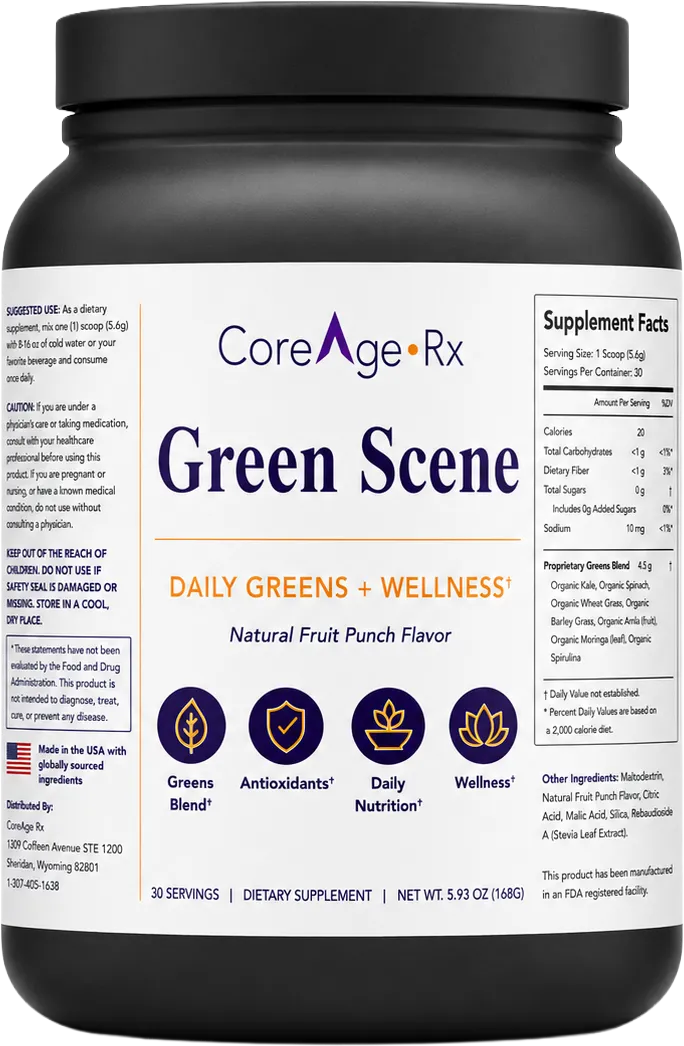
Green Scene is CoreAge Rx’s fruit punch greens powder. The pictured label lists a 4.5 g proprietary greens blend and less than 1 g of dietary fiber per scoop. See the current Green Scene™ page and check the bottle you receive before use.
Read the complete greens and nutrition series
- Greens Powder vs. Vegetables: Can a Scoop Replace a Serving?
- Greens Powder vs. a Multivitamin: How to Compare Them
- How to Read a Greens Powder Label
- Greens Powder Ingredients: What Those Plant Names Tell You
- Do Greens Powders Have Enough Fiber?
- When Should You Take Greens Powder?
- How to Mix Greens Powder: Water, Smoothies, and Simple Pairings
- Can Greens Powder Cause Bloating?
- Can Greens Powder Help With Weight Loss?
- Do Greens Powders Detox Your Body?
- Greens Powder With a Low Appetite: Keep Real Meals in the Plan
- Organic Greens Powder: What Organic and Quality Claims Mean
- Traveling With Greens Powder: Packing, Mixing, and Storage
- Green Scene Ingredients and Label: A Practical Product Guide
- Fruit choices in a balanced weight-management plan
Educational information, not individualized medical advice. Product information and linked research checked September 15, 2026. Ingredient research does not establish identical effects for a finished supplement.