
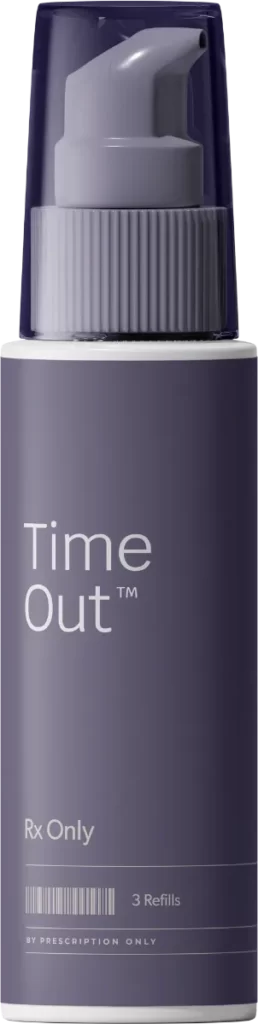
Time Out™
Time OutTM


What is Time outTM?
Time Out™ is a prescription-strength anti-aging topical designed to support skin that looks dry, dull, thin, or less firm over time. This formula combines estriol, Vitamin C, and hydrolyzed hyaluronic acid to help improve the appearance of mature skin while supporting a brighter, smoother, more hydrated glow.
Estriol helps support the look of skin firmness and elasticity, Vitamin C helps brighten uneven tone, and hydrolyzed hyaluronic acid delivers lightweight hydration for skin that looks plumper, softer, and more refreshed.
Best for:
• Mature skin
• Dry or thinning-looking skin
• Loss of firmness
• Dull tone
• Fine lines
• Uneven texture
• Dehydrated skin
A targeted formula for mature, glow-seeking skin
Estriol 0.3%
Vitamin C 5%
Hydrolyzed Hyaluronic Acid 0.5%
Simple nighttime support for mature skin
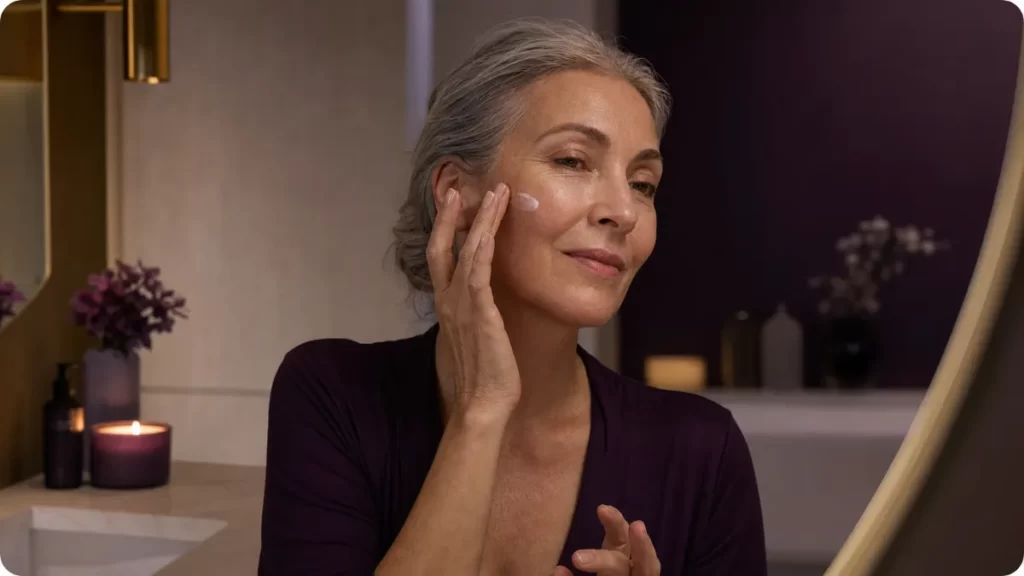
Skin that looks brighter, firmer, and deeply hydrated.
Get your medications in 3 simple steps

Take the health questionnaire

Our doctors will review your answers

Get your meds
Related Products
Coaching & human support


Frequently asked questions
What is Time Out?
Estriol 0.3% / Vitamin C 5% / Hydrolyzed Hyaluronic Acid 0.5% Topical is a physician-guided compounded skin rejuvenation therapy formulated to support hydration, elasticity, brightness, texture, and overall skin quality. This multi-ingredient formulation combines the skin-supportive effects of estriol with the antioxidant and collagen-supporting properties of Vitamin C and the moisture-binding properties of hydrolyzed hyaluronic acid.
This combination is designed to address several features commonly associated with aging and estrogen-deficient skin, including dryness, reduced elasticity, changes in skin thickness, dullness, uneven tone, and the appearance of fine lines. Each ingredient works through a different pathway, providing a more comprehensive approach to skin-quality optimization than hydration alone.
How does it work?
- Skin Structure, Elasticity & Collagen Support (Estriol)
• Estriol is a naturally occurring estrogen. Estrogen receptors are present in skin, and declining estrogen exposure with age and menopause is associated with changes in collagen, hydration, elasticity, and skin thickness.
• Topical estriol supports estrogen-responsive pathways within the skin that are involved in dermal structure and skin quality.
• Published clinical research evaluating topical estriol has reported improvements in measures such as skin elasticity, firmness, wrinkle depth, and other visible signs of skin aging with continued use.
• Because estriol is hormonally active, therapy should be individualized and supervised by a healthcare provider.
- Antioxidant Protection, Brightening & Collagen Support (Vitamin C)
• Vitamin C is a powerful antioxidant that helps neutralize free radicals generated by ultraviolet exposure, pollution, and other environmental stressors.
• Acts as an important cofactor in normal collagen synthesis, helping support firmer, healthier-looking skin over time.
• Helps brighten dull skin and improve the appearance of uneven pigmentation, discoloration, and overall skin tone.
• Supports protection against oxidative stress but does not replace daily broad-spectrum sunscreen.
- Deep Hydration & Skin Plumping (Hydrolyzed Hyaluronic Acid)
• Hyaluronic acid is a naturally occurring molecule with a strong ability to attract and retain water in the skin.
• Hydrolyzed hyaluronic acid contains smaller fragments that are used topically to enhance hydration and improve skin feel; performance depends on molecular weight and the formulation vehicle.
• Improved hydration helps skin appear smoother, softer, and more supple and can reduce the visibility of fine dehydration lines.
• Supports the hydrated environment needed for normal skin-barrier function and overall skin comfort.
- Comprehensive Skin Rejuvenation
• Together, estriol, Vitamin C, and hydrolyzed hyaluronic acid target skin structure, oxidative stress, collagen support, tone, texture, and hydration through complementary pathways.
• The goal is gradual improvement in overall skin quality rather than a temporary cosmetic effect alone.
• Can be incorporated into physician-supervised healthy-aging, menopausal skin, longevity, or aesthetic skincare protocols when clinically appropriate.
What are the benefits?
✓ Improves skin hydration and moisture retention
✓ Supports collagen production and dermal skin quality
✓ Supports skin elasticity, firmness, and a smoother appearance
✓ Helps soften the appearance of fine lines and wrinkles
✓ Brightens dull or uneven-looking skin
✓ Supports a more even-looking complexion and improved radiance
✓ Helps improve skin texture, softness, and suppleness
✓ Supports skin-barrier function through improved hydration
✓ Addresses multiple features associated with hormonally influenced and chronologically aging skin
✓ Complements physician-supervised aesthetic and medical-grade skincare protocols
Who may be a good candidate?
• Adults with dry, thinning, less elastic, or dull-appearing skin associated with aging.
• Women experiencing menopausal or post-menopausal changes in skin hydration, firmness, or texture.
• Patients seeking a physician-guided approach that combines hormonal skin support, antioxidant support, and hydration.
• Patients already following a comprehensive skincare program who want an additional prescription-based skin-quality option.
How should it be used?
Use exactly as prescribed. The amount, frequency, and application area should follow the prescription label and clinician instructions.
• Apply to clean, dry, intact skin unless otherwise directed.
• Avoid the eyes, eyelids, lips, mucous membranes, and broken or severely irritated skin unless specifically instructed by the prescriber.
• Wash hands after application unless the hands are the treatment area.
• Allow the product to absorb before layering additional skincare products.
• Potentially irritating products such as retinoids, exfoliating acids, benzoyl peroxide, or strong peels should be combined only as tolerated and according to the clinician’s skincare plan.
• Use broad-spectrum sunscreen during the day. Vitamin C and other skin therapies complement, but do not replace, photoprotection.
• Missed application? Resume the normal schedule with the next application. Do not apply extra product to make up for a missed dose.
What side effects and precautions should I know about?
Common (Usually Mild)
• Temporary redness, warmth, tingling, or mild stinging after application
• Mild dryness, tightness, or flaking, especially when beginning therapy or combining it with other active skincare products
• Temporary irritation or sensitivity at the application site
Less Common / Contact the Prescriber If Present
• Persistent or worsening burning, redness, swelling, rash, blistering, or significant peeling
• Allergic reaction to any component of the formulation
• Unexpected systemic or hormone-related symptoms
• New breast, uterine, or vaginal symptoms that warrant medical evaluation
Hormone-Specific Precautions
• Estriol is an estrogen. Patients with a personal history of estrogen-sensitive cancer or other estrogen-dependent conditions should discuss the risks and appropriateness of therapy with the prescribing clinician before use.
• Pregnancy, trying to become pregnant, and breastfeeding should be discussed with the prescriber before use.
• Topical administration does not necessarily eliminate systemic absorption. Absorption can vary with concentration, formulation, dose, application area, skin condition, and frequency of use.
• This compounded preparation should be used only by the person for whom it was prescribed.
What to expect?
Week 1–2
Hydration and surface softness may be among the earliest noticeable changes. Some patients may experience mild temporary irritation as the skin adjusts to the treatment and the rest of the skincare regimen.
Week 3–6
With consistent use, patients may begin noticing improved smoothness, hydration, brightness, and overall skin feel. Individual response varies.
Week 8–12
Changes related to collagen-supported skin quality, firmness, elasticity, texture, and fine-line appearance generally require longer-term consistent use and should be evaluated over months rather than days.
Month 3–6 and Beyond
Published topical-estrogen studies have evaluated structural and visible skin changes over several months. Continued results depend on adherence, sun protection, baseline skin condition, age, hormonal status, and the remainder of the skincare regimen.
For best results, apply consistently as directed, maintain daily broad-spectrum sun protection, and follow the skincare plan recommended by the treating healthcare provider.
What does the clinical evidence say?
• A clinical study of topical estrogens included a 0.3% estriol formulation and reported improvement in several measures of skin aging after six months. This supports the rationale for topical estrogen in aging skin but does not guarantee the same magnitude of benefit for every patient or every compounded vehicle.
• Published reviews of estrogen and aging skin describe effects on collagen, epidermal and dermal characteristics, hydration, and elasticity while also noting differences among studies and the need for additional research to define optimal topical regimens.
• Topical Vitamin C has antioxidant, collagen-supporting, and pigment-related mechanisms. Clinical performance depends on the chemical form, stability, pH, vehicle, packaging, and skin penetration of the specific formulation.
• Topical hyaluronic acid has evidence supporting improved hydration and some measures of elasticity and wrinkle appearance. Molecular weight influences how different forms behave within and on the surface of the skin.
• Evidence supporting the individual ingredients does not mean that this exact three-ingredient compounded formulation has been evaluated in a randomized clinical trial. Product claims should remain appropriately qualified unless product-specific clinical data are available.