
A greens powder should not automatically replace a serving of vegetables. The powder’s total weight, ingredient list, and nutrients may be very different from a portion of food. Check what a serving actually provides before treating the two as interchangeable.
Compare more than the color
| Feature | Whole vegetables | A greens powder |
|---|---|---|
| Amount eaten | A recognizable food portion | A measured scoop |
| Fiber | Depends on the food and portion | Must be read from the label |
| Water and texture | Part of the eating experience | Depends on how it is mixed |
| Nutrient detail | Varies by food | Varies by formula and disclosure |
| Convenience | Fresh, frozen, canned, or prepared options | Often quick to mix |
USDA’s vegetable guidance includes raw and cooked foods in multiple forms. You do not need a fresh salad at every meal to keep vegetables in your diet. A bag of frozen vegetables, canned carrots, or leftover roasted vegetables can be a practical option.
The Green Scene example
Its pictured label lists 4.5 g of a proprietary greens blend in a 5.6 g scoop. Dietary fiber is listed separately as less than 1 g. The blend weight does not mean 4.5 g of fiber, and it does not tell you the equivalent weight of each fresh vegetable.
Individual amounts of kale, spinach, wheat grass, barley grass, amla, moringa, and spirulina are not provided. There is no basis in that information to claim that one scoop replaces a specified number of cups of vegetables. Our fiber-in-greens article explains the label arithmetic.

Use convenience to support meals
If preparing produce is the obstacle, solve that obstacle directly. Keep an easy vegetable available for a meal you already eat. Add frozen vegetables to soup, use a ready-to-cook mix, or choose a familiar cooked option. Start with an amount and texture you enjoy rather than building an idealized meal you will not repeat.
A greens drink can sit alongside that routine if you like it. It should not create a reason to remove the foods that were supplying fiber, energy, or satisfaction.
What about limited appetite?
When you fill up quickly, it becomes more important to think about the whole meal. A low-calorie drink may add little protein or energy. Replacing lunch with it can leave a nutritional gap even if the ingredient list sounds impressive.
Use greens powder with a low appetite and discuss persistent poor intake with your care team. If medication is affecting appetite or digestion, the supplement should be reviewed within that broader context.
Make a fair comparison
The FDA’s supplement guidance explains why the Supplement Facts panel and other ingredients matter. Compare disclosed nutrients and realistic serving sizes, not front-label slogans. If you decide to use Green Scene, follow its current directions while keeping a varied food pattern in the plan.

Compare the eating experience as well as the ingredient names
Vegetables arrive with a food structure: water, texture, and the experience of chewing and eating a recognizable portion. A powder in a drink has a different structure and portion size. Sharing a plant name does not make those experiences or nutrient amounts equivalent.
This matters because nutrition is not only a list of botanical ingredients. A meal containing vegetables also involves the amount eaten, the other foods on the plate, and how the meal fits into the day. A scoop can be easy to consume while still leaving those meal-planning questions unanswered.
The comparison should therefore start with the actual food portion and the actual supplement label. Avoid converting “contains kale” into “equals a serving of kale” without a valid basis. Green Scene’s blend information does not disclose an individual kale amount or a vegetable-serving conversion.
Work through a lunch example
Imagine lunch is a grain bowl with a protein-containing food and a portion of vegetables. Replacing the vegetables with a greens drink changes more than color. It changes the amount and type of food on the plate, the disclosed fiber contribution, texture, and potentially the overall nutrient pattern.
Now imagine lunch is a sandwich that you enjoy, with a greens drink alongside it. That is a different situation: the drink is an addition rather than a claimed vegetable replacement. You can still consider adding a convenient vegetable side if the broader meal pattern would benefit from one.
The point is not that every meal must look identical. It is that a supplement should not be assigned a food-equivalence claim simply to make the meal appear complete. Describe what is actually present, then address any gap directly.
Expand the definition of convenient vegetables
Fresh produce is only one option. Frozen vegetables can reduce preparation time and waste. Suitable canned vegetables can be useful pantry staples. Prewashed greens or vegetables prepared earlier in the week may make it easier to include a portion when time is limited.
Choose options that fit your tastes and circumstances. If you dislike a particular vegetable raw, you may prefer it cooked or in a mixed dish. If large salads are unappealing, smaller portions of other vegetables may be more practical. The goal is a repeatable food pattern, not a daily performance of an idealized meal.
The USDA vegetable guidance recognizes a range of vegetable forms. Use that flexibility when convenience is the main reason a powder seems attractive. A supplement can remain optional while food preparation becomes simpler.
Read the fiber comparison carefully
The amount of fiber in vegetables varies by food and portion. A greens powder also varies by formula, so the comparison must use actual information rather than a category assumption. Green Scene’s reviewed label lists less than 1 g dietary fiber per scoop.
That disclosed amount is not the same as the 4.5 g greens blend or the 5.6 g total scoop. If you are trying to increase fiber intake, the difference matters. You cannot count all plant-powder weight as dietary fiber, just as you cannot count the entire weight of a vegetable as fiber.
For a practical plan, record the foods you usually eat and identify their fiber information using reliable labels or food data. A dietitian can help when a personal target or medical restriction is involved. The greens-and-fiber article explains the label arithmetic in more detail.
Limited appetite calls for a different comparison
Someone with a low appetite may struggle with a large volume of food. That does not automatically make a greens drink a complete substitute. The priority is to identify which nutritional needs are difficult to meet and which foods are manageable.
Smaller meals, tolerated textures, and convenient protein-containing foods may be useful topics for a dietitian or care team. A large drink can itself take up room when appetite is limited, so even a convenient supplement should be evaluated in the context of the whole day.
If low appetite is persistent, associated with illness, or occurs during prescription treatment, discuss it with the relevant clinician. A powder should not delay assessment of ongoing nausea, unintentional weight loss, or difficulty maintaining food and fluid intake.
Use both only when each has a clear role
There is no need to frame the decision as a competition in which one product must replace the other. Someone may eat vegetables and enjoy a greens beverage for taste or convenience. The key is to avoid assigning the drink nutrients or servings that are not established by its label.
Keep the routine transparent: meals supply the foods actually eaten, and the supplement supplies the amounts actually disclosed. If taking the powder makes you less likely to include vegetables because you believe the requirement has been “covered,” revisit that assumption.
Cost is also worth considering. Compare the current product price with the foods that are practical for your household, while recognizing that convenience and preferences affect value. Do not treat a supplement’s premium price as evidence of superior nutrition.
Frequently asked questions
How many vegetable servings are in one scoop?
The reviewed Green Scene information does not establish a vegetable-serving equivalent. Its blend weight and plant names are not enough to calculate one. Use the label’s disclosed amounts without inventing a conversion.
Are frozen vegetables a reasonable option?
They can be a practical way to include vegetables with less preparation and spoilage. Choose forms and preparation methods that fit your needs. Convenience should be evaluated across available foods rather than assumed to require a supplement.
Can I use a powder on days when meals are less balanced?
You can assess whether the product fits its directions and your circumstances, but do not treat it as a nutritional reset button. One drink does not automatically supply everything missing from the rest of the day. Return attention to the ordinary meal pattern.
Does a powder provide the same fullness as vegetables?
Do not assume equivalent fullness from different forms and portions. The overall meal, food volume, fiber, and individual response matter. A proprietary greens blend does not establish a predictable satiety effect or a replacement for a vegetable-containing meal.
Explore Green Scene™
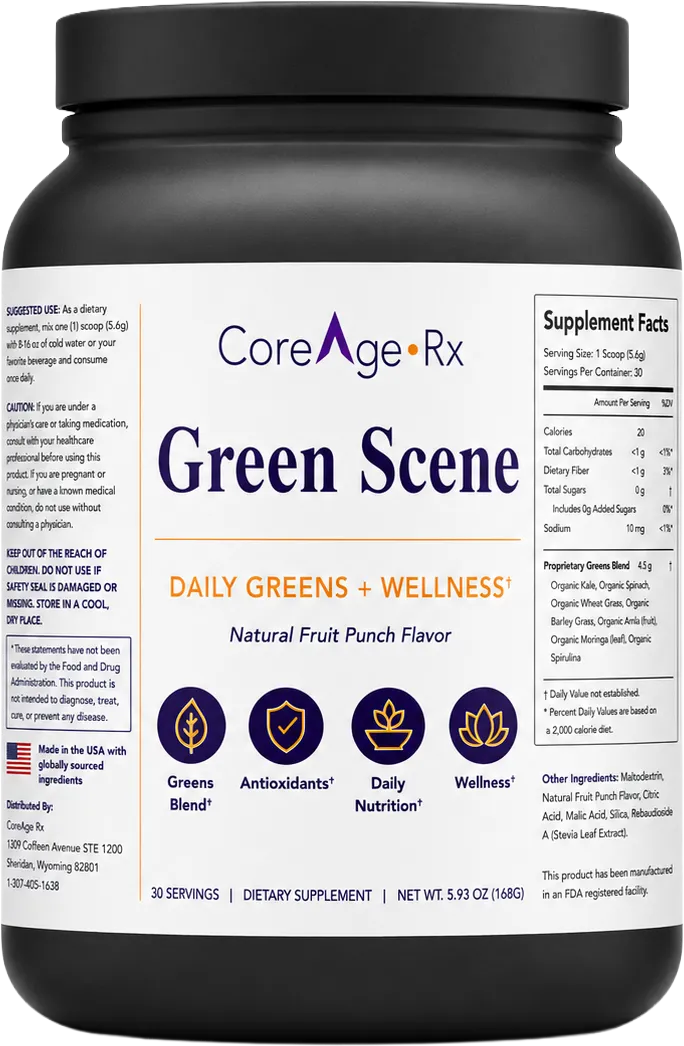
Green Scene is CoreAge Rx’s fruit punch greens powder. The pictured label lists a 4.5 g proprietary greens blend and less than 1 g of dietary fiber per scoop. See the current Green Scene™ page and check the bottle you receive before use.
Related reading
- Greens Powder: What It Can Add and What It Cannot Replace
- Do Greens Powders Have Enough Fiber?
- Greens Powder With a Low Appetite: Keep Real Meals in the Plan
- Fruit choices in a balanced weight-management plan
Educational information, not individualized medical advice. Product information and linked research checked September 15, 2026. Ingredient research does not establish identical effects for a finished supplement.