
You do not need a loading phase to use creatine. Loading is a way to raise muscle creatine stores more quickly; a smaller daily amount can raise them gradually. The decision is mainly about speed, convenience, and tolerance—not whether a routine without loading “counts.”
What loading means in studies
A common adult protocol uses about 20 g daily, divided into four portions, for 5–7 days. It then switches to a lower maintenance intake. The NIH fact sheet describes this pattern alongside protocols without loading. These amounts explain the research and should not be read as permission to exceed a supplement’s instructions.
With daily intake alone, stores generally build over several weeks. The creatine research review describes comparable increases in muscle stores through slower approaches. You are not starting over from zero every time you finish a workout.
Which approach fits an ordinary routine?
| Consideration | Loading | No loading |
|---|---|---|
| Initial schedule | Several portions to remember | One daily habit may be enough under the label |
| Speed | Faster rise in stores | More gradual rise |
| Digestive tolerance | Large amounts can be harder to tolerate | Avoids the initial high-intake phase |
| Long-term plan | Still needs a maintenance routine | Starts with the ongoing routine |
For someone beginning strength training, there may be little practical reason to rush. You can build a training log, learn movements, and establish meal and sleep habits while the creatine routine becomes consistent.

Why “all at once” is a different plan
Divided portions are part of the loading protocols being discussed. Taking the entire daily loading amount at one sitting is not equivalent. A small trial in male soccer players found more diarrhea with a single 10 g serving than with two 5 g servings. That study does not establish a perfect dose for everyone, but it shows why serving size can matter for tolerance.
Do not force yourself through persistent diarrhea or abdominal pain to finish a loading schedule. Symptoms can undermine hydration and training, and may need a different explanation.
Applying this to Strong Suit
Strong Suit’s pictured directions are one scoop daily, supplying 5 g creatine monohydrate. Four scoops would exceed those labeled directions. If you are considering a loading protocol, first discuss the product and your health history with a qualified clinician or sports dietitian.
If your priority is a simple routine, use the daily-dose guide and choose a repeatable cue. You can monitor progress with the creatine timeline guide, without treating an early scale change as proof of new muscle.

Loading changes the starting pace, not the need for a plan
The appeal of loading is understandable: if creatine stores can rise faster, it seems natural to want the fastest route. But faster store accumulation is only one part of the decision. You still need a maintenance routine, a training plan, and a way to assess whether the supplement is useful and comfortable for you.
Consider two people starting the same resistance program. One is preparing for a specific, near-term training block with professional guidance. The other is learning exercises and building a habit after years away from lifting. Speed may have different practical value in those situations. Neither person’s decision should be based only on the idea that more servings show greater commitment.
Loading also does not compress every outcome into the first week. Muscle creatine stores, workout performance, and longer-term changes in muscle tissue are different measures. Raising stores quickly cannot substitute for weeks of appropriate exercise, recovery, and adequate nutrition. An early scale change is especially easy to misread as a finished training result.
Compare the whole routine before choosing
Look beyond the initial amount. A loading schedule involves more serving decisions, more opportunities to forget or repeat a portion, and more product used during the first several days. A gradual approach uses the ongoing routine from the beginning. The simpler option may be easier to sustain even if stores rise more slowly.
Tolerance is another practical difference. If someone already struggles with large drinks or digestive symptoms, a high-intake phase may create a problem that undermines the rest of the plan. Research on divided portions does not mean every person or product will be comfortable with that approach. Your own bottle’s directions remain relevant.
Finally, consider what happens after the initial phase. A person can follow a detailed loading schedule perfectly and then stop remembering the maintenance serving. That is a planning problem, not evidence that the initial amount was too small. Design the ordinary day first, then decide with appropriate guidance whether there is a reason to alter the starting week.
A practical decision worksheet
Write down the answers to these questions before changing a label-directed routine:
- What outcome am I trying to improve? Be specific about training or function rather than using “results” as a catch-all term.
- Is there a meaningful reason that speed matters? An approaching event and a vague wish for faster muscle growth are different reasons.
- Does the current product label permit the plan? A generic article about creatine is not the label for your tub.
- Have I counted creatine from other products? A pre-workout can add to the total even when it is marketed for a different purpose.
- Who will help if the plan causes symptoms or conflicts with my health history? Identify that person before escalating intake.
- What will the maintenance routine be? It should work on rest days, busy days, and days when workouts move.
This worksheet may lead you to a gradual routine. That is a complete approach, not an incomplete version of supplementation. If the answers instead support discussing loading, bring the exact product and proposed schedule to a clinician or sports dietitian.
Do not confuse water changes with a muscle-building deadline
An early increase in body weight during loading can reflect water associated with increased muscle creatine. That can happen before enough training time has passed to explain the same change as newly built muscle tissue. The creatine review discusses why early and longer-term body-weight findings need different interpretation.
This distinction matters if you are also trying to lose weight. Reacting to an early increase by sharply cutting food or fluid intake can make the overall plan less useful. Record the start date and serving pattern, then interpret weight alongside strength, symptoms, and the longer-term trend.
It also matters when comparing progress photographs. Lighting, posture, muscle fullness, and recent exercise can all affect appearance. A photograph taken several days after starting a supplement cannot tell you exactly how much new muscle tissue has been built. Treat dramatic before-and-after claims with that limitation in mind.
Common loading mistakes to avoid
Copying a protocol without its context. A sentence describing a study may omit the participants’ health screening, divided portions, maintenance period, and monitoring. Read the complete research context before assuming it provides personal instructions.
Taking a large daily amount at once. Divided portions and single large servings are different exposures. The soccer-player trial cited above illustrates why tolerance can differ. Do not turn a protocol summary into permission to put several scoops into one bottle.
Repeating loading after every missed day. One missed maintenance serving is not the same as a prolonged period without supplementation. Repeatedly restarting high-intake phases can create complexity without addressing the underlying habit.
Ignoring symptoms to finish the schedule. A supplement plan should not take priority over ongoing diarrhea, significant abdominal pain, or difficulty maintaining hydration. Seek appropriate care instead of treating discomfort as a required stage of success.
Frequently asked questions
Is loading required when switching brands?
Changing containers does not automatically establish a need to load. Compare the ingredient amount and directions on the new product, and account for what you were already taking. If the new routine would exceed the label, get individualized guidance before making that change.
Can I load only on workout days?
That is a different schedule from the common research protocols described here. It should not be assumed equivalent simply because the weekly total looks similar. For a basic product-directed approach, follow the current daily directions rather than assembling a new protocol from separate online tips.
Will loading guarantee that I respond?
No. A faster increase in stores does not guarantee a particular performance or body-composition outcome. Training, baseline stores, diet, and individual response still matter. The timeline guide explains how to assess different outcomes without promising a fixed result.
Explore Strong Suit™
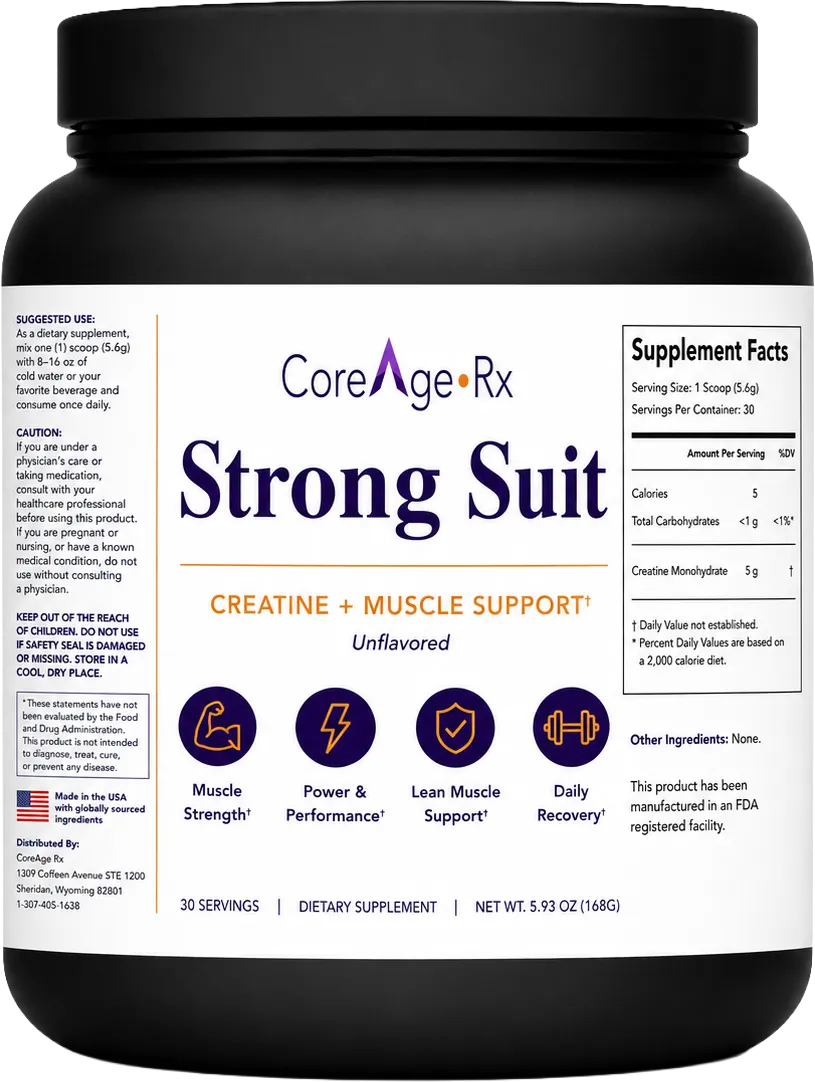
Strong Suit is CoreAge Rx’s unflavored creatine monohydrate powder. The pictured label lists 5 g creatine per scoop and 30 servings. See the current Strong Suit™ page and check the bottle you receive before use.
Related reading
- Creatine Monohydrate: Benefits, Dosing, and What to Expect
- How Much Creatine Should You Take Per Day?
- How Long Does Creatine Take to Work?
- Nutrition during GLP-1 treatment
Educational information, not individualized medical advice. Product information and linked research checked September 15, 2026. Ingredient research does not establish identical effects for a finished supplement.