Human research on estriol facial cream is limited and should be interpreted carefully. Small studies of topical estrogens have reported improvements in some skin measurements, but they do not establish the benefit or long-term safety of every compounded facial formula. Matching one concentration to a study is not enough to prove that the whole preparation will behave the same way.
Estriol is an estrogen. The evidence discussion should therefore include the exact product, exposure, medical history, and alternatives, not only photographs or claims about youthful skin. This guide explains what the commonly cited human studies can tell you and where important uncertainty remains.
Why estrogen is studied in skin
Skin changes around menopause can involve dryness, reduced firmness, and other features influenced by hormonal changes alongside aging and environmental exposure. The review of estrogen-deficient skin discusses biological rationale and clinical studies of topical therapies.
A plausible mechanism is a reason to investigate treatment, not proof that every person with dry skin needs an estrogen cream. Skin symptoms can have other causes, including dermatitis, cleansing habits, medications, and cumulative sun exposure.
The first question remains clinical: what concern is being treated, and why is a hormone-containing preparation being considered for it? A clear answer makes the research easier to interpret.
The often-cited 1996 study
A 1996 study compared topical 0.3% estriol and 0.01% estradiol preparations in fifty-nine preclimacteric women with skin-aging symptoms. Over six months, investigators reported improvements in several skin measurements and examined selected hormonal measures; a small subgroup underwent biopsies.
The abstract reported no systemic hormonal side effects, while prolactin increased significantly. These findings should not be rewritten as proof of zero systemic absorption or unrestricted long-term safety. Comparing two hormone preparations also answers a different question from demonstrating that a particular modern combination outperforms its matching cream vehicle.
The study is relevant evidence, but its size, population, duration, and formulations limit the conclusions. It did not test every current estriol product or every medical situation in which someone might consider one.
A separate small systemic-effects study
A 1993 study examined seventeen women using facial estrogen ointments for three months, including eight using estriol. It reported no significant change in the selected serum hormone measurements or vaginal smear findings during that period.
That is a narrow finding from a small study. It does not exclude uncommon effects, establish safety over years, or directly answer every question about the absorption of a different vehicle, dose, or application area. A limited set of measurements cannot be treated as a guarantee that no systemic exposure occurs.
Ask the prescriber what evidence applies to your actual preparation and health history rather than using this study as a blanket reassurance.
Why the finished formula matters
Concentration is only one part of a topical preparation. The cream base, other ingredients, amount applied, frequency, treatment area, and condition of the skin can affect exposure. A product used on intact facial skin differs from one applied to a larger area, mucosa, or recently treated skin.
If a modern formula combines estriol with vitamin C and hydrolyzed hyaluronic acid, the older estriol study does not automatically become a trial of that combination. The ingredients and vehicle should be identified before a comparison is made.
| Study detail | Question to ask about your product |
|---|---|
| Hormone identity | Is it estriol, estradiol, or another estrogen? |
| Concentration | Does the label match the substance and strength discussed? |
| Vehicle and other ingredients | Is the finished preparation actually comparable? |
| Application area and amount | Does the exposure resemble the studied use? |
| Participants | Were people with relevant medical histories included? |
| Follow-up | What remains unknown beyond the study period? |
Ingredient evidence and product claims are different
A product page may cite estrogen research to explain a rationale for treatment. That does not establish that the finished product has been tested in a randomized trial or that its advertised timeline is guaranteed.
Ask for the distinction explicitly: what is known about estriol as an ingredient, what is known about the complete cream, and what remains uncertain? A useful answer should include the limitations without dismissing the research entirely.
The presence of a prescription also does not resolve the evidence gap. A clinician’s decision can be individualized, but it should not be described as FDA approval of the compounded product.

What FDA approval status means here
The FDA’s menopause information states that no drugs containing estriol are FDA-approved and that there is no basis to assume estriol is a proven safer estrogen. Marketed estriol drugs are compounded preparations in this context.
The FDA’s compounding explanation describes how compounded drugs differ from approved products. The finished compounded preparation has not undergone the same FDA premarket review for safety and effectiveness.
That distinction belongs in an informed discussion of the product. It should neither be hidden behind natural or bioidentical language nor replaced by a claim that a small cosmetic study proves a particular formula safe for everyone.
Safety cannot be reduced to the word topical
Topical describes where a product is applied. It does not by itself establish that the ingredient remains entirely local. Hormone exposure can depend on the preparation, amount, area, skin condition, and frequency.
Review personal medical history with the prescriber, including hormone-sensitive conditions, current hormone products, unexplained bleeding, and other relevant concerns. Do not assume a facial product can be omitted from a medication list because the goal is cosmetic.
The estriol safety questions guide provides a structured discussion. It does not assign a quantified risk to a formula for which adequate long-term data are unavailable.
Distinguish surface hydration from structural outcomes
A cream containing moisturizing ingredients can improve comfort and the appearance of dryness lines. That effect may occur without proving an estrogen-specific structural change. The vehicle and accompanying humectants should be considered when evaluating photographs.
Firmness, elasticity, wrinkle depth, and hydration are different measurements. A study result in one area should not be converted into a general claim of age reversal or a lifting effect.
At home, define an observable goal and use comparable photographs. You cannot measure collagen production or systemic hormone exposure by looking in a mirror.
Apply the evidence discussion to Time Out
Time Out lists estriol 0.3%, vitamin C 5%, and hydrolyzed hyaluronic acid 0.5%. The estriol percentage resembles one used in the older study, but the complete combination and vehicle should not be assumed to be identical.
Ask why this formula is being considered for your concern, what nonhormonal options were considered, and how the benefit will be reviewed. Confirm the amount, frequency, area, and monitoring plan on the actual prescription.
The Time Out ingredient guide examines each component. The hyaluronic-acid guide explains why hydration from a supporting ingredient is a separate outcome.
Keep facial care separate from menopause symptom treatment
These skin studies do not establish that a facial estriol cream treats hot flashes, vaginal symptoms, or other indications for menopause hormone therapy. A facial preparation is not interchangeable with a hormone patch, pill, or vaginal product.
If those symptoms are present, discuss them through an appropriate menopause-care evaluation. Review all products together, but keep their purposes and instructions distinct.
The facial estriol versus hormone therapy guide explains why a cosmetic response cannot be used to decide whether systemic treatment is needed.
A useful conclusion from limited human evidence
When a product page quotes an impressive percentage improvement, ask which outcome was measured and how. A change in an instrument reading is not automatically the same as a visible change you would notice in daily life. The comparison group, starting severity, and measurement method are necessary context for deciding whether the number is relevant.
The studies provide a reason for a careful clinical conversation, not a universal recommendation. They leave uncertainty about finished formulations, broader populations, long-term outcomes, and uncommon effects.
Before use, ask for a specific goal, an explanation of the evidence limits, a review of individual suitability, and a clear follow-up decision. During use, report unexpected symptoms and avoid increasing the amount or treatment area to chase a faster result. That keeps the plan proportional to what human research can actually support.
Explore Time Out™
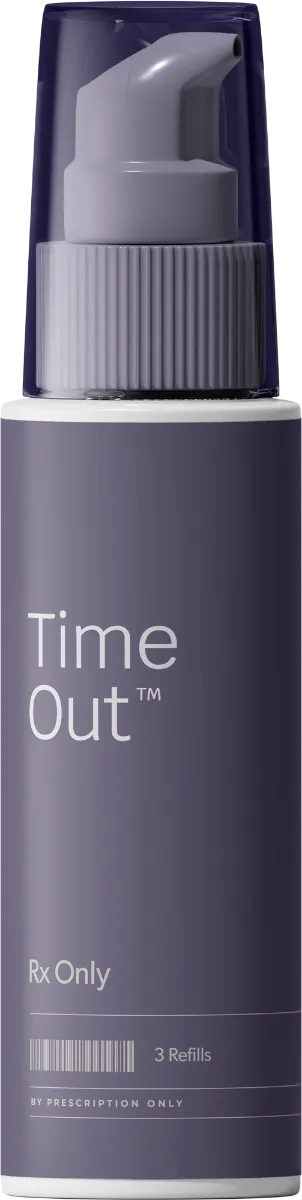
Time Out lists estriol 0.3%, vitamin C 5%, and hydrolyzed hyaluronic acid 0.5%. Estriol is an estrogen, so suitability and use require individual medical review. A facial formulation is not interchangeable with menopause hormone therapy or vaginal estrogen. Review the current Time Out™ page and bring your existing skin-care products to the provider discussion.
Related reading
- Menopausal Skin Care: Dryness, Firmness, and Treatment Questions
- Topical Estriol for Facial Skin: Safety Questions for Your Prescriber
- Estriol Face Cream and Menopause Hormone Therapy: Different Decisions
- Time Out Ingredients: Estriol, Vitamin C, and Hydrolyzed Hyaluronic Acid
- Tretinoin versus retinol: choosing a routine
Educational information; your prescription and clinician’s instructions guide individual care. Product details and linked sources checked September 15, 2026. Ingredient research does not establish identical results for a finished compounded formula. Photographs are illustrative and do not show treatment outcomes.