
Salicylic acid can be useful for clogged pores, but sensitive skin needs a plan that accounts for the entire routine. The main challenge is often cumulative irritation: a cleanser, toner, acne cream, and occasional peel may all contribute even when each product seems reasonable on its own.
The goal is to treat acne without making ordinary skin care uncomfortable. If salicylic acid repeatedly causes burning, scaling, or a rash, do not assume your skin needs to be pushed through a universal adjustment phase. Review the product, exposure, and diagnosis with a clinician.
Start by describing the sensitivity
Sensitive can mean immediate stinging, delayed itching, easy redness, dryness, or reactions to specific ingredients. Those experiences are not interchangeable. Some reflect irritation; others may involve allergy or a condition such as eczema or rosacea.
Record when the symptom begins, how long it lasts, and where it appears. Include whether it happens only after the acid or also after water, cleanser, and moisturizer. That pattern can help a clinician decide whether the routine needs simplification or a different assessment.
Do not label every reaction as purging. New itchy bumps, a spreading rash, or persistent burning may be a different problem from acne changing during treatment. The symptom pattern deserves attention on its own terms.
Check the product type first
Salicylic acid appears in facial cleansers, leave-on acne products, professional peels, wart treatments, and products for thickened skin. These uses have different formulations and directions. A high-strength product intended for feet or warts is not a facial acne substitute.
Even facial products differ in contact time, solvent system, concentration, and accompanying ingredients. A wash-off cleanser cannot be compared with a leave-on cream by percentage alone. Review the whole label and the intended application area.
For a prescription combination, use the pharmacy directions. If the public product page omits a strength, ask rather than borrowing the directions from another brand that discloses one.

Find hidden duplication in the routine
Make a list of all products used during a week. Look for salicylic acid in more than one step, but also note other exfoliating acids, retinoids, benzoyl peroxide, scrubs, brushes, and masks. Mechanical friction can matter alongside chemical ingredients.
A common pattern is an acne cleanser in the morning, an exfoliating toner at night, a prescription cream, and a peel on weekends. When irritation appears, the last product used may receive all the blame even though the total routine is the problem.
Bring the list to the prescriber. It is easier to make a sensible adjustment when the complete exposure is visible. Removing an optional duplicate may be more useful than adding several soothing products to compensate for it.
What the evidence supports
The AAD’s updated acne guidelines include salicylic acid as a conditional treatment recommendation. That supports considering it for appropriate acne concerns; it does not mean every sensitive face should tolerate any salicylic-acid preparation.
Guidelines also do not turn a specific combination cream into a proven solution for every acne pattern. The severity of acne, other medications, skin conditions, and practical tolerance all influence the choice. Painful deep acne and scarring may need a different treatment approach.
The main acne and pore guide helps separate these goals. If you are uncertain whether the visible dots are acne, review sebaceous filaments versus blackheads before increasing exfoliation.
Build a comfortable foundation
Use a cleanser that removes what needs removal without leaving the face persistently tight. Avoid hot water and vigorous rubbing. The AAD’s dry-skin guidance emphasizes gentle, fragrance-free care when dryness and irritation are concerns.
Choose a moisturizer suited to your skin and acne plan. A moisturizing step does not mean the treatment has failed to control oil. Skin can be oily and uncomfortable at the same time, and a tolerable routine is easier to follow consistently.
Keep sunscreen in the plan as a separate labeled product. If several layers pill or sting, discuss simpler options. Do not dilute an acne medication or sunscreen by mixing it into another cream unless the instructions specifically direct that use.

Introduce the actual product deliberately
Follow the prescribed amount, frequency, and area. Ask whether other active products should be adjusted during introduction. A generic recommendation to start slowly should not override a specific medical plan; get a schedule you can understand and follow.
Keep other optional products stable when possible. Record the start date and the first symptoms, if any. An introduction is easier to assess when you have changed one meaningful variable rather than the whole bathroom shelf.
If a clinician recommends limited-area use first, follow that advice. A home trial does not replace formal allergy testing and does not guarantee tolerance on all facial areas with repeated use.
What to do with different observations
| Observation | Useful response |
|---|---|
| Mild new dryness | Review moisturizer, duplicate actives, and the prescribed plan. |
| Persistent burning or tenderness | Stop the newly introduced product and contact the clinician. |
| Itchy spreading rash | Seek assessment rather than assuming routine adjustment. |
| Marked swelling or blistering | Obtain prompt medical advice. |
| Breathing difficulty or rapid facial swelling | Seek urgent medical care. |
The table is not a diagnosis. It is a way to avoid treating every reaction as the same phenomenon. The clinician’s instructions and the severity of symptoms determine what should happen next.
How Pore Favor changes the label discussion
Pore Favor lists salicylic acid, zinc oxide, niacinamide, and urea. The individual concentrations are not disclosed in the public ingredient summary. Ask for the dispensed strengths and full formula when reviewing sensitivity.
Supporting ingredients do not guarantee that the combination cannot irritate. Niacinamide or urea in a cream does not cancel every effect of additional acids applied underneath it. The complete regimen still needs review.
Ask whether Pore Favor should replace a current salicylic-acid step. The ingredients guide can help you identify what information to bring to that conversation. A simpler plan may make the treatment’s effect easier to evaluate.
Be careful around other treatments and procedures
Retinoids, prescription pigmentation products, peels, and recent laser or microneedling treatments can change tolerance. Give each treating clinician the full product list. Do not assume a familiar acne cream is appropriate on recently treated or broken skin.
If you already use tretinoin, ask whether salicylic acid has a specific additional role. The comparison guide explains the different treatment discussions. Combining them should be an intentional plan rather than an attempt to make one work faster.
Discuss pregnancy, breastfeeding, known salicylate allergies, and active skin disease before use. Do not expand facial application to large additional areas without checking the directions.
Evaluate both acne and comfort at follow-up
If repeated itchy reactions raise the possibility of contact allergy, ask whether a formal evaluation is appropriate. Medical patch testing is different from trying a cream on a small area at home. A home trial cannot identify every allergy, and intentionally reproducing a significant reaction is not a useful prerequisite for seeking help. Keep the original ingredient lists available for review.
Track new lesions, tenderness, and persistent comedones separately from scaling and stinging. A treatment that reduces some bumps while causing substantial irritation may need adjustment. Conversely, improved comfort alone does not tell you whether the acne goal has been met.
Bring a factual record of use, including missed applications and other routine changes. This helps distinguish a formulation problem from an unclear schedule or an incorrect assumption about the lesions being treated.
Ask what to change if the same irritation returns. A useful plan includes a response to recurrence, not only instructions for the first week. It should also specify when another diagnosis or treatment deserves consideration.
Aim for a routine you can keep using
Sensitive skin does not automatically rule out every acne active. It does make the details of product selection, exposure, and monitoring more important. The best regimen treats the actual concern while leaving the skin comfortable enough for ordinary care.
Salicylic acid should be one part of that plan. If the routine becomes an ongoing cycle of exfoliation, irritation, and attempted repair, step back with the clinician and review the whole pattern. Clearer instructions and fewer overlapping products may be the most useful next change.
Explore Pore Favor™
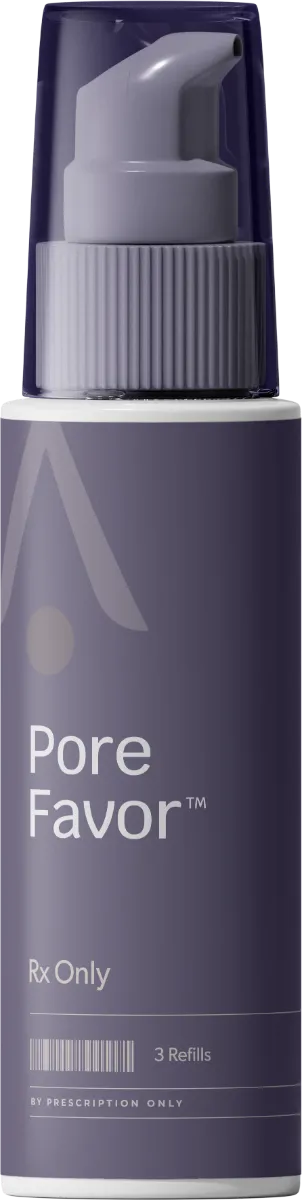
Pore Favor lists salicylic acid, zinc oxide, niacinamide, and urea. The public ingredient summary does not disclose individual concentrations. Use the prescribed formula and directions; zinc oxide in this cream does not establish a tested SPF. Review the current Pore Favor™ page and bring your existing skin-care products to the provider discussion.
Related reading
- Acne and Visible Pores: A Practical Treatment Guide
- Salicylic Acid for Blackheads: How It Fits Into Skin Care
- Salicylic Acid vs. Retinoids for Clogged Pores
- Building a Gentle Routine for Acne-Prone Skin
- Dark spots after acne: marks and breakout prevention
Educational information; your prescription and clinician’s instructions guide individual care. Product details and linked sources checked September 15, 2026. Ingredient research does not establish identical results for a finished compounded formula. Photographs are illustrative and do not show treatment outcomes.