
Salicylic acid can help treat blackheads by supporting exfoliation and reducing the buildup that contributes to clogged follicles. Its usefulness depends on the product, concentration, exposure, and the rest of the routine. A cleanser, a leave-on acne preparation, and a professional peel should not be treated as interchangeable simply because they share the ingredient.
Before adding salicylic acid, make sure the dots you want to treat are actually blackheads. Normal sebaceous filaments are often mistaken for them, especially on the nose. Treating normal structures aggressively can create irritation without producing the permanent smoothness you expected.
What makes a blackhead a blackhead?
A blackhead is an open comedone, a follicle opening with accumulated material that appears dark at the surface. It is a form of acne, not a sign that you failed to wash your face. Scrubbing harder is therefore not a direct solution to the underlying problem.
Blackheads can coexist with whiteheads and inflamed lesions. If the skin also has painful deep bumps or scarring, treatment may need to address more than surface congestion. A clinician can assess the full pattern rather than choosing a product only for the most visible dots.
Sebaceous filaments tend to be smaller, flatter, and more uniform. They help move oil to the skin surface and are normal. The Cleveland Clinic comparison explains why removing their contents does not permanently remove the structure.
How salicylic acid fits acne care
Salicylic acid is a beta-hydroxy acid used in acne products for its exfoliating role. The AAD’s updated guidelines include it as a conditional recommendation. That supports its use in appropriate circumstances while recognizing that the evidence and treatment needs differ from those of other acne therapies.
It does not mean salicylic acid is the only option for blackheads. Topical retinoids may also have an important role, and the choice depends on the acne pattern, tolerance, medical history, and other treatments. See salicylic acid versus retinoids for the comparison.
Avoid expecting the first application to empty every follicle. A useful routine aims to reduce recurring congestion over time. An immediate squeaky feeling or visible peeling is not evidence that the long-term problem is solved.
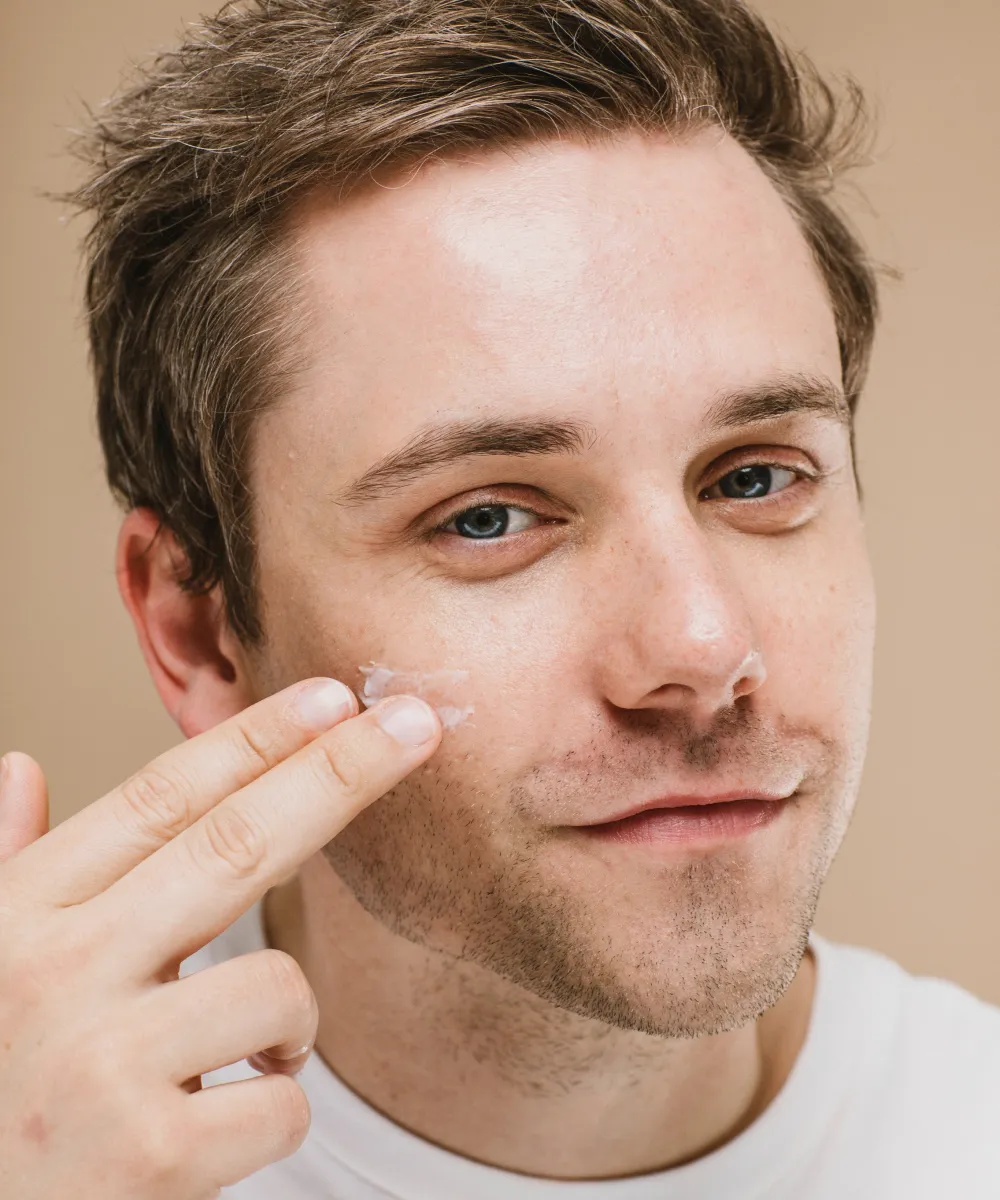
Compare product types before comparing percentages
A wash-off cleanser has a different exposure pattern from a leave-on cream. A product designed for facial acne also differs from a wart remover, callus treatment, or professional peel. Those products are not suitable substitutes for one another.
Read the intended use, directions, warnings, and application area. If it is a prescription combination, follow the pharmacy label and provider’s instructions. Do not import a schedule from a separate over-the-counter salicylic-acid product.
| Product detail | Why it matters |
|---|---|
| Wash-off or leave-on | Contact time and routine placement differ. |
| Intended body area | Facial skin may not tolerate products designed for thick skin elsewhere. |
| Concentration | It affects the formulation, but does not alone predict the result. |
| Other active ingredients | They may add treatment effects or irritation. |
| Directions and warnings | They define how the specific product should be used. |
If any of these details are unclear, resolve them before application. A familiar ingredient name should not make an unfamiliar product seem automatically safe for the face.
Where Pore Favor fits
Pore Favor lists salicylic acid with zinc oxide, niacinamide, and urea. The public ingredient summary does not provide the individual concentrations. Ask the pharmacy for those details if you need to compare the prescription with another product or review an allergy.
The combination should be used as prescribed. Do not add a salicylic-acid cleanser, toner, and mask on top simply to increase the total exposure. The supporting ingredients do not guarantee that extra exfoliation will be comfortable.
The Pore Favor ingredient guide describes each component’s possible role. A finished formula can be useful without every benefit being attributable to salicylic acid alone.

Build around the treatment, not around exfoliation
Use a gentle cleanser and a moisturizer that suits your skin. Keep sunscreen as a separate, labeled protection step. The AAD’s pore-care guidance emphasizes gentle washing and avoiding irritation, which can make pores more noticeable.
Review exfoliating tools as well as ingredients. A scrub, cleansing brush, rough washcloth, or frequent pore strip adds another exposure. Removing those steps may be more useful than buying a stronger acid when the face is already rough or tender.
If you use a retinoid or another acne prescription, ask how salicylic acid fits the plan. The clinician may choose one approach, combine treatments deliberately, or separate their use. There is no reason to improvise a maximum-strength stack.
Introduce a change you can understand
Keep the rest of the routine stable when possible and record when the product is started. Follow the directions for the amount, frequency, and area. Do not use extra product because only a small area has visible blackheads; confirm whether the prescribed treatment is intended for a broader acne-prone zone or a limited area.
Track comfort during cleansing and after application. Tightness, persistent stinging, new scaling, or a spreading rash deserves attention. If a new product causes a marked reaction, stop it and contact a clinician before trying again.
The salicylic acid and sensitive-skin guide discusses how repeated irritation can develop when several individually familiar products are combined.
Avoid extraction as a daily progress test
Also review makeup removal and products that contact the area, including hair styling products near the forehead. These exposures can matter to the broader routine, but do not assume a particular cosmetic caused the blackheads without a useful timeline. Bring the product names and the pattern of lesions to the clinician rather than replacing every cosmetic at once.
Squeezing a pore to see whether material comes out does not provide a reliable measure of treatment success. It can injure the skin and create more inflammation or marks. It can also reinforce the mistaken idea that every normal follicle should remain empty.
Use photographs taken in consistent ordinary light if you want to compare an area. Keep the camera distance and skin preparation similar. A close-up taken just after extraction will not be a fair comparison with an untreated baseline.
If one lesion is persistent, painful, or unusual, ask for assessment. Do not keep escalating pressure or using sharp tools because a product has not removed it quickly.
What to look for over time
A useful change may be fewer new comedones, less congestion in a defined area, or a routine that stays comfortable enough to maintain. Record those outcomes separately from shine and skin smoothness. They may change at different rates.
Agree on a review point with the provider, especially for a prescription combination. If there is little progress, discuss whether the lesions are correctly identified, whether use has matched the directions, and whether another treatment is more appropriate.
Do not treat every new bump as a harmless purge. A new distribution of itchy bumps, a painful rash, or substantial worsening needs a different conversation. The pattern and symptoms matter more than the label assigned to them online.
Safety questions worth asking
Tell the clinician about known salicylate or product allergies, other topical medications, pregnancy or breastfeeding, and active skin conditions. Ask before use on broken, irritated, or recently treated skin. Do not apply a facial acne product to large additional body areas without checking the instructions.
Marked swelling, blistering, persistent burning, or a spreading rash requires stopping the new product and obtaining advice. Serious allergic symptoms, such as breathing difficulty or rapid facial swelling, require urgent care.
Keep the product in its original container and follow the storage directions. Sharing or transferring a prescription can separate it from the instructions that make use clear.
Set a realistic end point
Blackhead treatment should reduce troublesome acne while preserving comfortable skin. Normal pores and sebaceous filaments will still be visible under close inspection. That is not a failure of the routine.
If you understand the lesion, choose the appropriate product type, and follow a manageable plan, salicylic acid becomes one useful tool rather than the center of an endless exfoliation cycle. The broader acne and pore guide can help you keep that larger goal in view.
Explore Pore Favor™
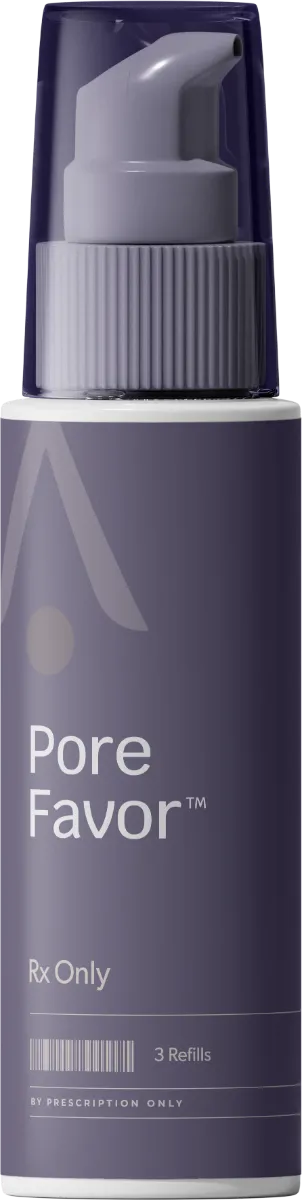
Pore Favor lists salicylic acid, zinc oxide, niacinamide, and urea. The public ingredient summary does not disclose individual concentrations. Use the prescribed formula and directions; zinc oxide in this cream does not establish a tested SPF. Review the current Pore Favor™ page and bring your existing skin-care products to the provider discussion.
Related reading
- Acne and Visible Pores: A Practical Treatment Guide
- Sebaceous Filaments vs. Blackheads: What Is the Difference?
- Salicylic Acid vs. Retinoids for Clogged Pores
- Salicylic Acid and Sensitive Skin: Avoiding an Irritation Cycle
- Dark spots after acne: marks and breakout prevention
Educational information; your prescription and clinician’s instructions guide individual care. Product details and linked sources checked September 15, 2026. Ingredient research does not establish identical results for a finished compounded formula. Photographs are illustrative and do not show treatment outcomes.