
Metformin can produce modest weight loss in some people, but it is not FDA-approved specifically as a weight-loss medicine. Its main approved role is improving blood glucose in type 2 diabetes. Whether it belongs in a weight-management plan depends on the person’s metabolic health, treatment goals, kidney function, and other medicines.
The most useful way to assess metformin is to separate three questions: what studies actually found, why a clinician might consider it, and what follow-up makes treatment appropriate. A low-cost generic tablet is not automatically the right treatment, and a modest average result does not mean that every person will respond the same way.
What does metformin do?
Metformin reduces glucose production by the liver and improves the body’s response to insulin. It also affects glucose handling in the intestine. These actions help explain its established use for blood-sugar management; they do not make it a GLP-1 receptor agonist or a direct substitute for semaglutide or tirzepatide. Source: metformin prescribing information.
Weight can change during treatment, but it should be evaluated alongside the actual reason the medicine was prescribed. Someone being treated for type 2 diabetes may benefit from improved glucose measures even without substantial weight loss. Someone seeking treatment specifically for obesity needs a discussion of options that address that goal.
Our insulin resistance and weight guide explains why a symptom or body shape alone cannot establish an insulin-resistance diagnosis.
How much weight loss occurred in the Diabetes Prevention Program?
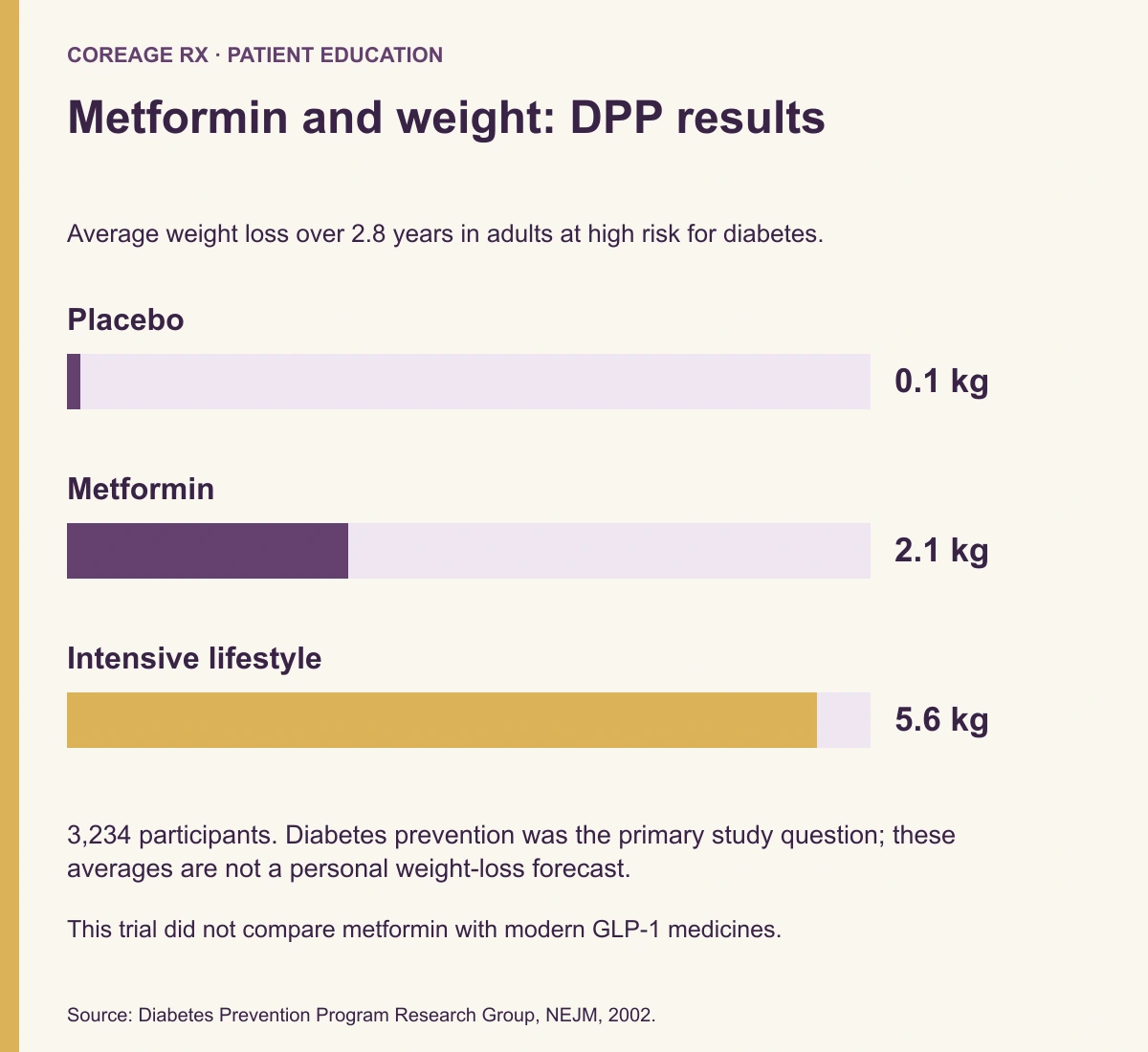
The Diabetes Prevention Program, or DPP, enrolled 3,234 adults at increased risk of type 2 diabetes. Participants had elevated fasting and post-meal glucose measurements but did not have diabetes at enrollment. They were assigned to metformin, placebo, or an intensive lifestyle program.
During the initial trial, with an average follow-up of 2.8 years, the reported average weight changes were:
| Study group | Average weight loss |
|---|---|
| Placebo with standard lifestyle advice | 0.1 kg, approximately 0.2 lb |
| Metformin with standard lifestyle advice | 2.1 kg, approximately 4.6 lb |
| Intensive lifestyle intervention | 5.6 kg, approximately 12.3 lb |
These are results from the original DPP randomized trial, not a forecast for an individual. The trial’s primary question was prevention or delay of diabetes. It was not a head-to-head comparison with modern GLP-1 medicines, and its population should not be treated as representative of everyone seeking weight loss.
The intensive lifestyle group received substantial support, including individual sessions, a weight-loss goal, and a physical-activity goal. “Lifestyle” in this study did not mean a brief suggestion to try harder. The NIDDK’s DPP overview describes the intervention and study design.
Diabetes prevention and weight loss are different outcomes
In the DPP, metformin reduced the relative incidence of diabetes by 31% compared with placebo; the intensive lifestyle intervention reduced it by 58%. Those figures describe diabetes incidence during the study, not percentage body-weight loss.
Confusing the two can produce a dramatically inflated expectation. A claim that the DPP showed “31% weight loss on metformin” would be incorrect. The actual mean weight change in the metformin group was 2.1 kg over the trial period.
The NIDDK overview reports that metformin’s preventive benefit was particularly evident in certain groups, including younger adults, people with a BMI of at least 35, and women with a history of gestational diabetes. These findings can inform a clinical discussion, but they do not establish that every person in those categories should start metformin. Source: NIDDK DPP results.
Why might a clinician consider it off label?
“Off label” means a licensed clinician uses an approved medicine for a purpose outside its approved labeling. It does not mean that the medicine is unapproved altogether, and it does not guarantee insurance coverage for that use.
Depending on the circumstances, a clinician may consider metformin for diabetes prevention or as part of managing a metabolic condition. The discussion should identify the reason, evidence, alternatives, and measures of success. Weight alone is not enough to choose the treatment.
If obesity treatment is the main objective, ask how metformin compares with an approved weight-management medicine for your health history and goals. The NIDDK overview of prescription weight-management medicines explains why eligibility, contraindications, and long-term follow-up matter.
Our when to seek weight-management help guide can help organize that appointment without assuming that medication is the only useful next step.
What is a realistic timeline?
A study average measured over years does not tell you how many pounds to expect in the first week or month. Early changes on a scale can reflect water, food in the digestive tract, or ordinary variation. A day-to-day drop is not proof that a medicine is producing sustained fat loss.
Agree on when to review progress and what to measure. Depending on the indication, this may include glucose results, weight trajectory, waist measurement, symptoms, eating patterns, and daily function. Treatment should be reassessed when the intended benefits are absent or side effects outweigh them.
Use our realistic weight-loss goals and water weight versus fat loss guides to interpret trends more carefully. Do not increase the medicine simply because someone else’s online results were faster.

Common side effects can affect the plan
The metformin label lists diarrhea, nausea or vomiting, gas, indigestion, abdominal discomfort, weakness, and headache among common adverse reactions. Digestive symptoms may interfere with meals or work, so ask how the prescriber wants them reported and managed.
Taking the prescribed product with meals and following its gradual dosing instructions may be part of a tolerability plan. Immediate-release and extended-release preparations have different instructions. Do not change the formulation, split an extended-release tablet, or adopt someone else’s schedule without checking the product directions and prescriber.
Persistent diarrhea or vomiting deserves review. Losing weight because you cannot eat or drink adequately is not a successful treatment outcome. Report severe symptoms, dehydration, or a major change in your ability to function. Source: metformin prescribing information.
Kidney function is a key safety check
Metformin is cleared through the kidneys. The prescriber should review kidney function before treatment and periodically afterward. The label contraindicates use when estimated glomerular filtration rate, or eGFR, is below 30 mL/min/1.73 m² and does not recommend starting it when eGFR is between 30 and 45.
These are clinical decision thresholds, not an invitation to interpret one isolated laboratory result without context. Acute illness, dehydration, and other medicines may change the assessment.
The label also describes circumstances involving iodinated contrast imaging, surgery, or restricted food and fluid intake when treatment may need to be temporarily interrupted. Tell the procedural team you take metformin and obtain a specific plan for stopping and restarting when appropriate. Do not assume all scans or procedures have identical requirements.
What is the lactic-acidosis warning?
Metformin carries a boxed warning about lactic acidosis, a serious buildup of lactate associated with an acid-base disturbance. Risk factors include kidney impairment, certain interacting medicines, excessive alcohol intake, liver impairment, and illnesses that reduce oxygen delivery or circulation.
Symptoms can be nonspecific: unusual severe weakness, muscle pain, breathing difficulty, abdominal pain, or increasing sleepiness. Seek urgent medical care for concerning symptoms, particularly during a serious illness or dehydration. If lactic acidosis is suspected, the label instructs discontinuation and immediate medical evaluation.
Do not dismiss pronounced breathing trouble or unusual drowsiness as routine stomach upset. Tell the treating clinician about metformin, other medicines, recent illness, and alcohol use. The boxed warning and precautions provide the detailed clinical guidance.
Vitamin B12 and low-glucose questions
Long-term metformin use can lower vitamin B12 levels. The product label recommends periodic B12 assessment and blood-count monitoring. Symptoms such as persistent fatigue, numbness, or tingling warrant discussion rather than assuming that an over-the-counter supplement will solve the cause.
The need for supplementation should be connected to dietary intake, laboratory findings, and the clinical picture. Our supplements during weight-management treatment guide explains the broader principle of matching a product to a demonstrated need, although metformin itself is not a GLP-1 medicine.
Low blood sugar is more likely when metformin is combined with insulin or an insulin secretagogue such as a sulfonylurea. The prescriber may need to adjust those treatments. Ask for a glucose-monitoring plan suited to the full regimen.
Metformin, semaglutide, and tirzepatide are not interchangeable
These medicines have different mechanisms, indications, dosing instructions, costs, and safety considerations. Results from separate trials cannot be used as a personalized ranking. In some diabetes regimens, medicines are combined under clinical supervision; that does not make self-directed combinations appropriate.
Our GLP-1 overview and tirzepatide versus semaglutide guide explain related treatment questions. If you explore CoreAge Rx’s semaglutide service or tirzepatide service, confirm the actual preparation and clinical indication. Compounded products are not FDA-approved versions of the brands used in published trials.
The best comparison begins with the problem you are trying to treat. A lower medication price, a larger advertised weight-loss number, or a preference for tablets should be considered alongside medical suitability and the ability to continue care.

Questions to bring to an appointment
- Are we treating diabetes, reducing diabetes risk, or addressing obesity directly?
- What benefit is realistic for my situation, and when will we review it?
- Which kidney, glucose, or B12 tests are appropriate?
- How should I handle persistent digestive symptoms or a new illness?
- What should I tell the team before a procedure or contrast scan?
- What is the next step if the treatment does not meet our agreed goals?
Frequently asked questions
Can metformin work without changing anything else?
The major prevention trial supplied lifestyle advice in the medication group, and the intensive lifestyle group received much more support. Medication does not remove the need for a workable food, activity, and follow-up plan.
Is a higher dose a reliable way to lose more weight?
No. Dose decisions depend on the indication, formulation, response, tolerance, and kidney function. Increasing it yourself can increase risk without establishing additional benefit.
Can I take it just for a short-term weight goal?
That requires a clinician’s assessment of whether treatment is appropriate at all. Metformin is not a guaranteed short-term weight-loss tool. Discuss the health goal and a sustainable plan before starting medication.
Educational information for adults; individual treatment decisions require a qualified clinician. Sources checked September 26, 2026. Original AI-generated article illustrations depict fictional people and objects, not patient outcomes. Other editorial images are illustrative. Graphics summarize the cited sources.