
Hard-boiled eggs can fit into a weight-management eating pattern because they provide protein in a convenient food. They do not burn fat, guarantee fullness, or make an egg-only diet nutritionally complete. The useful questions are how much you eat, what accompanies the eggs, and whether the overall pattern meets your needs.
An egg at breakfast, an egg added to a salad, and several eggs replacing most other foods are different situations. This guide explains how to read an actual serving example, build a more varied meal, handle daily-egg questions, and think about eggs when your appetite is lower during treatment.
What is in a hard-boiled egg?
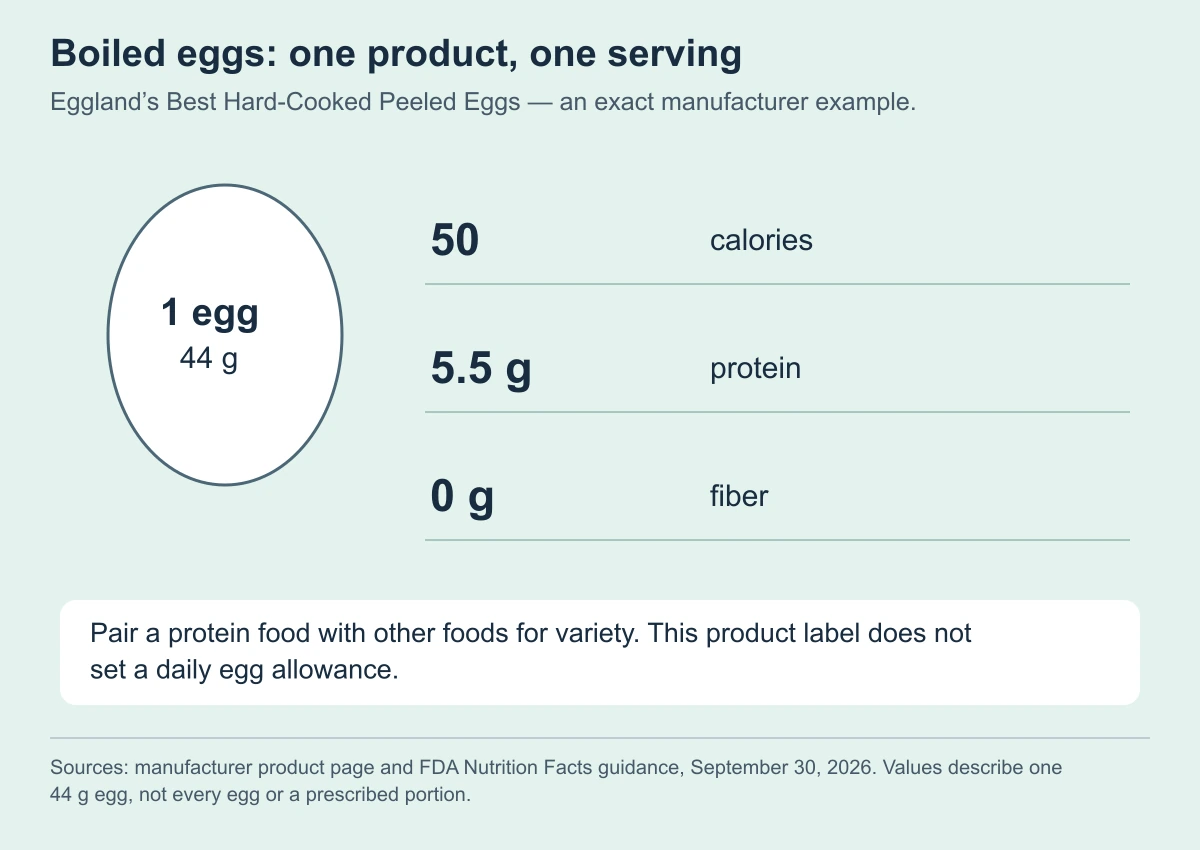
There is no single nutrition panel for every boiled egg. Egg size and the actual product matter. As a specific example, the manufacturer page for Eggland’s Best Hard-Cooked Peeled Eggs lists the following for one egg weighing 44 grams. These values describe that product, rather than every large egg or every home-prepared serving. Manufacturer product information
| Nutrient | One 44-gram egg in this example |
|---|---|
| Calories | 50 |
| Protein | 5.5 grams |
| Total fat | 3.5 grams |
| Saturated fat | 1 gram |
| Fiber | 0 grams |
| Sodium | 55 milligrams |
| Cholesterol | 150 milligrams |
The most useful thing about this table is the combination of information. Eggs contribute protein, but this product supplies no fiber. A meal built around eggs can therefore still benefit from other foods. A low calorie number by itself does not describe a complete meal, its volume, or the rest of the day.
The FDA explains that a Nutrition Facts serving is a reference for understanding the label; it is not a recommendation for how much a particular person should eat. If you eat more than one label serving, the listed amounts change accordingly. Read the size and number of servings before comparing two products. FDA label guidance
Why might someone choose eggs during weight management?
Convenience is a practical advantage. A refrigerated cooked egg can be easier to include in a meal than a food requiring a long preparation process. It also makes the protein contribution visible: you can look at the package and account for the actual number of eggs you use.
That does not mean eggs are uniquely effective for weight loss. Someone who dislikes eggs, has an egg allergy, or follows a plant-based pattern can choose other protein foods. The purpose is to find meals that are manageable and nutritionally useful, rather than to force one particular breakfast every day.
Consider what the egg replaces. Adding eggs to an already large meal is different from choosing an egg as part of a breakfast that otherwise consisted mainly of sweetened drinks and snacks. Likewise, switching the cooking method does not establish that the whole day’s energy intake has fallen. The wider pattern matters. Our balanced-meal guide explains how to combine foods without treating one ingredient as the entire solution.
Are boiled eggs better than fried or scrambled eggs?
Boiling does not require adding cooking oil or butter. That makes the egg’s own ingredients easier to separate from additions. A fried or scrambled egg may be prepared with added fat, cheese, milk, vegetables, or other ingredients; those choices change the finished dish.
The meaningful comparison is the complete preparation you actually eat. A plain boiled egg with a heavily dressed side dish is not automatically lower in energy than a different egg preparation. Conversely, adding vegetables to scrambled eggs can make the meal different in useful ways that a calorie-only comparison misses.
There is no need to label one cooking method as a personal success or failure. Write down the ingredients when comparing meals, including spreads and toppings. That approach is more informative than assigning all of a dish’s nutrition to the egg. If you are comparing breakfast ingredients, our grits guide and cream-cheese guide discuss the same distinction between a base food and the complete meal.
How can you make an egg meal more balanced?
Start by identifying what the egg supplies and what is missing from the meal. In the manufacturer example above, protein is present and fiber is absent. You can then choose accompanying foods for variety, preference, and your individual care plan.
Illustrative combinations include an egg with whole-grain toast and fruit, eggs in a vegetable salad, or an egg alongside beans and vegetables. These are meal ideas, not prescribed portions or calculated calorie plans. Ingredients, amounts, dressings, and preparation will determine the actual nutrition.
Three questions help:
- What else am I eating? Look at the meal rather than the egg in isolation.
- What is easy for me to repeat? Cost, cooking access, storage, and preferences affect whether a meal is practical.
- Do I need an individualized restriction? A clinician or dietitian can account for allergies, cholesterol concerns, kidney disease, diabetes, and other conditions.
People managing diabetes may need to consider carbohydrate distribution and medication timing as well as food preferences. NIDDK emphasizes an individualized healthy-living plan rather than a single food rule. Healthy living with diabetes

How many boiled eggs can you eat each day?
There is no universal daily egg allowance established by the product label. The right question depends on your overall eating pattern, medical history, cholesterol concerns, other protein foods, and what the eggs replace.
Do not turn the table’s 150 milligrams of cholesterol into a personalized daily limit or a guarantee that a certain number of eggs is appropriate. A Nutrition Facts value describes the food. It does not interpret your blood tests or decide your cardiovascular care.
If you want to eat eggs frequently and have been given dietary advice for high cholesterol or another condition, bring a realistic example to your clinician: the egg product or size, how often you eat it, how many, and the accompanying foods. That lets the discussion address your actual routine. A question such as “Does this breakfast fit my plan?” is more useful than asking whether eggs are universally good or bad.
Is an egg-only or boiled-egg diet a good shortcut?
An egg-only pattern does not provide the same range of foods as a varied meal pattern. The label example supplies no fiber, and making it most of your diet narrows the foods available to meet other nutritional needs. A short list of allowed foods also does not resolve how the pattern will work over time.
Weight-management decisions involve health, nutrition, physical activity, and individual circumstances. NIDDK describes overweight and obesity as health conditions with multiple contributing factors. Choosing one food does not settle those factors. NIDDK overview
If the appeal of a restrictive diet is a rapid promised result, examine the promise itself. A meal photograph or someone else’s scale change cannot predict your outcome. Our calorie-intake guide explains why an estimate is a starting point for discussion and why severe restriction requires more attention than simply counting calories.
What if you are taking semaglutide or tirzepatide?
Eggs can be one possible protein food, but they do not replace a nutrition plan or a medication review. NIDDK explains that prescription weight-management medicines are used alongside healthy eating and physical activity, with selection and follow-up determined by a health professional. Prescription medication overview
If lower appetite leaves you eating very little, ask whether you are meeting your needs across the day. An egg that is easy to tolerate may be useful, but one food does not account for all your fluids, fiber, energy, or other nutrients. Our protein and muscle guide discusses protecting function during weight loss, while the semaglutide questions guide and tirzepatide questions guide cover treatment-specific concerns.
Do not increase a medication dose simply because a small meal seems manageable, or assume persistent difficulty eating is the desired result. Discuss new nausea, vomiting, or inadequate intake with the prescribing team. For information about CoreAge Rx services, see the semaglutide and tirzepatide pages; suitability requires a clinical assessment.

How should you store hard-boiled eggs?
Food safety remains relevant even when you are focusing on weight. FDA guidance advises refrigerating cooked eggs and using hard-cooked eggs, whether still in the shell or peeled, within one week after cooking. Keep refrigerated foods cold, and follow the package instructions for a purchased product. FDA egg-safety guidance
For packed meals, consider how the food will remain refrigerated rather than assuming a peeled egg is safe to carry around all day. FDA also advises against leaving cooked eggs or egg dishes out of refrigeration for more than two hours, or more than one hour when temperatures exceed 90°F. Storage advice is not a reason to eat a food past the manufacturer’s directions.
Questions people commonly ask
Can eating boiled eggs make you lose belly fat?
The sources reviewed here do not establish that boiled eggs selectively reduce abdominal fat. They provide food-label and general weight-management information, not evidence for a targeted fat-loss effect. Evaluate the full plan rather than expecting a particular body area to respond to one food.
Are eggs enough protein for a whole meal?
Use the actual amount you eat and your individual needs. The cited product has 5.5 grams per egg; that figure does not tell us your personal meal target. A dietitian can help distribute protein among meals when appetite, health conditions, or preferences make planning difficult.
Should you skip the yolk?
That decision changes the food being eaten, so the whole-egg label above would no longer describe the serving. Discuss your nutrition goals and any cholesterol-related instructions rather than treating the yolk as automatically forbidden or automatically necessary in every meal.
Can you eat boiled eggs at night for weight loss?
Eggs eaten at night do not have a special established fat-burning effect. Consider the portion, other foods, hunger, sleep routine and the overall pattern rather than a universal clock cutoff. An egg-only late meal still lacks the variety discussed above. If a particular evening meal aggravates symptoms, review that pattern and your medical advice; the timing alone does not determine whether the meal causes weight loss.
What is the most useful next step?
Choose an egg meal you actually enjoy, check the portion and accompaniments, and consider its place in the whole day. If you need a medical restriction or repeatedly struggle to eat enough, use those details for an individualized nutrition review. Eggs can be a convenient ingredient; a sustainable plan has to account for much more than the ingredient.
Educational information for adults; individual treatment decisions require a qualified clinician. Sources reviewed September 30, 2026. Original AI-generated article images depict fictional people and objects, not patient outcomes. Other editorial images are illustrative. Graphics summarize the cited sources.