
Grits can be part of a healthy eating pattern. The useful answer depends on the product, the amount, the cooking ingredients, and the rest of the meal. Plain grits provide carbohydrate and some other nutrients, but they do not automatically make a complete high-protein or high-fiber meal.
Start with the actual label rather than treating every bowl as the same food. A dry reference amount, a cooked cup, and a restaurant bowl with butter, cheese, broth, or other toppings are different comparisons. Grits do not need to be banned for weight management, and they are not a food that causes weight loss by itself.
What does a verified grits label show?
The manufacturer SmartLabel for Quaker Old Fashioned Grits identifies a serving of one-quarter cup, or 41 grams, before added cooking liquid and toppings. The example is the 24-ounce canister, UPC 030000040904.
| Nutrition detail | Per labeled dry serving, 41 g |
|---|---|
| Calories | 140 |
| Total fat | 0.5 g |
| Saturated fat | 0 g |
| Sodium | 0 mg |
| Total carbohydrate | 32 g |
| Dietary fiber | 2 g |
| Total sugars | Less than 1 g |
| Added sugars | 0 g |
| Protein | 3 g |
| Iron | 1.9 mg, 10% Daily Value |
Source: Quaker manufacturer SmartLabel, checked September 30, 2026. The linked panel was updated May 24, 2022. Check the actual package for current information; these figures do not describe every grits product.
The label also lists enrichment nutrients, including thiamin, riboflavin, niacin, and folate. Those contributions are useful context, but they should not be used to invent a complete nutrient profile for a prepared recipe.
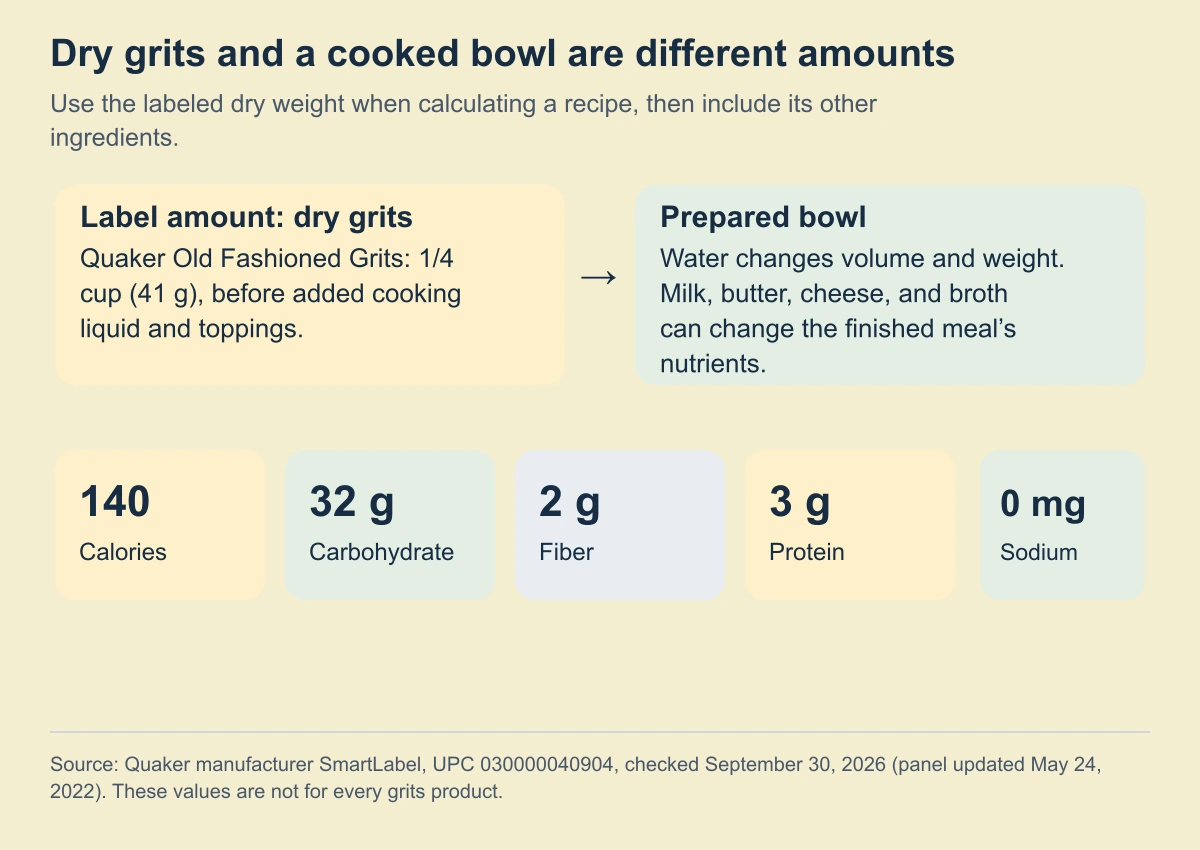
Is one-quarter cup dry the same as one-quarter cup cooked?
No. Cooking liquid changes the volume and weight. A cooked amount does not represent the same amount of dry corn just because the measuring cup has the same name.
For a recipe calculation, begin with the dry amount used and add the contributions of milk, broth, butter, cheese, or other ingredients. Then divide the complete recipe according to the actual number of portions. Water changes the prepared volume without supplying the calories of milk or a topping.
If a package supplies a prepared-product column, read what preparation it assumes. If it lists only a dry amount, do not reinterpret that as a nutrient value for an arbitrary cooked bowl. The FDA Nutrition Facts guide explains why the labeled serving is the first step in understanding the numbers.
Are grits whole grain?
Check the ingredient wording for the particular product. The reviewed Quaker example lists degerminated white corn grits and enrichment nutrients. Its ingredient description should not be changed into a whole-grain claim simply because the food starts with corn.
Other grits products can use different corn ingredients or processing descriptions. Read any whole-grain claim, the ingredients, and fiber amount together. A stone-ground name or rustic-looking package should prompt that check, rather than replace it.
Our healthy-cracker guide explains a related distinction between grain names, enriched flour, and verified whole-grain ingredients. The broader lesson is the same: a front-of-package word answers only part of the nutrition question.
Do grits provide much fiber or protein?
The verified dry serving contains two grams of fiber and three grams of protein. Those are contributions, but they do not establish a high-fiber or high-protein meal on their own.
The manufacturer panel lists fiber at 7% Daily Value. The FDA describes 5% Daily Value or less as low and 20% or more as high for a listed serving. Calling this particular serving “high fiber” using that reference would be inaccurate. FDA label guidance.
If the meal needs more protein or fiber, consider suitable additions and the rest of your day. An egg, tofu, beans, seafood, vegetables, or another food can change what the whole meal supplies. The exact contribution depends on the ingredients and amounts; it should not be inferred from a photograph or menu title.
Are grits good for weight loss, or are they fattening?
Grits can fit a weight-management plan, but the reviewed label does not establish a special fat-loss benefit. Nor does an ordinary serving automatically cause fat gain. The amount, preparation, and complete eating pattern matter.
Choosing a bowl solely because the plain grain has little fat can overlook substantial additions. Conversely, assuming that all carbohydrate foods must be eliminated can make the plan unnecessarily narrow. A meal should provide adequate nutrition and be something you can realistically include.
Our calorie-intake guide explains why an estimate needs to be interpreted within a nourishing, sustainable approach. A dry-label calorie value is useful information; it is not a rule that every bowl must weigh the same or supply the same amount.
How do butter, cheese, milk, or broth change the meal?
They add their own nutrients. Butter and cheese can change calories and saturated fat; cheese and broth can change sodium; milk or another protein-containing addition can change the protein contribution. The exact product and quantity determine the result.
The zero-milligram sodium line in the plain Quaker example does not describe grits cooked with salty broth or served with a salted topping. A lower-sodium base also does not cancel the sodium in another ingredient.
If you have a prescribed sodium, fluid, or other nutrition restriction, assess the complete preparation with the care team. For everyone else, a useful everyday approach is to decide what role the additions play—flavor, texture, protein, or a more complete meal—and include them honestly in the comparison.
What can a balanced grits meal look like?
Use the grits as one part of the plate rather than asking them to supply every nutrient. Choose foods that meet your appetite, preferences, budget, and dietary requirements.
| Starting meal | Possible additions | Practical question |
|---|---|---|
| Plain breakfast grits | Egg or tofu plus fruit or vegetables | Does the complete meal meet your needs? |
| Savory grits | Beans and cooked greens | What do the protein, fiber, and sodium amounts contribute? |
| Seafood and grits | Vegetables alongside and a considered sauce | Which ingredients change the meal beyond the plain grain? |
| A small bowl when appetite is limited | A tolerated protein-containing food | Is the overall intake adequate over the day? |
These are flexible examples, not prescribed portions or promises about glucose or weight. Food allergies and medical restrictions can change the choices. Our balanced-meal guide explains the same framework across different grains and meals.
Can people with diabetes eat grits?
The verified dry serving contains 32 grams total carbohydrate. The low total-sugars amount does not make it a low-carbohydrate food or remove it from a diabetes eating-plan discussion.
Consider the actual amount, the other meal ingredients, glucose monitoring when recommended, and the medicines being used. The appropriate portion is individualized. Do not assign every person the same bowl size or guarantee a particular glucose response based only on the grain name. NIDDK diabetes nutrition guidance.
Comparisons can also be misleading when one food is measured dry and another cooked. If you are comparing grits with oatmeal, rice, or another grain, align the serving basis before interpreting carbohydrate or calorie differences.
Are instant grits less healthy than old-fashioned grits?
The product name alone is not enough to rank them. Instant, quick, old-fashioned, flavored, and other versions can differ in serving weight and ingredients. Read the exact panel rather than transferring the verified Old Fashioned numbers to another package.
A flavored packet may introduce ingredients or sodium amounts not present in a plain example. A convenient plain product may still fit the meal you want. Preparation time, cost, and accessibility matter alongside nutrients when deciding what you will actually use.
Avoid comparing “one packet” with “one-quarter cup” without checking grams. Those reference amounts may represent different quantities, just as one restaurant bowl may contain a different amount from the bowl you prepare at home.
Does a corn-based product settle gluten or allergy questions?
No single grain name supplies the complete package information. Check the ingredients, allergen statements, and any appropriate gluten-free labeling for the exact product and flavor you buy. Added ingredients and manufacturing information can matter for people with a medical dietary requirement.
If a clinician or dietitian has prescribed a gluten-free plan, follow that plan and ask about unclear products. Do not treat a general nutrition article or a photograph of plain grits as verification of a package’s suitability.
What if you use a GLP-1 medicine and have less appetite?
The complete meal becomes especially relevant when the amount you can eat is smaller. A plain bowl supplying some carbohydrate can be useful, but the verified serving has modest protein and fiber. Consider what else you are able to eat across the day.
Our GLP-1 food guide and semaglutide protein and muscle guide discuss nutrition planning during treatment. Grits’ texture may suit some preferences, but it should not become a reason to accept prolonged inadequate intake or ignore digestive symptoms.
If you are exploring available prescription care, CoreAge Rx’s semaglutide page and tirzepatide page provide starting points for discussing eligibility. Those care decisions are separate from whether a particular breakfast fits your eating pattern.
What is the most useful way to decide?
Read the product, dry serving weight, ingredients, and nutrient amounts. Account for cooking additions and choose the rest of the meal deliberately. Then consider tolerance, taste, convenience, and any clinical nutrition needs.
Grits can be part of an enjoyable, balanced meal without being a special weight-loss food. Accurate measurements and a complete-plate view make the answer more useful than treating every cooked bowl as identical or judging a staple by one isolated nutrient.
Educational information for adults; individual treatment decisions require a qualified clinician. Sources reviewed September 30, 2026. Original AI-generated article images depict fictional people and objects, not patient outcomes. Other editorial images are illustrative. Graphics summarize the cited sources.