There is no good basis for using masturbation as a treatment that produces meaningful weight loss. Physical activity uses energy, but that general fact does not establish that masturbation changes body fat, provides a useful calorie target, or replaces an evidence-based weight-management plan.
The same caution applies to claims about weight gain, orgasms, or testosterone. Adult sexual-health questions deserve direct answers without shame, invented calorie estimates, or promises that an ordinary sexual activity will reshape the body.
Does masturbation burn calories?
Movement can use energy, but a reliable amount cannot be assigned to everyone from the studies discussed here. Duration, effort, individual characteristics, and what is actually being measured all matter.
A precise online number may come from a study of partnered sexual activity rather than masturbation. Those are different activities. A figure describing an entire partnered encounter also should not be relabeled as the calories burned by an orgasm alone.
The useful scientific question is not whether any energy is used. It is whether research on the actual activity establishes a meaningful, sustained weight outcome. A small energy-expenditure study is not the same as a trial demonstrating weight loss.
What did the frequently cited partnered-sex study measure?
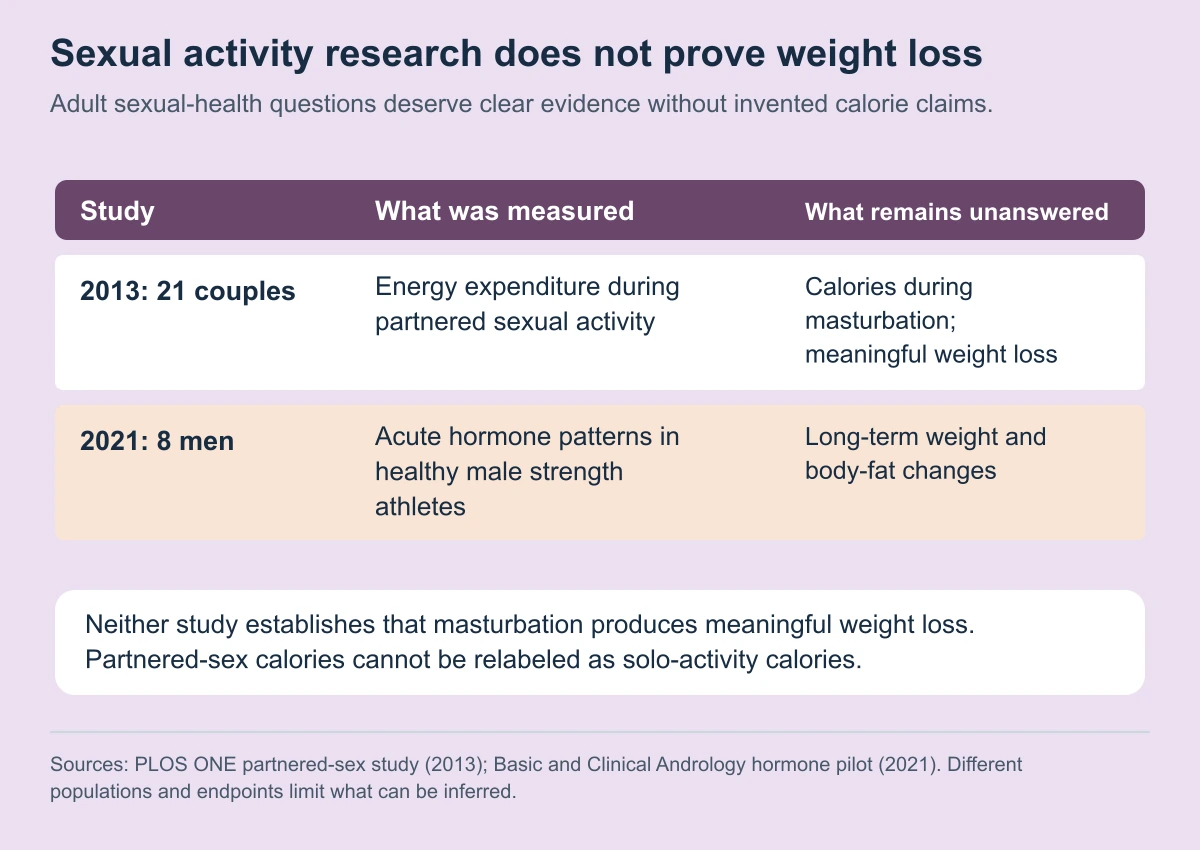
A 2013 study included 21 young heterosexual couples from the Montreal region. Researchers estimated energy expenditure during partnered sexual activity using a wearable armband and compared it with an endurance-exercise session.
Average energy expenditure during the partnered activity was about 101 calories for men and 69 calories for women in that selected study. Those numbers described the studied encounters; they were not measurements of masturbation, universal values for sexual activity, or a prescription for losing weight. Original PLOS ONE study.
The study’s population and methods matter. It did not establish a long-term body-fat change caused by masturbation, and its group averages do not tell an individual what a particular orgasm burned. Using those numbers to build a masturbation calorie calculator would extend the evidence beyond the question measured.
Why is a calorie estimate different from a weight-loss effect?
An estimate of energy used during one activity is only one part of a much larger picture. Long-term weight is affected by food and drink intake, activity patterns, sleep, health conditions, medicines, and other factors. An activity’s energy cost alone does not establish how the complete pattern changes.
There is also a difference between a short-term scale change and body-fat change. The amount of water, recent food intake, and the time of weighing can affect the number. A lower number after an activity does not identify the tissue or fluid responsible.
NIDDK describes overweight and obesity as involving multiple factors. Its overview does not identify masturbation as a weight-loss treatment. Our calorie-intake guide explains why estimates should support a nourishing, realistic plan rather than become a rigid way to compensate for food. NIDDK weight overview.
Does having an orgasm help reduce belly fat?
The reviewed evidence does not establish targeted abdominal-fat loss from an orgasm. A claim about a brief hormone response, a feeling of relaxation, or an energy estimate is not a measurement of where body fat changed.
You do not need to turn sexual activity into exercise accounting to justify enjoying it. It can be part of an adult’s private life without being a body-composition intervention. Likewise, choosing not to masturbate does not mean that you are missing a required weight-management tool.
If abdominal or overall weight changes concern you, focus the review on the actual pattern and health context. Our balanced-meal guide offers a practical starting point for food choices without promising that one behavior will control body fat.
Does masturbation change testosterone?
A 2021 pilot study examined acute hormone patterns after masturbation in healthy young men. Eight male strength athletes completed the study. Researchers compared conditions and measured total testosterone, free testosterone, cortisol, and related ratios over a short period.
Some free-testosterone patterns differed from the control condition, but the study did not establish stronger long-term muscle growth, fat loss, or a weight-management benefit. The authors called for larger studies. Original hormone pilot.
An acute hormone measurement is different from diagnosing a lasting hormone deficiency or demonstrating the effect of repeated activity over months. The selected male athletes also do not represent every adult, every age group, or women. It would be inaccurate to treat this pilot as proof that masturbation raises or depletes hormones in a clinically important way for everyone.

Does frequent masturbation mean you need TRT?
No. A sexual-behavior frequency is not a diagnosis of low testosterone. Fatigue, low desire, erectile difficulties, or body-composition concerns can have several explanations and deserve an appropriate assessment when persistent.
The Endocrine Society guideline recommends diagnosing hypogonadism in men only when relevant symptoms or signs accompany unequivocally and consistently low testosterone. It recommends confirming the diagnosis with a repeated morning fasting total-testosterone measurement. Endocrine Society guidance.
Our low-testosterone symptoms and testing guide explains that process. CoreAge Rx’s TRT information page provides related service information, but masturbation, an isolated feeling after orgasm, or a weight concern does not establish eligibility for testosterone treatment.
Can masturbation cause weight gain in women?
The reviewed studies do not establish that masturbation causes sustained weight gain in women. The hormone pilot involved men, so it cannot be used to explain a woman’s weight change. The partnered-sex study measured short-term energy expenditure rather than an intervention causing weight gain or loss.
If weight changes coincide with a change in sexual activity, the coincidence does not prove that one caused the other. Review the broader timeline: medicines, appetite, sleep, activity, pregnancy-related circumstances when relevant, and other health changes.
Hormone-treatment questions also need their own assessment. Our menopause hormone-therapy guide explains why symptoms and clinical eligibility should be evaluated specifically rather than attributing a body change to masturbation or independently starting hormone treatment.
What if you are losing weight without trying?
Do not automatically attribute unexplained weight loss to masturbation. MedlinePlus advises contacting a healthcare provider when weight loss is unexplained, exceeds the amounts described in its guidance, or occurs with other symptoms.
It identifies loss of more than ten pounds, or 5% of normal body weight, over six to twelve months or less without an explanation as a reason for contact. A clinician may need to review appetite, digestive symptoms, medicines, stress, and other health questions. These numbers are not an instruction to wait if you are unwell or the loss is rapid. MedlinePlus unintentional weight loss.
Record when the change started and what else was happening. Persistent diarrhea, vomiting, marked thirst, substantial weakness, or another concerning symptom belongs in the review. The goal is to identify the cause rather than let a common sexual-health myth delay care.
Is masturbation normal, and is there a required frequency?
ISSM describes masturbation as a common and normal sexual activity. People can engage in it for pleasure, relaxation, or other personal reasons. The fact that it is common does not create a required frequency for health or weight management. ISSM clinical education.
The useful questions are whether the activity is voluntary, comfortable, and compatible with the person’s life and preferences. Avoid comparing yourself with a calorie-based or hormone-based schedule promoted online. Those schedules can turn a private choice into a performance target without an evidence-based reason.
If the activity feels compulsive, creates distress, interferes with work or relationships, or is linked to persistent shame, a qualified healthcare professional or sex therapist can help. Support should address the actual concern rather than impose a universal number.

What if the question is really about sexual function?
Difficulty achieving or maintaining an erection, persistent pain, or a change in sexual function is a separate clinical question from whether masturbation changes weight. A clinician can review the symptom, relevant conditions, medicines, and the circumstances in which it occurs.
CoreAge Rx’s 4Play page describes prescription erectile-dysfunction care involving a compounded preparation and clinician review. That is a service discussion for an appropriate clinical concern, not evidence that normal masturbation requires medicine or that the product treats weight loss. Follow the actual clinician’s evaluation and prescription rather than combining products based on an article.
Sexual wellbeing and body weight can be discussed together when a person has concerns about both. Their coexistence does not establish a single cause or make one treatment appropriate for every problem.
What is a more useful way to approach a weight goal?
Start with the goal, health context, eating pattern, movement you can maintain, sleep, and any medicine or medical condition affecting the picture. Our food-noise and cravings guide can help separate persistent food thoughts from the idea that every appetite experience needs to be suppressed.
When prescription weight-management care may be appropriate, CoreAge Rx’s semaglutide information offers a starting point for discussing available treatment and eligibility. A clinical assessment is different from promising weight loss through sexual activity.
Masturbation can remain a personal adult choice without a calorie assignment or body-fat promise. The evidence discussed here does not establish it as a meaningful weight-loss treatment, and unexplained weight or sexual-function changes deserve attention on their own terms.
Educational information for adults; individual treatment decisions require a qualified clinician. Sources reviewed September 30, 2026. Original AI-generated article images depict fictional people and objects, not patient outcomes. Other editorial images are illustrative. Graphics summarize the cited sources.