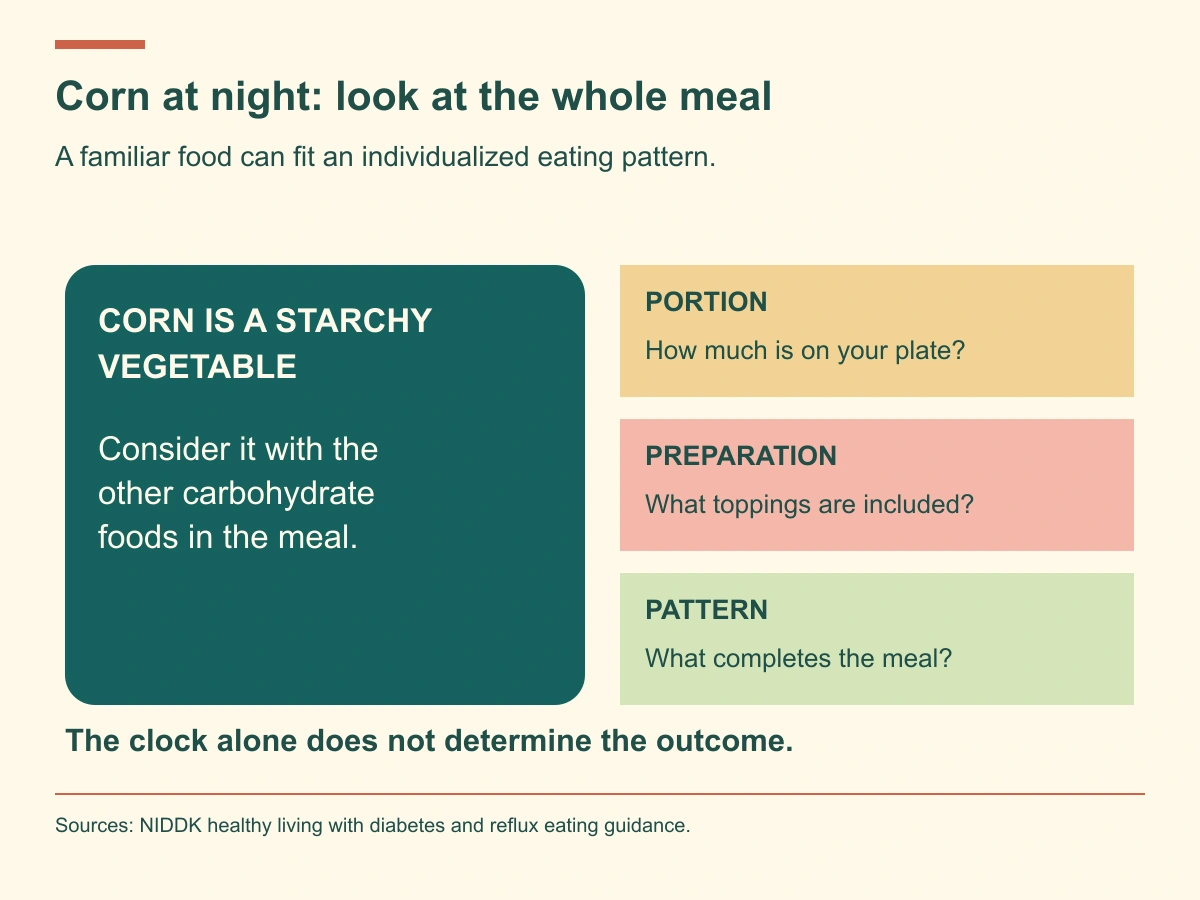
You can include corn in an evening meal while working on weight management. There is no established hour when corn becomes fattening, and there is no special time to eat it that guarantees weight loss. Portion, preparation, the rest of the meal, and your individual health needs are more useful considerations than the clock alone.
Corn also needs to be identified correctly in the question. A serving of sweet corn, a large bowl of buttered popcorn, corn chips, and sweetened cornflakes are different foods. They should not share one nutrition verdict simply because they all contain corn.
Is corn a vegetable or a carbohydrate?
For meal planning, NIDDK places corn among starchy vegetables. It supplies carbohydrate, so it is useful to consider it alongside other starches in the meal rather than treating it as interchangeable with every nonstarchy vegetable. Having carbohydrate does not make a food incompatible with weight management. NIDDK healthy living with diabetes
The practical distinction is about the plate. If dinner already includes a large portion of rice, bread, or potatoes, adding corn changes the total meal. If corn is the main starch beside protein and nonstarchy vegetables, the meal has a different balance. Neither plate can be judged from the word “corn” alone.
You do not need to remove a familiar, affordable food just because a diet list labels it “high carb.” Ask how it fits your own eating pattern. For a broader discussion of food variety and fiber sources, see food fiber versus supplements.
Does eating corn at night cause weight gain?
The sources reviewed for this guide do not establish a corn-specific nighttime effect on weight. A late meal can have practical consequences for comfort, sleep, or blood glucose management, but that is different from proving that corn eaten after a certain hour turns into more body fat.
NIDDK recommends individualized meal timing for people with diabetes, taking medicines, activity, work schedules, and health conditions into account. A person working an evening shift may have a very different dinner time from someone who starts work early. A single online cutoff ignores those differences. NIDDK meal-planning guidance
Consider why the late meal happens. Is it a planned dinner after work? A snack because lunch was too small? Repeated grazing while watching television? Those situations suggest different changes. Moving an otherwise unchanged meal earlier may not address the actual issue, especially if the earlier meal is followed by additional unplanned food later.
Avoid treating one late dinner as a setback that needs to be corrected by skipping the next day’s meals. Look at the pattern across days, how you feel, and whether the plan is manageable. If you need help setting an appropriate intake, use an individualized assessment rather than an arbitrary nighttime rule.
Build an evening meal around the whole plate
One meal-planning approach described by NIDDK uses nonstarchy vegetables for half the plate, protein for a quarter, and a carbohydrate food for the remaining quarter. It is a starting framework, not a requirement that every meal look identical or a personalized prescription for everyone. NIDDK plate-method guidance
For example, corn could accompany fish, tofu, beans, poultry, or another protein choice along with vegetables you enjoy. A mixed dish might combine corn with beans, peppers, tomatoes, and a protein ingredient. The amount of each ingredient and the overall portion still matter; adding a vegetable name does not automatically make any recipe suitable for every person.
Use a serving bowl or plate when it helps you see the amount. Eating directly from a large shared container makes it harder to describe what you had, which can complicate a food-log discussion with a dietitian. The goal is useful information and a satisfying meal, not making each bite a test of willpower.
If you are hungry soon afterward, assess the meal rather than automatically blaming corn. Was the portion appropriate? Did it include protein and a variety of foods? Were you trying to compensate for a missed lunch? Our protein breakfast ideas can help with an earlier meal if an inconsistent start to the day contributes to evening hunger.

Preparation changes the food you are evaluating
Plain boiled, steamed, or grilled corn differs from corn prepared with generous amounts of butter, cheese, creamy sauces, or sweet coatings. Those additions can be enjoyable, but they belong in the description of the meal. “Corn” is not enough information to estimate what a restaurant side or casserole contains.
You can choose seasonings and toppings that suit your preferences and medical needs. Try a smaller amount of a rich topping alongside herbs or other flavors if that makes the dish satisfying for you. There is no requirement to eat corn dry, nor a need to regard one topping as a moral failure.
For packaged products, compare the portion you plan to eat with the label’s serving. Check the complete ingredients and nutrition information rather than relying on claims such as “made with corn” or “whole grain” alone. Different brands and preparation methods may produce very different dishes.
| Corn-containing food | What to check | Helpful meal-planning question |
|---|---|---|
| Sweet corn on the cob or kernels | Portion and toppings | What other starches are on the plate? |
| A corn-and-bean salad | Dressing, ingredients, and overall serving | Does this work as a side or part of the main meal? |
| Popcorn | Added oil, butter, sugar, and portion | Am I having a planned snack or eating from a large container? |
| Corn chips | Label, serving, and dips | How does the whole snack fit my needs? |
| Cornflakes | Cereal portion, added sugar, milk, and additions | Is this the meal or snack I intended to have? |
If your question is specifically about cereal, the cornflakes at night guide addresses that food separately. Its preparation and usual accompaniments differ from a serving of sweet corn at dinner.
Evening reflux is a separate timing issue
If you get reflux after dinner or when lying down, timing can matter for symptoms. NIDDK notes that eating meals at least three hours before lying down may help people with nighttime reflux. This is not a rule that everyone must stop eating at a certain hour to lose weight. NIDDK reflux guidance
Look at the whole dinner and evening routine, including meal size, richer toppings, other foods, and how soon you lie down. Personal triggers vary. Keeping a brief food-and-symptom record may make it easier to explain the pattern to your clinician than eliminating every food eaten on a bad night.
Persistent symptoms, trouble swallowing, recurrent vomiting, or significant pain should not be handled solely by moving corn earlier. Discuss them with a qualified professional. Our best time to drink tea guide makes a similar distinction between beverage timing for comfort and unsupported weight-loss timing claims.
What if corn causes bloating or discomfort?
Notice the serving, preparation, accompanying foods, and timing of symptoms. A very large mixed meal gives you several possible explanations, and one uncomfortable evening does not establish an intolerance to corn. Reducing a portion or choosing a simpler preparation may make your observations easier to interpret.
Do not respond to bloating by adding several supplements or a laxative tea without understanding the problem. That can introduce new symptoms and make it harder to identify what is happening. The fiber supplement bloating guide explains why changes to fiber intake and digestive tolerance deserve individual attention.
If symptoms persist, recur with many foods, or limit what you can eat, bring the pattern to your care team. The question may be broader than whether a single food belongs in an evening meal. Severe or worsening abdominal pain, repeated vomiting, or inability to keep fluids down needs prompt assessment.

If you have diabetes or use a GLP-1 medicine
Corn contributes carbohydrate, and the amount may be relevant to your glucose plan. The right meal pattern depends on your treatment and personal targets. Insulin and some medicines that increase insulin release can cause low blood glucose when meals are delayed or skipped. Avoid removing a planned carbohydrate portion without understanding how that affects your regimen. NIDDK diabetes eating guidance
If semaglutide or tirzepatide reduces your appetite, review overall intake and tolerance with the care team. Feeling full after a small amount does not by itself show that your daily nutrition is adequate. Persistent nausea, vomiting, or difficulty eating warrants follow-up rather than a more restrictive food list.
CoreAge Rx tirzepatide information describes its assessment-based service for people exploring treatment. Ask the team about the exact preparation, instructions, and follow-up. Medication decisions require an individual evaluation; a corn meal or its timing does not determine whether a medicine is appropriate.
Frequently asked questions
What is the best time to eat corn for weight loss?
There is no established corn-specific weight-loss time. Choose a meal or snack time that fits your hunger, schedule, medicines, and digestive comfort. Assess the portion and meal around it before changing the clock.
Can I eat boiled corn for dinner?
Boiled corn can be one part of dinner. Consider what else you are eating and whether the meal provides a useful balance for your needs. Corn alone is not a complete weight-management plan.
Is frozen corn different from fresh corn for this purpose?
The form alone does not decide whether it fits. Check whether the product is plain or includes a sauce, then consider the portion and preparation. Convenience can make a workable eating pattern easier to maintain.
Is it better to skip corn if I already had rice?
You can include more than one carbohydrate food, but the combined amount matters. You might choose smaller portions of each or make one the main starch. A dietitian can help if you need a specific carbohydrate plan.
Will corn undo my progress if I eat it late once?
A single meal does not define the entire pattern. Resume your usual plan, assess any symptoms, and avoid compensating with extreme restriction. If late eating is a recurring concern, address the schedule and meal structure that lead to it.
What should I change first?
Start with the detail that is clearest: a very large portion, a topping you use without measuring, missed daytime meals, or lying down soon after dinner. Choose one practical adjustment and see whether it improves the routine. You do not need to ban corn to make a useful change.
Educational information for adults; individual treatment decisions require a qualified clinician. Sources reviewed October 5, 2026. Original AI-generated article images depict fictional people and objects, not patient outcomes. Other editorial images are illustrative. Graphics summarize the cited sources.