Peach tea can be an enjoyable drink, but the name does not establish a weight-loss benefit. An unsweetened peach-flavored tea, a peach herbal infusion, and a bottled sweet tea can have very different ingredients, sugar amounts, and caffeine content. Start with the drink you actually buy or prepare.
The most realistic benefit may be practical: choosing an unsweetened drink you like can make it easier to replace a sugar-sweetened beverage. That is a change in the overall eating pattern, not evidence that peach flavor burns fat or makes a drink equivalent to eating whole fruit.
What counts as peach tea?
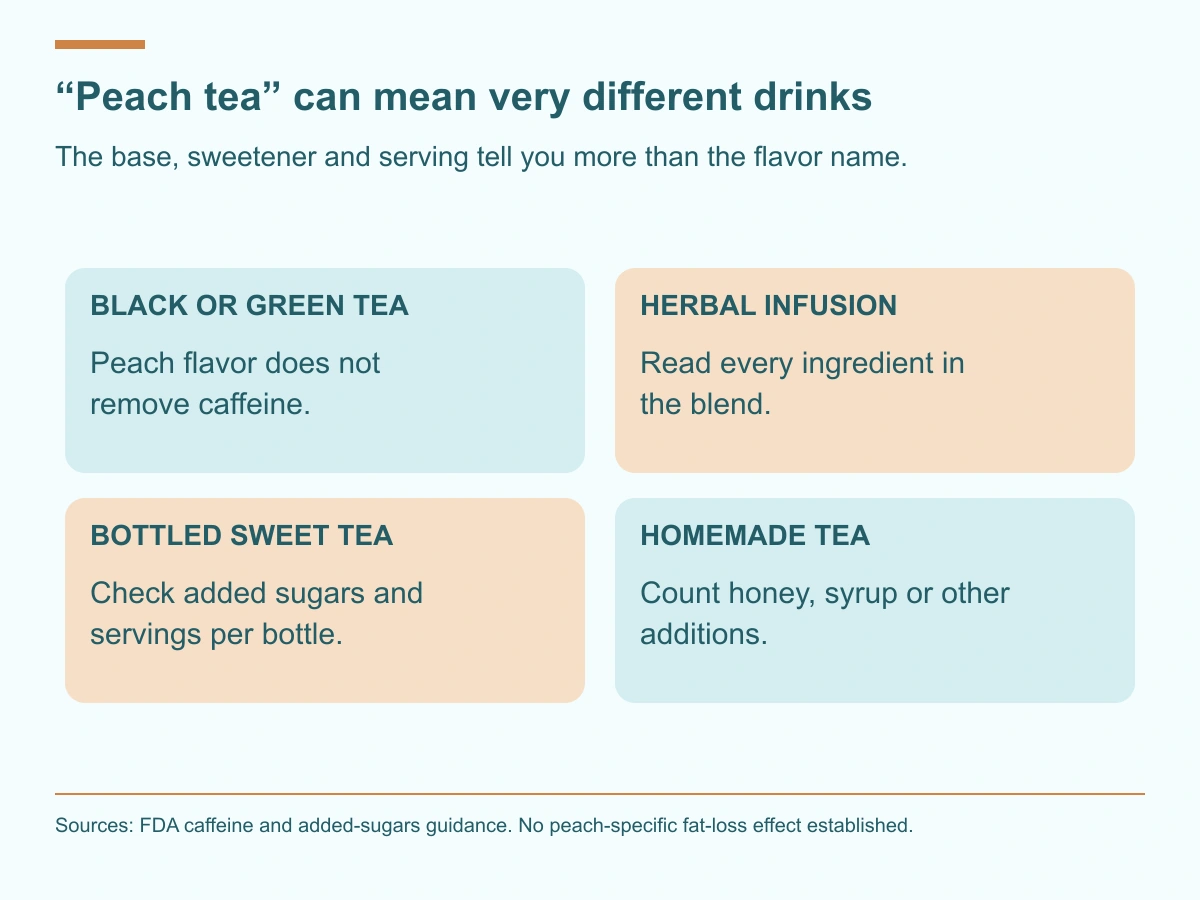
“Peach tea” is a flavor description used for several kinds of products. Some are black or green tea with peach flavoring or fruit ingredients. Others are herbal blends without conventional tea leaves. A café may use brewed tea and syrup, while a bottled product may have a separate recipe and serving size.
Check the complete ingredient list rather than inferring the contents from a peach illustration. The words on the front can tell you the intended flavor while leaving important questions unanswered: which tea base, how much added sugar, whether sweeteners are present, and how large the container is.
These distinctions also explain why one person’s experience does not apply to every peach tea. A caffeine-free infusion before bed is different from a large black-tea drink, even when both taste fruity.
| Type of peach drink | What to check | A common mistaken assumption |
|---|---|---|
| Peach-flavored black or green tea | Tea base, added ingredients, sweetening | Fruit flavor means there is no caffeine. |
| Peach herbal infusion | Every herb and whether tea leaves are included | All herbal blends have identical effects. |
| Bottled peach sweet tea | Serving size, servings per bottle, added sugars | One bottle always equals one label serving. |
| Café peach iced tea | Syrup, portion size, sweetener options | A tea-based drink must be low in sugar. |
| Homemade peach tea | The brewed base and everything added | Honey or syrup does not count because it is natural. |
Is peach tea good for weight loss?
No peach-tea-specific fat-loss effect is established by the sources reviewed for this article. The drink’s role depends on its ingredients and how it fits into your usual pattern. An unsweetened version can be a reasonable beverage choice, while a heavily sweetened version may contribute more added sugar and energy than expected.
NIDDK includes unsweetened tea among drinks with little or no added sugar that can fit a healthy eating plan. It also emphasizes food choices, portions, timing, activity, sleep, and individual needs. It does not identify peach tea as a treatment for obesity. NIDDK healthy-living guidance
Think about the substitution. Replacing a regular sugary drink with unsweetened tea changes one source of added sugar. Adding tea to an otherwise unchanged routine is a different action. Neither guarantees a particular amount of weight loss, because the rest of the eating pattern and other factors still matter.
For a related comparison, our sweet tea versus soda guide focuses on actual ingredients and serving amounts rather than the health image of a beverage category.
Read the whole container, not just the large calorie number
Start with serving size and servings per container. Then look at total sugars, added sugars, and the amount you plan to drink. A label’s nutrient numbers refer to its stated serving; they may not describe the whole bottle if it contains more than one serving. FDA label-reading guidance
For a hypothetical example, a drink labeled with 12 grams of added sugar per serving would provide 24 grams if you consumed two of those servings. That is arithmetic, not a claim about a particular peach-tea brand. Checking the actual bottle avoids comparing one product’s full container with another product’s partial serving.
Also notice whether a café’s nutrition information applies to a particular size and standard recipe. A different size, extra syrup, or a custom preparation can change the comparison. If the recipe is unclear, ask the retailer instead of using a generic internet tea entry as an exact measurement.
Does honey make it a healthier weight-loss drink?
Honey contributes added sugar when used to sweeten a beverage. The same principle applies to syrup and table sugar. A sweetener’s source does not remove its contribution to the drink. FDA’s added-sugars guidance includes honey and syrups in the added-sugar category.
That does not mean a small amount of sweetener makes a drink forbidden. It means the amount belongs in an honest description of what you drink. You can decide whether to use less, choose an unsweetened version, or keep a preferred sweetened drink in a portion that fits your plan.
If you are accustomed to very sweet tea, a gradual change may feel more practical than a sudden switch you dislike. Compare the resulting drink by taste, convenience, and actual ingredients. “Natural” is not a substitute for reading the label.
Is peach tea the same as eating a peach?
A peach-flavored beverage should not be assumed to provide the nutrition of a whole peach. Flavoring can be present without a meaningful amount of fruit, and a filtered drink is a different food from the fruit itself. Even when real peach pieces are used, the recipe and whether you eat the fruit matter.
A picture of a peach on a bottle therefore does not establish its fiber content. Read the label for the actual nutrients rather than using the image as a fruit-serving claim. If you want fruit as part of a meal or snack, choosing the fruit itself is a separate decision from choosing a flavored drink.
Our balanced-meals guide explains how different food components contribute to a meal. A beverage can be pleasant and useful without needing to replace fruit, protein foods, or other nourishment.

Does peach tea contain caffeine?
It depends on the base. Black and green tea generally contain caffeine; a peach flavor does not remove it. Some herbal infusions are caffeine-free, while blends may include tea leaves or other caffeine-containing ingredients. Read the whole ingredient list and any caffeine statement.
FDA notes that caffeine amounts vary among products and serving sizes. It also explains that decaffeinated tea can still contain some caffeine. If a precise limit matters for your health, ask the manufacturer or retailer about the actual product. FDA caffeine guidance
For most adults, FDA cites 400 milligrams a day as an amount not generally associated with negative effects, but that is not a personal target or a guarantee for every adult. Pregnancy, medications, medical conditions, and individual sensitivity can require different advice. Our decaf tea guide explores that distinction further.
Morning, afternoon, or evening?
There is no established peach-tea drinking time that produces a special weight-loss effect. Choose a time that fits your routine, caffeine tolerance, and medical needs. If an evening drink interferes with sleep, checking the tea base and total caffeine intake is more useful than assuming fruit flavor makes it a bedtime beverage.
FDA lists sleep disruption, palpitations, anxiety, stomach upset, and other symptoms among possible effects of too much caffeine. Consider all sources, including coffee, energy drinks, supplements, and medicines. FDA caffeine guidance
If reflux is a problem, track the drink and the circumstances rather than removing every tea automatically. NIDDK notes that caffeine and some other foods can trigger GERD symptoms for some people, and recommends discussing personal triggers with the clinician. NIDDK reflux guidance
The best-time-to-drink-tea guide addresses the broader timing question without treating a clock time as a fat-loss prescription.
What about hydration?
Enjoying a drink can make a regular fluid routine easier, and unsweetened tea can be one option within a suitable plan. It should not be used to suppress persistent hunger or replace meals. Someone who has been advised to limit fluids should follow that individualized guidance.
If you feel unwell, a flavored drink is not automatically the right response. Repeated vomiting, very little urine, marked dizziness, or inability to keep fluids down can require medical assessment. Tea does not establish that dehydration has been corrected, and a sweetened drink is not a universal substitute for a clinician’s treatment plan.
For ordinary daily choices, compare the drink you will realistically use. Water, unsweetened tea, and other suitable options can coexist. There is no need to drink unusually large volumes because an online recipe promises faster results.
Peach tea while taking semaglutide or tirzepatide
A flavored tea does not make a GLP-1 medicine work better, replace a dose, or establish a safe treatment combination. The relevant questions are the drink’s ingredients, caffeine, sugar, your symptoms, and whether you are eating and drinking adequately.
A joint nutrition advisory for GLP-1 care emphasizes nutritional adequacy, hydration, and preservation of muscle and function. A person whose appetite is greatly reduced should not rely on tea instead of meals. If nausea or early fullness makes nutrition difficult, discuss it with the care team.
Our semaglutide nausea guide covers symptoms that may need review. For information about an assessment-based service, see CoreAge Rx semaglutide care. Confirm the preparation and individualized plan; the beverage choice does not determine whether a medicine is appropriate.

A simple homemade approach
Start with a tea or infusion whose ingredients you understand and prepare it according to its package directions. Decide separately whether to add fruit or sweetener. Keep the amount and the final serving easy to describe so you know what is in the glass.
If you add peach slices for flavor, enjoy them as a food if appropriate for you. Do not assume that a brief infusion has transferred all the fruit’s nutrients into the water. If you use a concentrated syrup, measure the amount you normally add at least once to understand the recipe better.
This is a beverage-preparation framework, not a medicinal recipe. There is no evidence-based “fat-burning” dose, steeping time, or fasting schedule for peach tea in the sources reviewed here.
Frequently asked questions
Is unsweetened peach tea better than sweetened peach tea?
It generally avoids the added sugar used to sweeten the drink, but check the actual product. The best choice also depends on taste, caffeine tolerance, medical needs, and what you will drink consistently. A label comparison is more informative than a blanket claim that every tea is healthy.
Does cold peach tea work differently for weight loss?
Cold temperature does not establish a special weight-loss benefit. Compare the same ingredients and serving amounts. Iced drinks can be large or heavily sweetened, but neither feature is required by the word “iced.”
Can I drink it every day?
That depends on the complete ingredients, amount, caffeine, added sugar, and your health needs. It can be part of a routine without becoming a treatment. Repeated symptoms or a relevant medical condition deserve an individual discussion.
What is the easiest useful change?
Identify one drink you have regularly, read its full label or recipe, and decide whether a lower-sugar version fits your preferences. That gives you a concrete choice to evaluate without relying on a peach-tea weight-loss promise.
Educational information for adults; individual treatment decisions require a qualified clinician. Sources reviewed October 7, 2026. Original AI-generated article images depict fictional people and objects, not patient outcomes. Other editorial images are illustrative. Graphics summarize the cited sources.