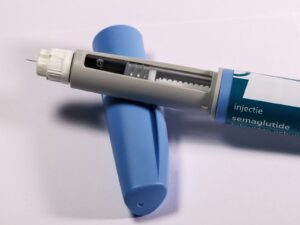
Creatine can be considered for a strength-training goal during weight loss, but it is not a fat-burning supplement. Its best-established role concerns repeated, high-intensity exercise. Whether it is useful for you depends on your training, food intake, tolerance, and medical situation.
Keep three goals separate
Losing fat, maintaining or gaining strength, and watching scale weight are related but different goals. Creatine can affect muscle water, so an early scale increase may occur even when your broader plan is unchanged. That makes the number harder to interpret, not proof that fat loss has stopped.
The NIH exercise review explains the performance evidence. The creatine evidence review discusses water-related changes. Neither establishes that a particular creatine product guarantees muscle preservation during a calorie deficit or during GLP-1 treatment.
Protect the basics of the plan
Review whether meals provide adequate protein and overall nourishment, and whether resistance exercise is appropriate and sustainable. A very restrictive eating pattern can make recovery difficult. Adding a powder does not fix an eating plan that leaves you consistently weak, lightheaded, or unable to train.
If appetite is reduced by medication, discuss practical meal sizes and food choices with your care team. Our GLP-1 nutrition guide covers the broader eating context, while creatine versus protein clarifies what each supplement supplies.

Measure progress in more than one way
Track a few repeatable strength or function measures, such as controlled repetitions at a familiar resistance. Note energy, recovery, and how often you complete your planned sessions. Compare similar conditions rather than testing a maximum effort every day.
If weight tracking is part of your care plan, record the date you start creatine. Use a trend and review unexplained changes with your clinician. The water-weight article explains why an early change should not trigger abrupt food or fluid restriction.
Do not add an unproven treatment promise
It is reasonable to discuss creatine as an optional exercise supplement. It is not reasonable to claim that it prevents all muscle loss from semaglutide, tirzepatide, aging, or weight reduction. Those claims would require evidence about the specific population, intervention, and outcome.
Keep prescription decisions with your prescriber. Creatine does not change medication eligibility, replace follow-up, or justify ignoring persistent fatigue or poor intake.
Where Strong Suit may fit
Strong Suit’s pictured label supplies 5 g creatine monohydrate per daily scoop. If your clinician agrees it fits your plan, follow the current directions and review your other supplements for overlap. You do not need to increase the amount because your goal is weight loss.
Set a follow-up point to review tolerance and training progress. A useful supplement routine should support the plan you can maintain, while leaving adequate attention for meals, movement, sleep, and medical care.

Distinguish a fat-loss plan from a performance-support decision
A weight-loss plan concerns the overall balance of food intake, activity, health circumstances, and treatment when prescribed. Creatine addresses a different question: whether supporting repeated, high-intensity exercise fits your training goal. Those decisions can coexist without turning creatine into a fat-loss treatment.
This distinction prevents a common expectation problem. Someone may start creatine hoping that the scale will drop faster, then become discouraged by an early increase related to muscle water. The product was being judged against an outcome it was not established to deliver.
Before starting, write down why you are considering it. “I want to support a consistent resistance routine while following my care plan” is a clearer goal than “I want the powder to speed up weight loss.” A specific goal helps you choose useful measures and avoid reacting to every scale fluctuation.
Review the parts of the plan that directly support training
Resistance exercise should be appropriate to your abilities and sustainable alongside the rest of your life. If the program is too demanding to repeat, a supplement will not make the schedule workable. Consider access to equipment, recovery time, joint limitations, and whether professional guidance would help.
Meals also need attention. Reduced appetite can make it easier to eat less, but it can also make adequate protein and overall nourishment harder to maintain. A small intake that repeatedly leaves you weak, lightheaded, or unable to complete ordinary activities deserves review with your care team.
Creatine does not provide a meaningful protein serving or replace a meal. If you are unsure which need is most pressing, compare a few typical days of eating with your clinician or dietitian. The creatine versus protein article explains why the two products should not be treated as interchangeable muscle supplements.
Build a progress record with more than one column
| Measure | What it helps answer | What it cannot establish alone |
|---|---|---|
| Weight trend, when appropriate | Is total body weight changing over time? | Exactly how much fat or muscle changed |
| Familiar strength exercises | Is performance stable or progressing? | That a supplement caused the result |
| Session consistency | Is the activity plan realistic? | Whether food intake is adequate |
| Meal pattern and symptoms | Is eating manageable and comfortable? | A complete nutritional assessment |
| Clinical follow-up | Does the plan fit current health needs? | A guarantee of a particular timeline |
The point is not to measure everything every day. Select a few useful observations and review them together. A single number can be misleading when several parts of the plan are changing at once.
A worked example of an early scale change
Imagine a person starts a daily creatine routine while continuing a prescribed weight-management plan and two regular strength sessions each week. During the first part of the routine, their weight rises somewhat. They have not noticed new swelling, significant symptoms, or a major change in food intake.
That observation deserves context rather than an immediate conclusion that fat loss has stopped. They can record the supplement start date, keep measurements reasonably consistent if weighing is part of the plan, and discuss the trend at follow-up. Training performance and tolerance provide additional information.
If the change is rapid, unexplained, or accompanied by symptoms, the next step is clinical advice rather than assuming it is expected muscle water. The water-weight guide explains why both overreaction and automatic reassurance can be unhelpful.
Do not overstate the evidence during GLP-1 treatment
Creatine research supporting exercise performance does not automatically establish that a particular product prevents all muscle loss during semaglutide or tirzepatide treatment. A claim about that outcome would need evidence that matches the population, intervention, and measurement.
The same caution applies to promises about medication tolerance. Creatine is not a treatment for persistent nausea, constipation, dehydration, or inadequate food intake associated with a treatment plan. Those issues belong in a discussion with the prescriber and relevant nutrition professionals.
Tell your care team when you add a supplement. Keep prescription decisions, dose changes, and symptom management with the prescriber. An optional exercise supplement should support a coordinated plan rather than becoming a separate set of instructions that conflicts with treatment.
Choose a review point and a reason to continue
A review after several weeks can focus on whether the routine is consistent, comfortable, and relevant to your goal. Bring the actual product label and a short record of training and symptoms. If the product is difficult to tolerate, discuss that directly instead of assuming discomfort must be accepted to protect muscle.
Cost and convenience are also legitimate considerations. A supplement that complicates an already demanding routine may not be the best priority. Adequate meals, appropriate exercise, and clinical follow-up deserve continued attention whether or not you use creatine.
If you continue, keep the serving aligned with the current product directions and count overlapping ingredients in other products. A weight-loss goal does not establish a need to exceed the label or repeat loading phases.
Frequently asked questions
Can creatine burn fat directly?
It should not be presented as a fat-burning supplement. Its better-established role is in supporting certain exercise efforts. Fat-loss outcomes depend on the broader plan, and a creatine serving does not replace that plan.
Should I stop if the scale rises slightly?
A small early change can have several explanations, including muscle water. Review the timing and context, and discuss unexpected changes with your clinician. Symptoms, rapid changes, or an unexplained pattern deserve attention rather than an automatic rule to continue or stop.
Can I skip protein foods if I take creatine?
No. Creatine and dietary protein have different roles. If appetite makes protein-containing foods difficult to fit in, seek a practical nutrition plan. Adding creatine does not supply the missing protein or other nutrients.
Is a higher dose needed during a calorie deficit?
Do not increase intake on that assumption. Follow the product label and individualized professional advice. A change in body-weight goal does not by itself establish a different creatine requirement or make extra servings more effective.
Explore Strong Suit™
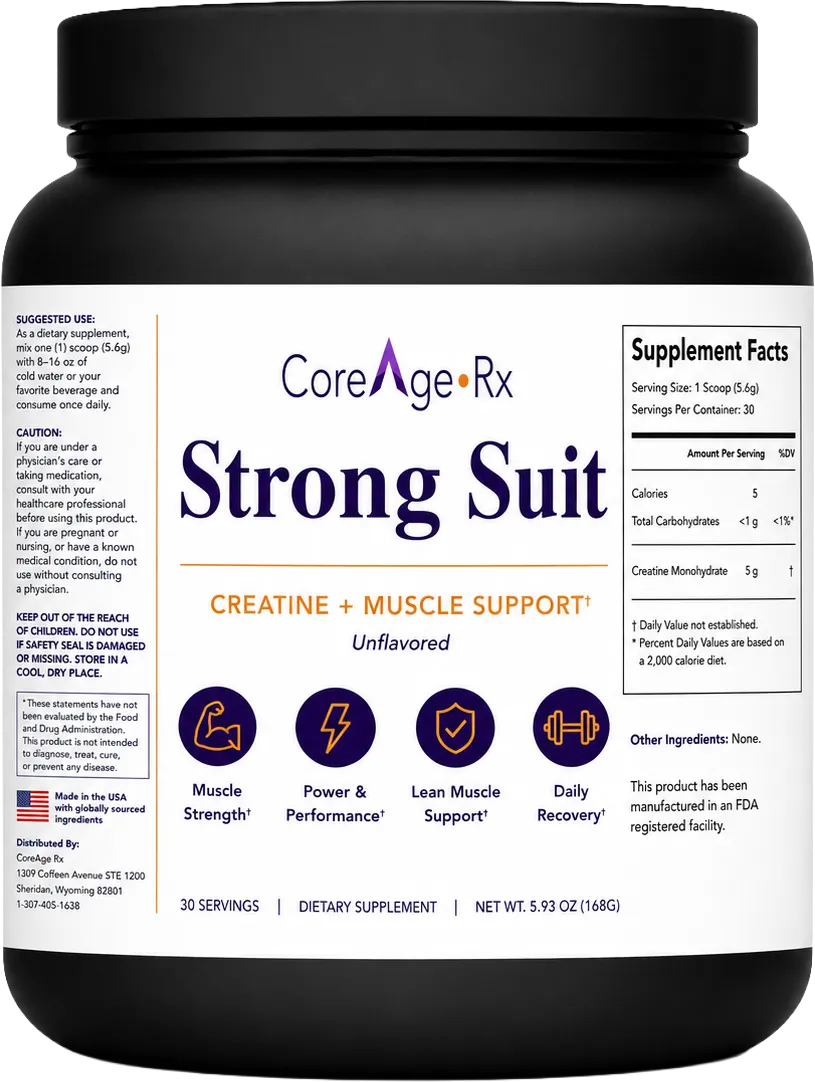
Strong Suit is CoreAge Rx’s unflavored creatine monohydrate powder. The pictured label lists 5 g creatine per scoop and 30 servings. See the current Strong Suit™ page and check the bottle you receive before use.
Related reading
- Creatine Monohydrate: Benefits, Dosing, and What to Expect
- Creatine and Water Weight: What the Scale Can Tell You
- Creatine vs. Protein Powder: Different Jobs, Different Needs
- Nutrition during GLP-1 treatment
Educational information, not individualized medical advice. Product information and linked research checked September 15, 2026. Ingredient research does not establish identical effects for a finished supplement.