
Creatine monohydrate can support strength and repeated, high-intensity exercise when it is paired with training. It works by increasing the muscle’s supply of creatine, which helps replenish energy during short bursts of effort. It is not a stimulant, and one serving should not feel like a cup of coffee.
If you are considering a daily supplement, start with three questions: what activity are you trying to improve, what amount does the label actually provide, and can you maintain the routine? Those questions are more useful than choosing the longest ingredient list.
Where the evidence is strongest
The clearest uses involve activities such as resistance training and repeated sprints. Creatine can help someone do more work during training, which may contribute to better strength and lean-mass gains over time. Responses vary. A benefit in a study of trained adults does not guarantee the same change in every person or every workout. The NIH exercise-supplement review describes these uses and their limits.
Creatine does not replace the training stimulus. It also does not provide the protein, calories, or range of nutrients that a meal supplies. If your workouts are inconsistent or your food intake is inadequate, addressing those basics is part of the same plan.
Daily use versus a loading phase
Two common research approaches build muscle creatine stores at different speeds:
| Approach | Typical research pattern | Practical difference |
|---|---|---|
| Daily intake without loading | About 3–5 g a day | Stores rise gradually over several weeks |
| Loading, followed by maintenance | About 20 g a day in divided portions for 5–7 days, then 3–5 g a day | Faster initial increase, with more servings to manage |
These are descriptions of study protocols, not instructions to exceed your product’s label. Loading is optional. The review of common creatine questions explains why a lower daily intake can also increase stores. See the separate loading-phase guide before deciding whether speed matters for your situation.

What to track
Choose two or three repeatable measures: the weight you lift with controlled form, repetitions at a familiar load, and how consistently you complete planned sessions. Compare similar workouts. A particularly good day can reflect sleep, meals, motivation, or training changes as well as supplementation.
The scale can rise early because creatine affects water held in muscle. That is different from gaining the same amount of fat. At the same time, every scale increase should not automatically be attributed to creatine. Record when you start, and interpret trends alongside symptoms and other changes. Our water-weight article explains this distinction.
Make the routine workable
Use the included scoop as directed, mix the powder with liquid, and choose a repeatable daily cue. Before-versus-after-workout timing has much less certain evidence than many advertisements imply; the timing review found the available comparisons limited and inconsistent. A routine you can follow is a sensible starting point.
If you have kidney disease, abnormal kidney tests, are pregnant or breastfeeding, or take medicines that affect kidney function, discuss use with your clinician first. Tell the person interpreting your blood work that you take creatine. Persistent stomach symptoms also deserve attention rather than a larger dose.
Where Strong Suit fits
Strong Suit is CoreAge Rx’s unflavored creatine monohydrate product. Its pictured label provides 5 g of creatine per scoop. The scoop’s total powder weight is 5.6 g; those two numbers describe different things. Use the current label rather than treating any generic scoop as a standard unit of creatine.
For a broader nutrition plan during medical weight management, pair this guide with our diet guide for GLP-1 treatment. Creatine is an optional addition to a food and training plan, and has not been established as a way to prevent all treatment-related muscle loss.

Understand the energy system before judging the results
Muscles use a molecule called ATP to power contractions. The body has several ways to replenish ATP, and the creatine–phosphocreatine system helps with short, demanding efforts. A set of challenging repetitions is a useful example: increasing available creatine may support the ability to repeat that effort. This is why creatine is discussed so often alongside resistance exercise, rather than as a replacement for everyday food energy.
That mechanism also explains an important limitation. A supplement can support a part of the training process without producing a noticeable sensation when you drink it. You may feel no immediate change at all. Tingling, a racing heart, or a sudden rush of energy are not measures of whether plain creatine is working. If a mixed pre-workout produces those sensations, other ingredients may be responsible.
The most useful comparison is between similar sessions over time. Suppose you normally complete three sets of an exercise at a particular load. A training log can show whether you gradually perform more controlled repetitions or progress the load. It cannot isolate the supplement’s contribution, but it gives you a more relevant outcome than how energized the first serving made you feel.
Match the supplement to the goal
Someone training for strength, someone trying to maintain function while losing weight, and someone looking for a replacement for breakfast have different needs. The first two may have a reason to discuss creatine within a larger plan. The third needs food: creatine supplies neither a complete meal nor a meaningful protein serving.
For a new lifter, technique and a repeatable program come first. For an experienced lifter, the question may be whether a simple supplement fits a training routine that is already established. For an older adult returning after a long break, appropriate exercise selection and medical limitations can matter more than the exact time a scoop is consumed. These differences should shape expectations, even when the product is identical.
A practical goal might be, “I want to complete my planned strength sessions consistently and track progress for the next two months.” A less useful goal is, “I want this powder to add a fixed amount of muscle by next Friday.” Research describes average outcomes under particular conditions; it does not turn a product into a personal timetable.
A four-part plan for getting started
First, record what is already in your routine. Include combination supplements, because a pre-workout or recovery product may already contain creatine. Check the amount per actual serving. Adding products without adding their ingredient amounts can unintentionally change the daily intake.
Second, choose a single daily cue. A regular meal is often easier to maintain than a workout cue when the training schedule changes. Put a checkmark in a calendar after the serving if there is a chance you will forget whether you already took it. More elaborate tracking is optional.
Third, decide how you will monitor tolerance. Note the serving, beverage, and any digestive symptoms. If symptoms appear, the answer is not automatically to take more, add a loading phase, or combine several new supplements. Keep the record simple enough to show a clinician if needed.
Fourth, choose a review point. After several weeks, review adherence, training progress, and whether the routine remains comfortable. A review is an opportunity to decide whether the product fits your needs. It is not a test you fail if your scale or lifting numbers do not match someone else’s results.
Read a product claim at three different levels
An ingredient claim asks whether creatine monohydrate has been studied for an outcome. A dose claim asks whether the amount in a serving resembles the amount relevant to that research. A finished-product claim asks whether the particular product has itself been tested. Those questions are related, but an answer to one does not answer all three.
For Strong Suit, the reviewed label allows a clear calculation of the creatine amount: one labeled scoop supplies 5 g. That is useful information. It does not establish that the finished product was used in every creatine trial, that every user will respond, or that all claims attached to other creatine products apply to it.
Look for clear ingredient amounts, directions, manufacturer information, and any verifiable testing documentation. A manufacturing statement should be interpreted according to what it actually says. For example, facility registration is not the same as FDA approval of a supplement’s effectiveness. The FDA’s supplement guidance explains this regulatory distinction.
Questions to take to a clinician or sports dietitian
Bring the bottle or a readable photograph of both label panels. Explain your training goal, current medicines, other supplements, and any kidney history. If laboratory tests are planned, say when you started creatine and how much you use. That context is more helpful than simply saying you take “a workout powder.”
Ask whether the plan fits your health circumstances, which outcomes are worth tracking, and what symptoms should lead you to stop. If you are losing weight under medical supervision, also ask how the supplement fits with protein intake and resistance activity. The discussion should focus on your whole plan rather than assuming a supplement resolves an underlying nutrition gap.
Frequently asked questions
Is creatine the same as protein?
No. Protein provides amino acids used for many body functions, including building and repairing tissue. Creatine has a different role in rapid energy availability. Some people use both, but one does not replace the other. Compare them in the creatine versus protein guide.
Do I need to feel stronger immediately?
No. Increasing muscle stores and adapting to training take time. An absence of an immediate sensation is expected and does not justify a larger serving. Use comparable training records and a consistent routine when evaluating progress.
Can I take it only on days when I exercise?
Follow the product’s directions. Strong Suit is labeled for daily use, and maintenance routines commonly include non-training days. The rest-day guide explains how that differs from using a pre-workout only before selected sessions.
Explore Strong Suit™
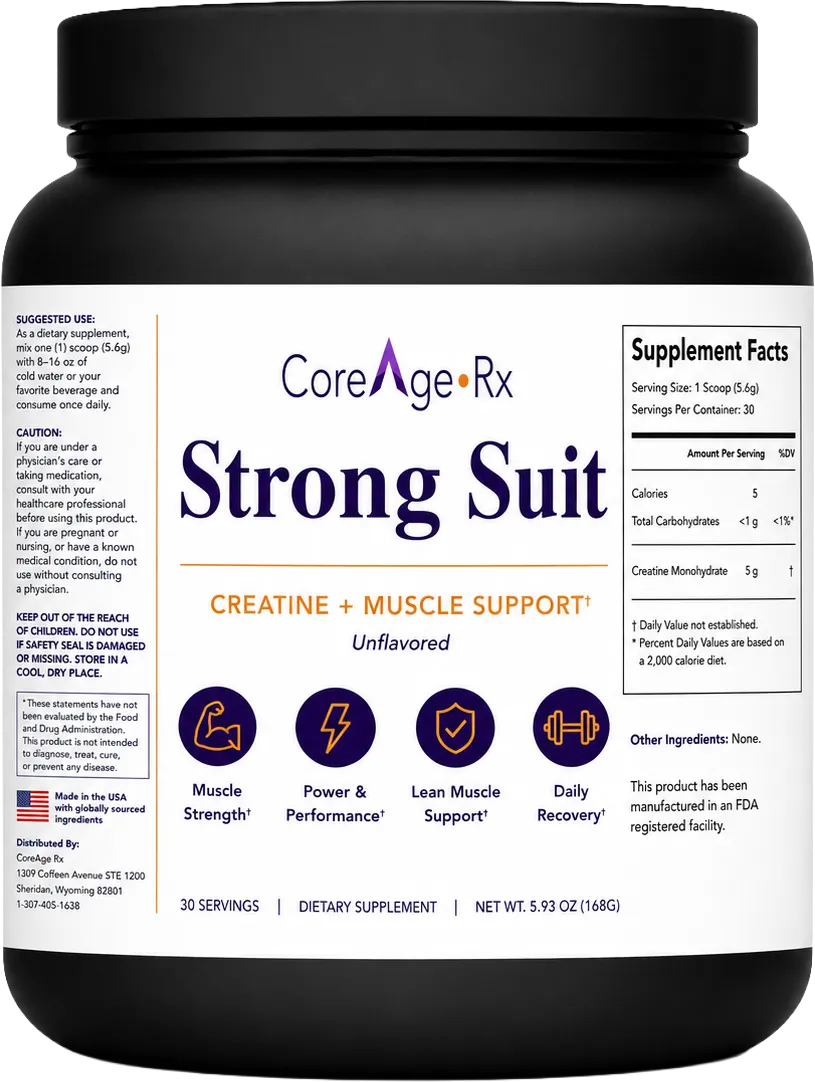
Strong Suit is CoreAge Rx’s unflavored creatine monohydrate powder. The pictured label lists 5 g creatine per scoop and 30 servings. See the current Strong Suit™ page and check the bottle you receive before use.
Read the complete creatine series
- How Much Creatine Should You Take Per Day?
- Do You Need a Creatine Loading Phase?
- When Is the Best Time to Take Creatine?
- Should You Take Creatine on Rest Days?
- How Long Does Creatine Take to Work?
- Creatine and Water Weight: What the Scale Can Tell You
- Creatine for Women: Strength, Dosing, and Common Questions
- Creatine After 50: How It Fits With Strength Training
- Creatine vs. Protein Powder: Different Jobs, Different Needs
- How to Mix Creatine Without Overcomplicating Your Routine
- Creatine and Bloating: Water Retention vs. Stomach Upset
- Creatine and Kidney Health: What to Discuss Before You Start
- Creatine During Weight Loss: Strength, Muscle, and Scale Changes
- How to Choose a Creatine Supplement and Read the Label
- Nutrition during GLP-1 treatment
Educational information, not individualized medical advice. Product information and linked research checked September 15, 2026. Ingredient research does not establish identical effects for a finished supplement.