
“Creatine bloating” can describe two different experiences: an early water-related weight change or digestive symptoms such as abdominal fullness, gas, or diarrhea. Distinguishing them helps you choose a sensible next step. Persistent pain should not be dismissed as an expected sign that a supplement is working.
Start with what you are noticing
| Observation | Useful question |
|---|---|
| Higher scale weight without abdominal discomfort | Did this begin after starting or loading creatine? |
| Loose stools after a large serving | How much creatine was taken at one time? |
| Gas after a new shake | What else is in the drink? |
| Severe or persistent pain | Does this need medical assessment now? |
The creatine evidence review distinguishes water-related effects from common misconceptions. Our water-weight article explains why the scale alone cannot identify digestive bloating.
Serving size can matter
In a small trial of male soccer players, a single 10 g serving was associated with more diarrhea than two separate 5 g servings. The trial report supports paying attention to the amount taken at once. It does not show that every person will tolerate a given amount or that symptoms always come from creatine.
Strong Suit’s pictured directions call for one daily scoop, providing 5 g creatine. Taking several scoops to start faster exceeds that routine. If you have been using a self-designed loading plan, discuss it rather than assuming you need to push through the discomfort.

Check the rest of the routine
Look at pre-workouts, protein shakes, sweeteners, caffeine, milk, and other supplements used around the same time. A newly introduced drink can contain several possible triggers. Changing all of them at once makes cause and effect hard to interpret.
Write down the product, serving, drink, meal timing, and symptoms. This short record can help a clinician or dietitian review what changed. Avoid repeatedly taking another serving to “test” a product if the previous reaction was significant.
When to pause and get help
Stop the supplement and seek advice for persistent diarrhea, repeated vomiting, worsening pain, or symptoms that interfere with eating and drinking. Severe abdominal pain, blood in stool, faintness, or signs of dehydration need prompt medical attention. Do not assume every new symptom is harmless water retention.
People with kidney disease or other medical conditions should discuss supplementation before restarting. The kidney-health guide explains a different set of considerations that stomach symptoms alone cannot assess.
A calmer restart decision
If a clinician considers another trial reasonable, agree on the product, labeled amount, beverage, and what would make you stop. The goal is a tolerable routine with a clear purpose. The mixing guide can help keep preparation simple; it cannot guarantee that a product will suit everyone.

Describe the symptom before choosing a solution
“Bloating” is often used for a tight abdomen, visible distension, gas, a higher scale reading, or simply feeling unusually full. Those experiences are not interchangeable. A useful first step is to describe what you actually notice, where you notice it, and how it affects your day.
For example, a slightly higher weight without pain is a different observation from loose stools soon after a large drink. A painful, distended abdomen is different again. Writing down the specific experience helps prevent a generic online explanation from replacing attention to the symptom itself.
Include the timing, but do not treat timing as proof of cause. A symptom beginning after a new supplement makes the supplement relevant to the review. It does not establish that creatine is the only possible explanation, especially if the routine changed in several ways at once.
Review the complete drink, not just the headline ingredient
A “creatine shake” may contain milk, a protein powder, fruit, sweeteners, caffeine, and another supplement. Each ingredient and the total volume can matter to comfort. If you began the whole recipe at once, the label on the creatine tub cannot explain everything in the glass.
Write the recipe down with actual amounts. Check whether the protein or pre-workout already contains creatine. Note if you used a larger-than-directed scoop or added another portion because powder settled. These details can reveal a preparation or intake issue that is easy to miss when the routine is described only by its name.
Do not remove prescribed medicines or several major food groups as an unsupervised experiment. If symptoms are persistent, a clinician or dietitian can help decide what information matters and whether a limited, appropriate change is reasonable. Significant reactions should not be repeatedly reproduced to satisfy curiosity.
Use a short symptom record
| Record item | Example of useful detail |
|---|---|
| Product | Exact name and a label photograph |
| Serving | Actual amount used, including other creatine sources |
| Beverage | Water, milk, shake ingredients, and approximate volume |
| Timing | With a meal, after training, or another clear cue |
| Symptom | Gas, pain, diarrhea, fullness, or another specific observation |
| Course | When it began, how long it lasted, and whether it is worsening |
A record is useful because memory often blends several episodes together. It should support a review, not delay care. If symptoms are severe or concerning, seek help promptly rather than waiting to collect a complete week’s data.
Understand what the serving-size study does and does not say
The soccer-player trial comparing a single 10 g serving with two 5 g servings suggests that the amount taken at once can affect diarrhea risk under those study conditions. It is a reason to pay attention to large single servings, not a universal explanation for every digestive complaint.
The study population was specific, and the result does not guarantee that every person will tolerate 5 g or that dividing any product is the correct response. It also does not show that increasing intake through discomfort improves long-term outcomes. Research should narrow a question, not be used to dismiss symptoms outside the study.
For Strong Suit, begin with what the reviewed label actually directs: one daily scoop supplying 5 g creatine. A self-designed loading routine is a different exposure. If you have been taking several scoops, bring that detail into the clinical discussion instead of describing the routine as ordinary label-directed use.
Recognize when the problem is no longer a mixing question
Repeated vomiting, persistent diarrhea, worsening abdominal pain, or difficulty keeping fluids down calls for medical advice. Severe pain, blood in stool, faintness, or signs of significant dehydration deserve prompt attention. The correct response is not to keep adjusting the flavor or liquid volume while assuming the cause is harmless.
New swelling or reduced urination raises a different concern from ordinary gas. Do not use the phrase “water weight” to explain those symptoms away. Tell the clinician about creatine and all other products, but allow the assessment to consider other causes as well.
If you have a medical condition, pregnancy-related considerations, or a complex medicine regimen, seek individualized guidance before restarting a supplement that appeared to cause a problem. A reassuring study in healthy exercising adults does not replace that assessment.
Decide whether a retry has a clear purpose
If a qualified clinician considers another trial reasonable, agree on what will remain consistent and what will change. That might involve a clearly identified product, the label-directed serving, a simple beverage, and a way to record symptoms. The plan should also specify when to stop and when to contact the clinician.
Avoid adding several other new supplements during the same period. A simpler routine is easier to interpret. If the product remains uncomfortable or the original goal is not compelling, continuing is not mandatory. Exercise and nutrition plans can still move forward without forcing a particular supplement to fit.
Frequently asked questions
Is bloating proof that creatine is working?
No. Digestive discomfort is not a required marker of effective supplementation. Water-related changes in muscle and abdominal symptoms are different issues. You do not need to experience gas, pain, or diarrhea to obtain a potential training benefit.
Should I drink less liquid to avoid fullness?
Do not disregard the product’s mixing instructions. If the usual preparation is uncomfortable, review the routine with an appropriate professional. Reducing liquid without understanding the problem may fail to address the actual cause.
Will a different brand automatically solve it?
No. Products can differ in ingredients and preparation, but a brand change does not identify the source of symptoms or guarantee tolerance. Review the full panels and the circumstances of the reaction before assuming a new container is the complete answer.
Explore Strong Suit™
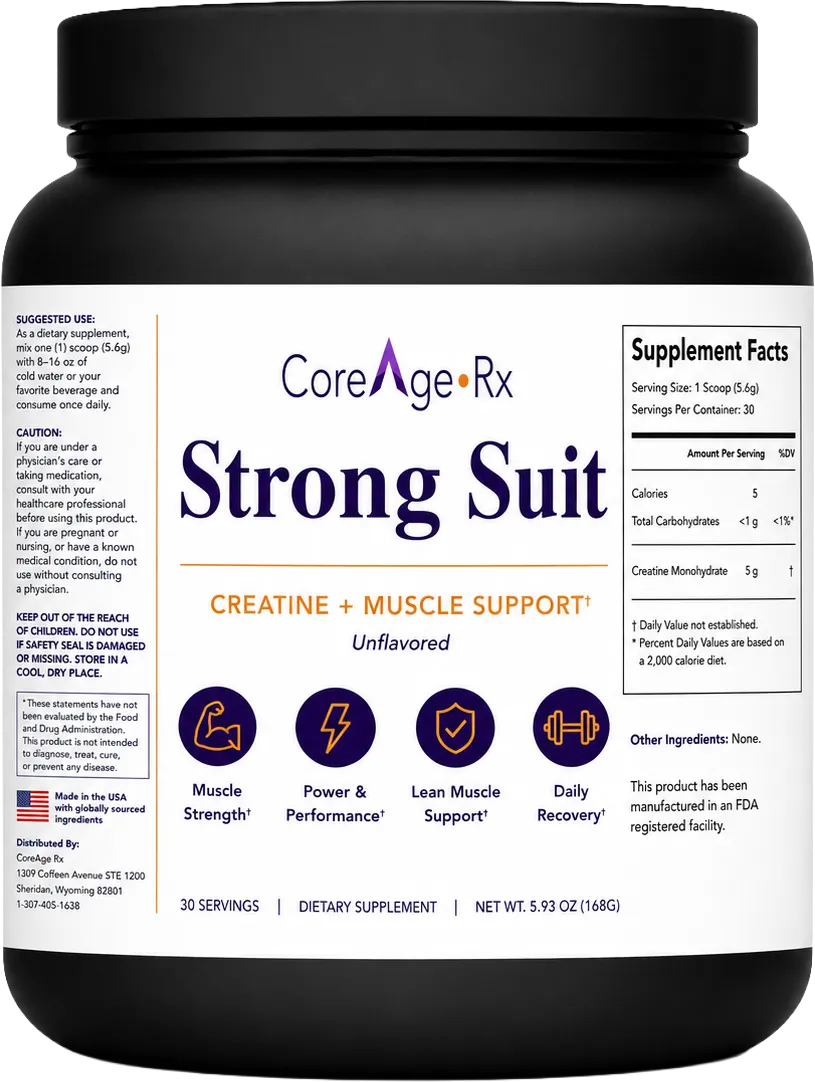
Strong Suit is CoreAge Rx’s unflavored creatine monohydrate powder. The pictured label lists 5 g creatine per scoop and 30 servings. See the current Strong Suit™ page and check the bottle you receive before use.
Related reading
- Creatine Monohydrate: Benefits, Dosing, and What to Expect
- Creatine and Water Weight: What the Scale Can Tell You
- How to Mix Creatine Without Overcomplicating Your Routine
- Nutrition during GLP-1 treatment
Educational information, not individualized medical advice. Product information and linked research checked September 15, 2026. Ingredient research does not establish identical effects for a finished supplement.