Mix creatine according to the product’s directions, using the labeled serving and enough liquid to drink it comfortably. You do not need an elaborate shake recipe. For Strong Suit, the pictured label specifies one scoop in 8–16 oz of cold water or a favorite beverage, once daily.
A simple mixing routine
- Start with a clean glass or shaker and the directed amount of liquid.
- Measure the serving with the product’s own scoop as instructed.
- Add the powder and stir or shake thoroughly.
- Drink it as part of the routine you chose, then wash the container.
These steps are about convenience and following the label. They do not create a special absorption advantage. Avoid swallowing a scoop of dry powder; a dry scoop is not the labeled way to use the product.
What if some powder settles?
Powders do not always make a perfectly clear drink. Stirring again or gently swirling the last portion can make it easier to finish. Do not add another scoop because a little sediment is visible. That can increase the amount without telling you how much you already consumed.
If the texture repeatedly makes the product hard to use, review the liquid amount and label directions. A different familiar beverage may be more comfortable. Keep your first changes simple so you can tell what helps.

Do you need juice or a protein shake?
No special drink is required by Strong Suit’s pictured directions. Some research has investigated taking creatine with other nutrients, but that does not establish a need to add a large amount of sugar. The creatine review discusses supplementation approaches, and the NIH review places them within overall nutrition.
Choose a drink that fits your meal plan and tolerances. If you use milk, a protein powder, or a smoothie, account for that drink’s ingredients separately. Creatine does not remove lactose, allergens, or calories from the beverage.
Keep storage separate from mixing
Use a dry scoop and close the tub after serving. Follow its cool, dry storage instructions. Avoid leaving an opened container in a hot car, damp bathroom, or steamy area near the stove. Do not treat a mixed drink as a way to store the remaining powder for days.
If you prepare a perishable shake, handle it according to the food ingredients’ storage requirements. The fact that it contains a shelf-stored powder does not make a milk-based drink safe at room temperature indefinitely.
Troubleshooting without stacking changes
If your stomach feels uncomfortable, check the creatine amount, any other supplements, and the drink itself. Our bloating and stomach-upset guide helps separate those possibilities. For a routine that is easier to remember, read when to take creatine; there is no need to chase a precise workout window.

Choose the container before adding powder
A glass and spoon can be sufficient for a simple drink. A shaker can be convenient when you want a lid for mixing or when the beverage also contains a compatible protein powder. Choose a container that is clean, large enough for the directed liquid, and easy to wash thoroughly afterward.
Check the lid and seal before shaking. A rushed routine often becomes messy because the lid is not fully closed or powder is caught around the threads. If using a glass, add the liquid first so the powder is less likely to remain packed against a dry bottom.
Keep the product’s scoop dry. Reaching into the tub with a wet spoon or damp scoop adds moisture to the stored powder. Measure over a clean, dry surface when practical, close the container promptly, and store it according to the current label.
Work through a basic Strong Suit preparation
Start with the reviewed label: one scoop, once daily, mixed with 8–16 oz of cold water or a favorite beverage. Choose an amount within those directions that you can drink comfortably. The smaller and larger liquid volumes change concentration and mouthfeel; they do not change the creatine amount if the powder serving stays the same.
Add the measured serving, stir or shake, and check whether powder remains in a clump. Stirring again may help distribute it. If a little powder settles while the drink stands, gently swirl it before finishing. Do not add a replacement scoop because the drink is not perfectly transparent.
When finished, wash the container, including the lid and any mixing insert. Leaving residue in a sealed shaker can make the next use unpleasant and harder to clean. A routine that includes cleanup is more sustainable than one that produces a pile of partly rinsed bottles.
Compare common beverage options
| Beverage | Why someone might choose it | What to consider |
|---|---|---|
| Cold water | Simple and consistent with the reviewed directions | Texture may be more noticeable without other ingredients |
| A usual flavored beverage | Familiar taste | Account for the beverage’s sugar, caffeine, or other ingredients |
| Milk or a milk alternative | Fits an existing meal or shake routine | Allergens, tolerance, and food-storage requirements still apply |
| A protein shake | Combines two separately chosen products conveniently | Check whether the protein product already contains creatine |
| A smoothie | Fits a planned meal or snack | Added ingredients change volume, nutrition, and texture |
The best option is a practical one that fits the label and your needs. A more complicated drink is not automatically a more effective delivery method.
Troubleshoot texture one change at a time
If the drink feels gritty, first review the amount of liquid and how thoroughly you mixed it. Try the other end of the label’s liquid range if that fits your routine. Changing the beverage may also change how noticeable the texture is, but keep the powder serving consistent.
If clumps repeatedly appear, check whether moisture has entered the tub or whether the scoop was damp. Inspect the product and follow manufacturer guidance if its condition seems unusual. Do not assume every change in appearance is harmless, and do not use a product past its expiration date simply because it still mixes.
If the problem is the total volume of a large shake, reconsider the recipe rather than adding more powder to a smaller amount of liquid without checking directions. For someone with low appetite, a simpler drink may be easier to fit around meals. The goal is a comfortable routine, not the thickest or most elaborate recipe.
Avoid three common preparation errors
Dry scooping: swallowing the powder directly is not the reviewed method of use. Follow the mixing directions. A social-media demonstration does not replace the instructions on the product.
Borrowing another product’s scoop: scoop size and powder density differ. A protein scoop is not a creatine measuring tool, and a teaspoon is not automatically equivalent to the included scoop. Read the ingredient amount and serving instructions together.
Stacking hidden creatine: a pre-workout, recovery drink, or combined powder may already provide creatine. Adding a standalone serving changes the daily total. The daily-dose guide shows how to count overlapping products without guessing at undisclosed blends.
Prepare for travel without losing the label information
Keeping the original container and scoop preserves the directions, lot information, and ingredient identity. If you need a smaller practical arrangement, keep the product clearly labeled and retain a readable photograph of the original panels. An unidentified white powder in an unmarked bag makes accurate preparation and troubleshooting harder.
Plan for the place you will mix it. Access to a clean container, water, and a way to wash the shaker matters more than recreating a complex home recipe. Avoid storing the powder in a hot car or damp area, and follow the manufacturer’s directions for any question about unusual storage conditions.
Frequently asked questions
Does more water dilute the effect?
Using a different liquid amount within the product directions changes the drink’s concentration, not the measured amount of creatine you added. Finish the prepared serving as directed. Do not add more powder merely because the drink tastes weaker.
Do I need a blender?
Not for a basic powder-and-liquid routine. A blender may be useful for a smoothie, but it adds equipment and cleanup. A clean glass or shaker is often sufficient for following the label’s simple preparation directions.
Can I prepare several days of milk-based shakes at once?
Follow food-storage guidance for the perishable ingredients and the product manufacturer’s preparation advice. A dry supplement’s storage instructions do not establish how long a mixed, perishable drink remains suitable. Preparing a fresh serving can be simpler than trying to infer a storage life.
What if mixing changes do not solve stomach discomfort?
Do not keep experimenting through persistent or severe symptoms. Pause and seek appropriate advice. The drink, serving amount, other supplements, or an unrelated condition may need review; texture alone cannot identify the cause.
Explore Strong Suit™
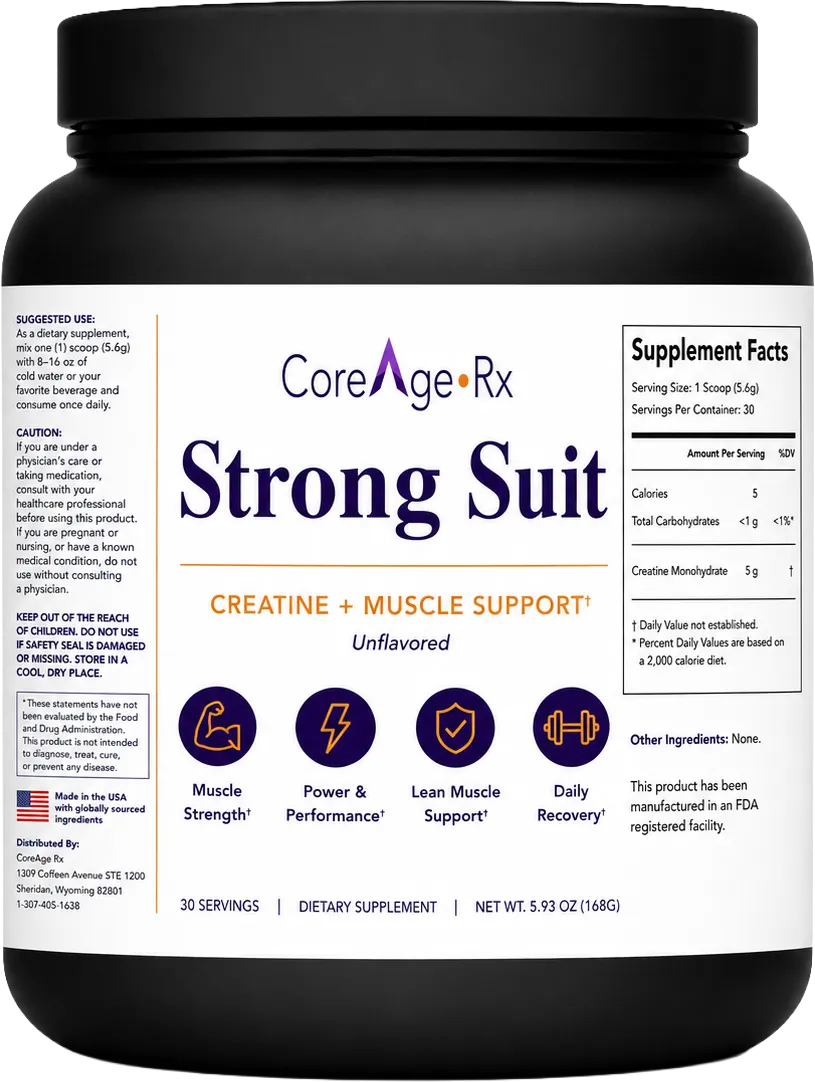
Strong Suit is CoreAge Rx’s unflavored creatine monohydrate powder. The pictured label lists 5 g creatine per scoop and 30 servings. See the current Strong Suit™ page and check the bottle you receive before use.
Related reading
- Creatine Monohydrate: Benefits, Dosing, and What to Expect
- When Is the Best Time to Take Creatine?
- Creatine and Bloating: Water Retention vs. Stomach Upset
- Nutrition during GLP-1 treatment
Educational information, not individualized medical advice. Product information and linked research checked September 15, 2026. Ingredient research does not establish identical effects for a finished supplement.