
Creatine and protein powder serve different purposes. Protein provides amino acids used to build and maintain tissues. Creatine helps support rapid energy availability during repeated, intense muscular effort. One is not a substitute for the other.
Compare the job before the container
| Question | Protein powder | Creatine monohydrate |
|---|---|---|
| What does it supply? | Dietary protein and its amino acids | Creatine |
| What need might it address? | A practical gap in protein intake | An exercise-performance goal |
| Does it replace a complete diet? | No | No |
| What label number matters? | Grams of protein per serving | Grams of creatine per serving |
The NIH exercise-supplement review covers both ingredients. A protein shake can be convenient when food-based protein is difficult to fit in, but many people can meet their needs through meals. Creatine is a separate decision about supplementation and training.
Start with your meals
Write down a few typical days of eating. Look for regular sources such as eggs, dairy, fish, poultry, meat, tofu, beans, or other foods that fit your preferences. A dietitian can help estimate whether intake meets your needs, especially during weight loss, illness, or intensive training.
If breakfast is routinely just coffee, adding creatine does not supply the protein or energy missing from that meal. Likewise, if you already meet your protein needs, adding more powder does not automatically make a creatine routine more effective.

Can they be used together?
Some people include both in a training plan. That does not mean everyone needs both or needs to take them in the same drink. Check the full labels for serving amounts, allergens, other active ingredients, and any overlap with products you already use.
A combined supplement can be harder to adjust because changing the serving changes several ingredients at once. Separate products can make the amounts easier to understand, although convenience and cost also matter. The creatine review provides context on the ingredient’s uses without establishing that a particular combination is necessary.
Where Strong Suit fits
Strong Suit is a creatine product, not a protein powder. Its pictured label lists 5 g creatine monohydrate per scoop and no other ingredients. Do not count that serving toward a dietary protein target simply because both supplements are associated with muscle.
If you want to combine it with a usual beverage, read how to mix creatine. Keep the labeled serving consistent and check that any pre-workout or recovery shake does not already contain creatine.
During medical weight management
When appetite falls, it can become harder to eat enough balanced food. Discuss your meal pattern with your care team and use our GLP-1 nutrition guide as a starting point. The creatine during weight loss article explains why strength goals, protein intake, and scale weight need to be considered separately.

Use a meal example to see the difference
Imagine breakfast is coffee and a piece of toast, and lunch is often delayed. Adding creatine to the morning drink does not turn that pattern into a protein-containing breakfast. The creatine may address a separate exercise goal, but the meal still needs to be evaluated for the nutrients and energy it supplies.
Now imagine someone regularly eats adequate protein through meals and wants support for a structured resistance program. That person may have a reason to consider creatine without needing a protein powder. The two decisions do not have to travel together simply because both products are sold in the same aisle.
A third person may find a protein shake convenient on busy days and also choose a clearly labeled creatine product. In that case, each has a defined job. The useful question is whether the combination fits the person’s actual needs, rather than whether buying both makes the routine look more complete.
Read the relevant number on each label
For protein powder, look at grams of protein per serving, the serving size, ingredients, and allergens. The total scoop weight is not necessarily the protein amount. Flavoring and other ingredients can make the powder serving heavier than the protein it supplies.
For creatine, look at the disclosed grams of creatine monohydrate. Strong Suit’s pictured label lists 5 g in a 5.6 g scoop. That is a creatine amount; it should not be added to a protein total. Shared use of the word “grams” does not make the two measurements nutritionally interchangeable.
For a combination product, locate both amounts separately. If the label uses a proprietary blend that obscures an amount you are trying to count, the comparison remains incomplete. Do not assume a large scoop or a muscular photograph on the container establishes an adequate amount of either ingredient.
Compare convenience, flexibility, and overlap
| Routine | Potential convenience | What needs attention |
|---|---|---|
| Food-based protein with separate creatine | Clear separation of meals and supplement use | Whether meals meet the person’s needs |
| Protein powder without creatine | Convenient protein when food is less practical | The powder’s protein amount and other ingredients |
| Separate protein and creatine powders | Each amount can be understood independently | Avoid accidentally adding creatine twice |
| A combined formula | Fewer containers to manage | Changing the serving changes multiple ingredients |
There is no universally best arrangement. A combined formula can be convenient but less flexible. Separate products can be clearer but require attention during preparation. Food can supply protein without a powder, although convenience, appetite, cost, and dietary preferences may affect the choice.
Consider the whole day’s eating pattern
A single shake cannot tell you whether a person’s overall protein intake is appropriate. Review typical meals and snacks across several days, including weekends and busy workdays. Identify where protein foods already appear and where meals are routinely missing or too small.
Examples of protein-containing foods include eggs, dairy foods, fish, poultry, meat, tofu, beans, and other legumes. The amount varies by food and portion, so a dietitian can help assess the pattern when a personal target is needed. The goal is to understand the actual routine rather than assume everyone needs another scoop.
During weight loss or reduced appetite, the issue may be maintaining adequate nourishment while meal sizes change. That deserves a practical food plan and, when relevant, clinical follow-up. Creatine does not remove the need to address low intake, persistent nausea, or difficulty eating regular meals.
Mixing both in one drink: a practical check
If both products fit your plan, first confirm that the protein powder does not already contain creatine. Then follow each product’s serving and preparation directions. Measure each with its own scoop rather than using the larger scoop for both.
Consider the rest of the drink. Milk, yogurt, fruit, nut butter, and sweeteners change the beverage’s ingredients, energy, texture, and potential allergens. Creatine does not make those features disappear. A very large shake may be inconvenient or uncomfortable for someone with low appetite, even when its ingredients seem individually reasonable.
If a new combination causes symptoms, record exactly what changed. A drink containing several new ingredients makes the cause harder to identify. Do not automatically blame creatine, protein itself, or “detoxing.” The creatine mixing guide and stomach-upset guide offer a more systematic starting point.
Evaluate results according to the product’s job
For a protein supplement, a useful question may be whether it helps you follow the meal plan or meet a dietitian’s recommendation comfortably. For creatine, the question may involve consistency and progress in repeated, high-intensity exercise. Neither product should be judged only by whether the first serving produces a noticeable sensation.
If training improves after changing meals, adding a shake, beginning creatine, and following a new program, you cannot assign the entire improvement to one change. The overall routine may still be useful. A clear record simply helps avoid exaggerated conclusions and unnecessary additions.
Frequently asked questions
Which should I buy first?
Start with the need you are trying to address. An inadequate meal pattern deserves attention before assuming a performance supplement will solve it. If food intake is already appropriate and the goal is a specific training outcome, creatine is a separate discussion. You may not need either product.
Can creatine count toward my daily protein?
No. Creatine grams and protein grams describe different substances. Strong Suit’s 5 g of creatine per labeled scoop should not be recorded as 5 g of dietary protein.
Is taking both automatically better for muscle?
No. More products do not establish a better plan. Training, adequate nutrition, individual needs, and tolerance matter. Use each product for a clear reason and account for ingredients already present elsewhere in the routine.
Do I need both immediately after exercise?
There is no reason to turn this comparison into a universal minute-by-minute schedule. Follow your nutrition plan and product directions. The creatine timing article explains why consistency is a more practical starting point than a rigid workout window.
Explore Strong Suit™
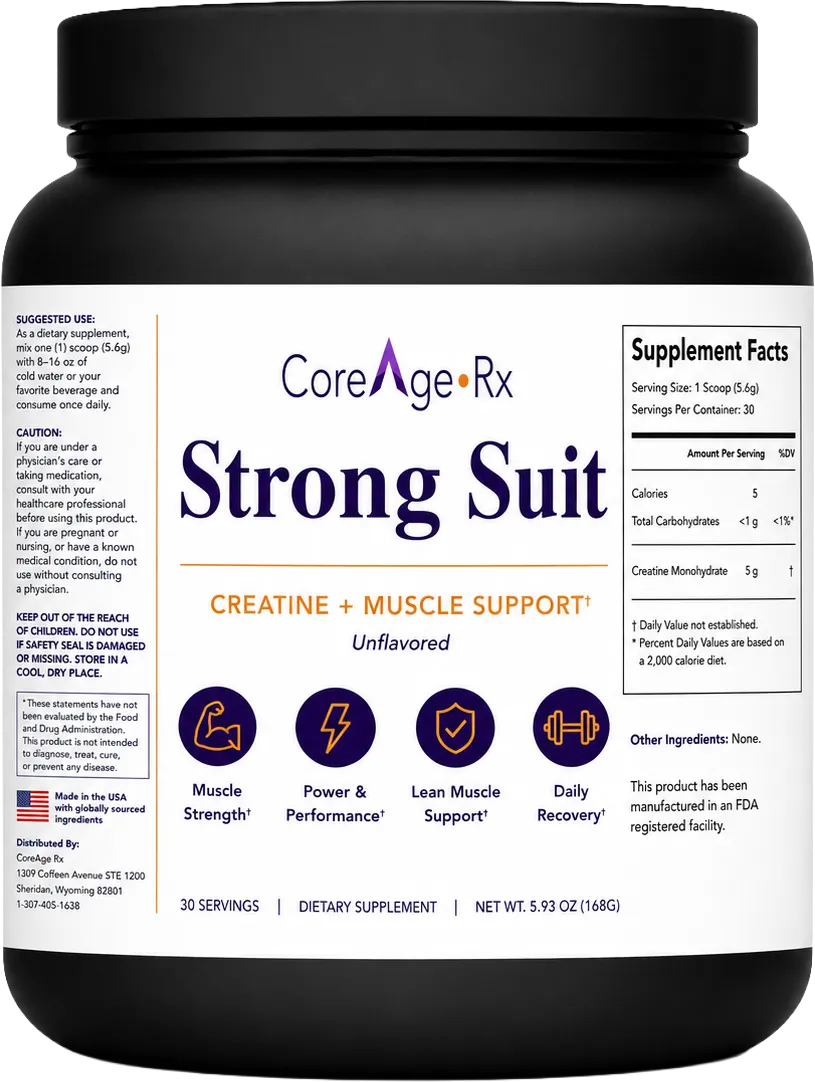
Strong Suit is CoreAge Rx’s unflavored creatine monohydrate powder. The pictured label lists 5 g creatine per scoop and 30 servings. See the current Strong Suit™ page and check the bottle you receive before use.
Related reading
- Creatine Monohydrate: Benefits, Dosing, and What to Expect
- How to Mix Creatine Without Overcomplicating Your Routine
- Creatine During Weight Loss: Strength, Muscle, and Scale Changes
- Nutrition during GLP-1 treatment
Educational information, not individualized medical advice. Product information and linked research checked September 15, 2026. Ingredient research does not establish identical effects for a finished supplement.