
People use the word “energy” to describe several different experiences: staying awake, concentrating, moving without unusual effort, or recovering after a demanding day. NAD+ participates in cellular energy metabolism, which makes it an understandable subject of interest. That biological role does not identify why a particular person feels tired or establish that an injection will solve the problem.
A useful evaluation begins with the symptom and its effect on daily life. This article explains how to describe fatigue, place NAD+ research in context, and create a follow-up plan that can distinguish a meaningful change from an unusually good day.
Describe the kind of tiredness
Fatigue and sleepiness can overlap, but they are not identical. Sleepiness is a tendency to fall asleep. Fatigue may feel like a lack of stamina or an unusually high effort to complete a task. Weakness can mean that a muscle cannot produce its usual force. Breathlessness is another distinct symptom that deserves its own description.
The MedlinePlus fatigue overview emphasizes the importance of the history. Instead of saying only “I have no energy,” describe whether you are falling asleep at your desk, struggling on stairs, needing breaks during basic chores, or finding routine mental work unusually demanding.
Also describe the pattern: sudden or gradual onset, constant or intermittent symptoms, morning or evening predominance, and recovery after rest. Those details help guide an assessment.
Build a timeline before choosing an explanation
Think back to when the change began. Note an illness, a new medication, a shift in work hours, reduced food intake, disrupted sleep, or a major increase in training. A timeline does not prove cause, but it gives the clinician better starting information than a list of possible supplements.
Include what has stayed the same. If you previously completed a familiar walk comfortably and now cannot, that comparison is useful. If the workload doubled, the change in tiredness has a different context.
Avoid treating normal aging as a diagnosis for every new symptom. Persistent or worsening fatigue deserves attention, especially when it differs from your usual response to activity.

Common contributors should remain in view
Sleep disruption, medication effects, mood concerns, low intake, anemia, thyroid disease, and other medical conditions can contribute to fatigue. Their relevance varies from person to person. A clinician can decide which possibilities fit the history and whether examination or targeted testing is appropriate.
This does not mean everyone needs a large laboratory panel. Testing is most useful when it addresses a specific clinical question. A result outside a reference interval needs interpretation, and a result within one does not invalidate a person’s symptoms.
Bring a complete medication and supplement list, including recent changes. Do not stop prescribed treatment on your own because fatigue appears on a side-effect list.
Sleep deserves more than an hours total
Time in bed and restorative sleep are different measures. Frequent awakenings, inconsistent schedules, loud snoring, witnessed pauses in breathing, or marked daytime sleepiness may change what needs evaluation. The NHLBI sleep overview explains why insufficient or disrupted sleep affects daytime function.
A short sleep record can include bedtime, waking time, awakenings, and daytime symptoms. It need not become an elaborate scoring system. The aim is to help the clinician understand a pattern.
If a person changes sleep habits at the same time as beginning a treatment, record both. Improvement may be real even when it cannot be attributed to a single change.
What NAD+ biology does and does not establish
NAD+ helps support reactions involved in producing usable energy inside cells. Feeling energetic is a whole-person outcome influenced by many systems. The step from a cellular mechanism to a noticeable clinical benefit requires testing in people with the relevant symptom.
A study showing a change in blood NAD-related metabolites does not necessarily show that fatigue improved. Likewise, a study in a particular disease population may not apply to otherwise healthy adults. The NAD+ evidence guide explains these levels of evidence.
This distinction allows scientific interest and realistic expectations to coexist. A plausible mechanism is a reason to investigate a treatment, while the outcome data determine how confidently a benefit can be described.

Current injection studies do not define a fatigue treatment protocol
The 2019 IV pilot characterized metabolite changes during and after an infusion. It did not establish a durable improvement in ordinary fatigue. The 2026 injection preprint adds early tolerance data, including small NAD+ groups, but does not establish a universal energy-response schedule.
Therefore, promises of a predictable boost within a few days or a fixed improvement by a particular month should be treated as expectations needing evidence. They should not become a reason to increase the dose or ignore an unresolved symptom.
A clinician may discuss treatment in an individual context, but the plan should make the evidence limits and the intended outcome explicit.
Post-exertional worsening changes the conversation
Some people become substantially worse after physical or mental activity and recover unusually slowly. This pattern can occur with conditions such as Long COVID or ME/CFS and deserves specific discussion. It should not be interpreted simply as a motivation problem or a reason to push harder.
The CDC’s Long COVID symptom guidance describes post-exertional worsening among possible symptoms. If this fits your experience, tell the clinician about delayed symptoms as well as how you feel during the activity itself.
An NAD+ product should not be presented as an established treatment for these conditions. Activity advice needs to fit the diagnosis and the person’s tolerance; a generic exercise challenge is not an appropriate substitute for assessment.
Choose a practical baseline
A baseline records what ordinary life looks like before a change. Select one or two tasks affected by fatigue, such as preparing dinner, completing a work block, or walking a familiar route. Record the effort, need for rest, and any symptoms afterward.
| Observation | Helpful detail |
|---|---|
| Daily function | What task became difficult and how often |
| Sleep | Usual schedule, awakenings, daytime sleepiness |
| Activity | Workload and any delayed worsening |
| Other changes | Illness, medication, food intake, or stress |
| Unwanted effects | Symptom, timing, severity, and duration |
The record should be simple enough to maintain. It is a communication tool, not a self-diagnostic test.
Look for a consistent, meaningful change
A better day can result from rest, a lighter workload, recovery from illness, or ordinary variation. Repeated observations under reasonably similar conditions are more informative. Consider whether you can do something useful more comfortably, rather than whether an energy score moved once.
Also include the burden of treatment. A perceived improvement may be less useful if it comes with persistent symptoms, complicated administration, or a cost that is difficult to sustain. Those are legitimate parts of the review.
Agree with the clinician on a follow-up point and a decision. The results-tracking guide explains how to avoid turning an open-ended trial into automatic refills without reassessment.
Include food intake and recent weight change
Changes in appetite, meal pattern, or body weight can help explain a change in stamina. Describe skipped meals, difficulty eating, persistent gastrointestinal symptoms, or a recent reduction in intake. This is particularly relevant when another treatment has changed appetite. The aim is to identify a care need, not to assume that a supplement or injection compensates for inadequate nutrition.
If you already receive weight-management care, share the fatigue concern with that team as well. Coordinated care can keep medication changes, nutrition support, and symptom assessment connected. Avoid adding multiple interventions at once without a clear reason; that makes both benefit and unwanted effects harder to interpret.
Know when the symptom needs quicker attention
New severe chest pain, substantial breathing difficulty, fainting, or sudden neurological symptoms require urgent medical attention. Severe weakness, confusion, persistent vomiting, or rapidly worsening symptoms also warrant prompt assessment according to their severity. Do not wait for an NAD+ consultation to address an emergency.
If an unexpected reaction follows an injection, explain the timing and identify the preparation. The side-effects article covers the information that helps the treating team evaluate it. Do not repeat a dose to test whether a severe reaction happens again.
Leave the consultation with a clear next step
The most useful outcome may be a targeted investigation, a change to an existing care plan, attention to sleep or intake, or a discussion of treatment options. Whatever is chosen, make sure the goal and review point are understood.
NAD+ biology can be part of that conversation without becoming the only explanation for fatigue. Starting with the symptom, documenting daily function, and reviewing the actual evidence produces a more useful plan than chasing a generalized promise of more energy.
Explore NAD+ Injectable
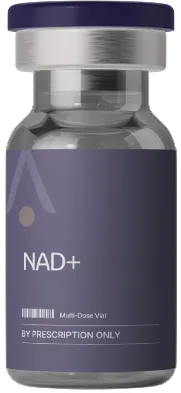
CoreAge Rx lists NAD+ Injectable as a provider-guided compounded treatment. The dispensed label must identify the concentration, route, and individual directions; clinical findings from another NAD+ preparation do not establish the same result for this product. Review the current NAD+ Injectable page and bring a complete medication and supplement list to the provider discussion.
Related reading
- NAD+ Injections: Evidence, Uses, and Questions to Ask
- NAD+ Injection Side Effects and Product-Quality Questions
- How Long Do NAD+ Injections Take to Work? Tracking Meaningful Changes
- NAD+ nasal spray versus injections
Educational information; your prescription and clinician’s instructions guide individual care. Product details and linked sources checked September 15, 2026. Studies of another preparation or delivery route do not establish identical results for a finished compounded product. Photographs are illustrative and do not show treatment outcomes.