
Understanding NAD+ injection side effects requires attention to the route, the preparation, and the timing of symptoms. A local sore spot is different from a generalized reaction, and symptoms during an IV infusion cannot automatically be assigned the same frequency after a subcutaneous injection.
The evidence is still developing. This guide explains what current reports can tell us, which information helps a clinician assess a reaction, and why product quality and handling belong in the same discussion as the active ingredient.
Identify the actual exposure
Begin with the name on the dispensed container, its concentration, the prescribed route, and when it was used. Include whether it was a new prescription, a refill, or a recently changed formulation. “NAD treatment” alone may refer to several different preparations.
Also identify anything used at the same time, such as another injected medicine, a supplement, or a new topical product at the injection area. These details do not establish causation, but they help prevent assumptions about the source of a symptom.
The label-reading guide explains the relationship between concentration, volume, and syringe markings. If those details are unclear, contact the pharmacy before another administration.
Local symptoms and systemic symptoms are different
A local reaction occurs around the injection site. It may involve discomfort, redness, bruising, or swelling. The amount of discomfort, whether it improves, and whether the affected area expands are relevant observations. A photograph with a time record can be useful for the treating team, without substituting for an examination.
Systemic symptoms affect the person more broadly. Examples include generalized flushing, marked nausea, severe chills, dizziness, or feeling faint. These should be described separately from a local sore spot.
Do not assume that a symptom is harmless because it appears in an online discussion. Severity, persistence, associated symptoms, and the individual’s health history determine the response.

What IV reports contribute
A 2026 retrospective NAD+ versus NR infusion study recorded gastrointestinal symptoms, increased heart rate, and chest pressure among NAD+ recipients during infusions. The report is useful as evidence of experiences observed under that protocol. It does not establish the expected frequency of each symptom with every NAD+ formulation.
The distinction between IV and non-IV use matters. Infusion conditions, rate, concentration, and monitoring differ from a prescribed subcutaneous or intramuscular injection. A symptom that resolved in a monitored study should not become advice to wait through chest pain at home.
Our route comparison explains why safety findings must remain attached to the intervention that produced them.
Small injection pilots leave important uncertainty
The April 2026 injection preprint reported preliminary short-term tolerance data, including very small NAD+ groups. The broader research program primarily concerned NR, and an NR-only trial should not be summarized as additional NAD+ safety evidence.
Small studies can help identify immediate experiences and improve future protocols. They cannot rule out uncommon harms or establish safety after months or years of use. Selected study participants may also differ from patients with complex medical conditions or multiple medications.
This is why a lack of serious events in a brief pilot is a limited finding. It should be discussed alongside the study size and duration rather than translated into “safe for everyone.”
The FDA alert addresses a separate quality concern
FDA has warned compounders about ingredients unsuitable for sterile preparations. The agency described awareness of food-grade NAD+ being used for IV products and reports of severe chills, shaking, vomiting, and fatigue following NAD+ injectable drugs, with some people requiring treatment. The reactions were consistent with excessive endotoxins.
Endotoxins are bacterial components that can cause harmful inflammatory reactions. Sterile-compounding quality is therefore more than a question of whether the ingredient name is correct. Appropriate materials, preparation, and controls are essential.
The alert does not prove that an individual prescription is contaminated, and it does not identify every reaction as an endotoxin reaction. It does establish that severe symptoms should not be dismissed as a routine “detox” response.

Use symptoms to guide the urgency of care
Severe chest pain, trouble breathing, fainting, or swelling affecting the mouth or throat require emergency assessment. Severe shaking chills, persistent vomiting, or rapidly worsening generalized illness after an injection also need prompt medical attention. Seek help based on the symptoms rather than trying to determine the mechanism yourself.
For a milder but persistent or worsening symptom, contact the treating clinician or pharmacist before changing the plan. Describe when it began, how long it lasted, and whether it is improving. Do not deliberately repeat a dose to reproduce a significant reaction.
If urgent care is needed, take the medication details or a photograph of the label when practical. Obtaining care should not be delayed to collect documentation.
A reaction record can make follow-up more useful
A short, factual record helps the team distinguish timing from speculation. It can also reveal whether a problem began with a new vial or formulation.
| Record | Why it helps |
|---|---|
| Product and dispensing pharmacy | Identifies the preparation and contact |
| Label concentration and route | Clarifies the intended exposure |
| Date and time used | Relates symptoms to administration |
| Symptom and duration | Describes the event without assuming cause |
| Lot or prescription information | Supports pharmacy investigation if needed |
| Other recent changes | Identifies possible contributing factors |
Keep the container and relevant packaging unless a healthcare professional instructs otherwise. Store it securely according to its label while awaiting advice, and prevent anyone else from using it.
Do not improvise a solution to burning or discomfort
Adding water, combining vials, changing injection depth, switching routes, or using another needle size without instruction can create new problems. A symptom may reflect several factors, and an online explanation does not establish which one applies.
Likewise, appearance alone cannot confirm that an injectable is safe. A clear liquid can still have a quality problem. Conversely, a visible change, damaged seal, or unexpected particles is a reason to contact the pharmacy before use.
The correct next step is to review the actual preparation and administration instructions with the dispensing team. The storage and travel article addresses temperature and handling questions that may arise around a shipment.
Basic injection practices remain important
Use the prescribed supplies and the technique taught for the actual route. The CDC’s injection-safety guidance emphasizes a new sterile needle and syringe for each injection and the importance of preventing contamination. Sharing equipment or reusing a syringe to enter a vial creates avoidable risk.
Used needles should go into an appropriate sharps container. The FDA sharps guidance explains safe disposal principles. Do not leave loose needles where household members, pets, or waste handlers could encounter them.
These practices support safer administration but do not make an unsuitable or contaminated preparation acceptable. Product quality and administration technique are complementary responsibilities.
Review medical history and the whole routine
The clinician needs to know about relevant medical conditions, previous reactions, pregnancy or breastfeeding, and other medicines or supplements. Evidence from selected healthy volunteers does not resolve safety for every clinical situation.
Avoid using a broad list of possible side effects to diagnose yourself or to stop an unrelated necessary medicine. The purpose of the review is to connect your symptoms and history to an appropriate action.
The NAD+ Injectable product guide outlines questions to ask before starting. A clear contact pathway and follow-up plan should be established before problems arise.
A refill is another opportunity to verify the plan
When a new supply arrives, compare its label and instructions with the current prescription. Check whether concentration, volume, device, route, or storage directions changed. A familiar product name can make a person overlook a meaningful difference in the preparation.
If symptoms began after a refill, provide the pharmacy with that detail without assuming the batch is responsible. It is one piece of information in the assessment. Keep records of the previous and current directions if available, and clarify any discrepancy before using the next dose. Never compensate for a suspected difference by adjusting volume from memory or by comparing the bottle with someone else’s prescription.
Report and reassess rather than normalize
The treating team can advise whether an event needs pharmacy investigation or reporting to FDA MedWatch. Reporting an event does not prove that a drug caused it, but it contributes information that may help identify patterns.
At follow-up, consider both the intended benefit and any unwanted effects. Continuing should be a clinical decision based on the overall picture, not an automatic response to a scheduled refill. A treatment’s biological rationale does not make persistent symptoms an acceptable price that every patient should simply endure.
Explore NAD+ Injectable
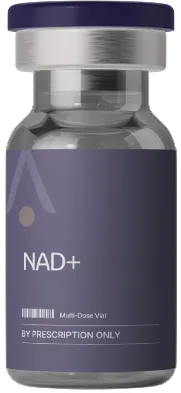
CoreAge Rx lists NAD+ Injectable as a provider-guided compounded treatment. The dispensed label must identify the concentration, route, and individual directions; clinical findings from another NAD+ preparation do not establish the same result for this product. Review the current NAD+ Injectable page and bring a complete medication and supplement list to the provider discussion.
Related reading
- NAD+ Injections: Evidence, Uses, and Questions to Ask
- Reading an NAD+ Injection Label: Milligrams, Milliliters, and Units
- CoreAge Rx NAD+ Injectable: A Product and Evidence Guide
- NAD+ nasal spray versus injections
Educational information; your prescription and clinician’s instructions guide individual care. Product details and linked sources checked September 15, 2026. Studies of another preparation or delivery route do not establish identical results for a finished compounded product. Photographs are illustrative and do not show treatment outcomes.