
Dry skin and dehydrated skin are often described online as separate categories, but the language can be more precise than the real-life symptoms allow. In skin care, dry commonly refers to a tendency toward insufficient surface lipids and moisture retention, while dehydrated is often used for reduced water content. The same face can have overlapping features, and neither label alone establishes a diagnosis.
The practical question is what your skin feels and looks like, what may be contributing, and which routine changes help. Tightness, flaking, shine, and stinging should be described directly rather than used to assign a permanent skin type from a single test.
Why the labels can be confusing
Skin hydration depends on several interacting factors, including water-binding substances, surface lipids, barrier function, environment, and inflammation. It is not possible to separate them perfectly by deciding whether the face feels oily or dry at one moment.
A shiny forehead can coexist with tight, irritated cheeks. A person with a usual dry-skin tendency can also experience temporary worsening after harsh cleansing or a new active. The routine should respond to that pattern rather than force the whole face into one category.
The AAD’s moisturizer guidance emphasizes choosing products for the skin’s needs. That is more practical than assuming one buzzword determines every ingredient you should use.
Describe the symptoms first
Record when tightness occurs, where flakes appear, whether products sting, and whether itching persists between applications. Note how the skin responds to washing and the time of day. These details can reveal a useful pattern.
Avoid relying on a pinch test, a single photograph, or the amount of shine to diagnose dehydration. Those observations can be affected by lighting, age, facial anatomy, product finish, and ordinary variation.
If the skin is persistently itchy, red, painful, or cracked, ask whether dermatitis or another condition needs assessment. A skin-care label should not replace diagnosis when symptoms continue.
Think in terms of moisturizing functions
Humectants help attract water, emollients smooth the surface, and occlusive ingredients help limit water loss. Many moisturizers combine these roles. You do not necessarily need separate bottles for each function.
A light water-binding serum may be insufficient for someone who needs more moisture retention. A very rich cream may feel unpleasant to another person even if it is effective for dryness. Texture and tolerance matter to consistent use.
| Observation | Useful routine question |
|---|---|
| Tightness after cleansing | Is the cleanser or washing method too harsh? |
| Flaking through the day | Is moisture support adequate, or is there inflammation? |
| Shine with stinging | Is an oily surface being mistaken for a well-tolerated routine? |
| Immediate softness after cream | Is the main benefit surface hydration? |
| Persistent itch or rash | Does a skin condition need assessment? |
Review cleansing before adding more serum
Very hot water, repeated washing, vigorous rubbing, and abrasive tools can make the surface uncomfortable. The AAD’s dry-skin guidance recommends gentle, fragrance-free care and reducing harsh exposure.
Remove sunscreen and makeup as needed without trying to achieve a stripped feeling. If a cleanser contains an acid or acne active, count it as part of the treatment routine. A wash-off product can still influence tolerance.
Also review occasional peels, scrubs, and masks. They may be easy to overlook because they are not used daily, but they can affect the same areas that later feel dry or sting.
Oily skin can still need moisturizer
Visible oil does not prove the skin is comfortable or adequately supported. Acne treatments and cleansing can produce dryness alongside shine. Avoid responding by adding more astringent or exfoliating steps to the whole face.
Choose a moisturizer suited to the skin and acne plan, and discuss noncomedogenic options when relevant. A lighter texture may be preferable, but no category guarantees a perfect match for everyone.
The gentle acne routine guide explains how treatment and moisture support can have separate jobs. If acne is painful or scarring, a broader medical plan may be needed beyond adjusting hydration products.

Menopause can change the baseline
The AAD’s menopause guidance describes increased dryness and sensitivity among possible skin changes. Hormonal influences can contribute, while ordinary aging, sun exposure, medications, and skin conditions remain relevant.
Do not assume every new symptom proves estrogen deficiency or requires a hormone cream. A gentler cleanser and more suitable moisturizer may be useful, while persistent rash or itching deserves assessment.
The menopause dry-skin routine offers a practical framework. It begins with comfort and diagnosis rather than a requirement to add every mature-skin active.
What hyaluronic acid can add
Hyaluronic acid is a water-binding ingredient used in topical products. It can contribute to hydration support, but the complete formula determines whether it is enough for your skin. More HA is not automatically the answer to every tight or flaky area.
The mature-skin HA guide explains the evidence and the distinction from injectable filler. The hydrolyzed HA guide explains why molecular-size language does not replace finished-product evaluation.
Follow the product’s own directions. A general recommendation to apply a serum on damp skin should not override clean, dry-skin instructions for a prescription combination.
Drinking more water is not a complete topical-care plan
Whole-body hydration and skin-surface care are related to health in different ways. A tight face after harsh cleansing should not automatically be treated as proof that you need large amounts of extra water. The symptom may be more directly related to the local routine or a skin condition.
Follow any medical fluid guidance you have and address ordinary hydration needs appropriately. Do not use a cosmetic dehydration label to override restrictions or to replace assessment of persistent symptoms.
For the skin itself, review cleansing, moisturizer, active treatments, and environment. That provides more specific information than trying to solve every surface complaint with a larger water bottle.
Where Time Out fits
Time Out lists estriol 0.3%, vitamin C 5%, and hydrolyzed hyaluronic acid 0.5%. The HA component has a hydration-related rationale, but the product is a hormone-containing prescription rather than a generic answer to dehydrated skin.
Estriol requires individual medical review. The FDA’s menopause information states that estriol-containing drugs are not FDA-approved. Topical use should not be assumed to guarantee no systemic exposure.
The Time Out ingredients guide explains the full combination. Ask whether the specific concern warrants that formula or whether nonhormonal moisture care may be sufficient.
Track the response without changing everything at once
Choose one or two meaningful observations, such as comfort after washing and the amount of persistent flaking. Keep other optional products stable when practical and record the date of a change.
Use comparable photographs if appearance matters, but note the timing relative to moisturizer. A newly hydrated surface can look smoother immediately, which is different from a long-term structural change.
At review, ask whether the routine is comfortable and whether the original concern has improved. If not, consider whether the diagnosis or product choice needs reassessment rather than adding more layers indefinitely.
Know when self-adjustment is not enough
Persistent itching, painful cracks, recurring rash, or symptoms that interfere with sleep deserves evaluation. Increasing warmth, pain, pus, or spreading redness may need prompt care. Severe facial swelling or breathing difficulty requires urgent medical attention.
Stop a newly introduced product that causes a marked reaction and seek advice. Do not keep exfoliating or adding active creams because the skin has been labeled dehydrated.
Use the labels as shorthand, not conclusions
If a consultation uses the term dehydrated, ask what specific findings support it and what change will be assessed. A useful explanation should connect the label to symptoms and a practical plan. It should not require buying a separate product for every moisturizing function before simpler options have been evaluated.
Dry and dehydrated can be useful words for a conversation, but they should not become rigid diagnoses that determine every product choice. Describe the symptoms, review the exposures, and choose a formula that meets the actual need.
A practical routine supports comfort, addresses identified conditions, and keeps treatment instructions clear. Whether the face is usually oily, dry, or variable, that approach is more useful than trying to fit it permanently into one online category.
Explore Time Out™
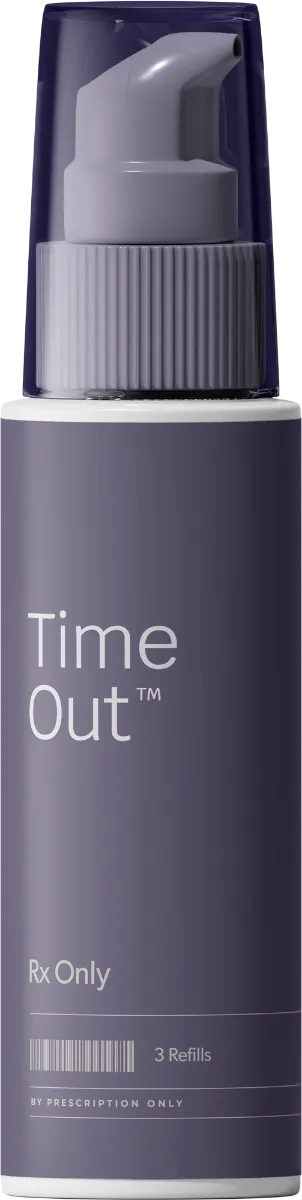
Time Out lists estriol 0.3%, vitamin C 5%, and hydrolyzed hyaluronic acid 0.5%. Estriol is an estrogen, so suitability and use require individual medical review. A facial formulation is not interchangeable with menopause hormone therapy or vaginal estrogen. Review the current Time Out™ page and bring your existing skin-care products to the provider discussion.
Related reading
- Menopausal Skin Care: Dryness, Firmness, and Treatment Questions
- A Practical Dry-Skin Routine During Menopause
- Hyaluronic Acid for Mature Skin: Hydration and Fine-Line Appearance
- Hydrolyzed Hyaluronic Acid: What Molecular Size Means in Skin Care
- Tretinoin versus retinol: choosing a routine
Educational information; your prescription and clinician’s instructions guide individual care. Product details and linked sources checked September 15, 2026. Ingredient research does not establish identical results for a finished compounded formula. Photographs are illustrative and do not show treatment outcomes.