A dry-skin routine during menopause can start with ordinary steps: gentler cleansing, a suitable moisturizer, consistent sun protection, and assessment of persistent symptoms. Hormonal changes may contribute to dryness, but a hormone-containing cream is not the only possible response and is not automatically needed for every dry face.
The goal is comfortable skin that is easy to care for. Before adding multiple serums, identify when the tightness occurs, which areas are affected, and what changed in the routine. A clear baseline makes it easier to decide whether an active treatment adds something useful.
Notice the pattern of dryness
Write down whether the skin feels tight after washing, flakes throughout the day, itches at night, or stings with products. Note whether the problem is limited to the face or occurs elsewhere too. These observations can help distinguish ordinary dryness from a condition needing assessment.
The AAD’s menopause guidance describes dryness and sensitivity among common skin changes. It also recommends seeking care for persistent problems. Menopause should not become a catch-all explanation for every rash or uncomfortable area.
If a symptom began after a new medication or product, include that timeline. Do not stop a necessary medication independently; ask the clinician whether it may be relevant and what options exist.
Make cleansing less demanding
Use a gentle cleanser and comfortable water temperature. Avoid long exposure to very hot water and repeated washing that leaves the skin stripped. Removing sunscreen and makeup should not require vigorous scrubbing.
The AAD’s dry-skin guidance emphasizes gentle, fragrance-free care and reducing harsh washing. A soft towel used to pat rather than rub can reduce unnecessary friction.
If your cleanser includes an acid or acne active, count it as part of the treatment routine. It may still be appropriate, but its role should be deliberate rather than overlooked because it rinses away.

Choose a moisturizer with the right feel
Moisturizers vary in their balance of water-binding, smoothing, and water-loss-limiting ingredients. Creams and ointments can be useful when more moisture retention is needed, while another texture may suit a different face or climate.
The AAD’s moisturizer guide explains these differences. Choose a product that is comfortable with repeated use rather than assuming that an expensive mature-skin label guarantees a better result.
If fragrance or a previous ingredient caused a reaction, review the full formula. A product described as natural or soothing can still contain something your skin does not tolerate.
Keep the morning routine simple
The morning goal is comfort and protection. Cleanse as appropriate for your skin and instructions, use moisturizer if needed, and apply a labeled sunscreen. A separate toner, essence, serum, and mask are not automatically required.
If several layers pill, review optional steps and textures. Do not scrub the skin to remove product buildup or mix sunscreen into moisturizer to change the finish. Each product should be used according to its directions.
Choose broad-spectrum SPF 30 or higher, with suitable reapplication and water-resistance directions for the day. The AAD sunscreen guide explains the label features, and clothing and shade remain useful complements.
Give evening care a clear purpose
Remove sunscreen and makeup gently, then follow the prescribed treatment and moisturizer plan. If no active is needed, a simple moisture-focused routine can still be useful. The number of products is not a measure of how well you are caring for mature skin.
If a retinoid or other prescription is used, confirm the application order and whether the schedule needs adjustment when dryness develops. Do not stop every treatment indefinitely or add several new creams without a clear plan.
| Step | Purpose | Question to resolve |
|---|---|---|
| Cleansing | Remove relevant surface products | Is the technique or formula adding irritation? |
| Moisturizer | Support hydration and comfort | Which texture suits the skin now? |
| Prescription | Treat a defined concern | Does dryness require an individual adjustment? |
| Sunscreen | Provide labeled daytime protection | Is the product comfortable and practical? |
Do not exfoliate every flake
Flaking can make makeup look uneven, but repeated scrubbing or acid use can worsen an irritated surface. A rough-feeling area is not always a request for stronger exfoliation. It may need more gentle care or assessment of dermatitis.
Review brushes, washcloths, peels, and masks alongside daily products. A weekly exposure can contribute to symptoms even if the basic routine appears mild.
The skin barrier recovery guide explains how to organize the product history. Persistent burning, itching, or a rash should be described to a clinician rather than treated as ordinary dryness indefinitely.
Hyaluronic acid can be part of moisture support
Hyaluronic acid is used as a water-binding ingredient in topical products. The complete formula determines how it feels and whether it provides enough moisture support for your skin. A serum is not automatically a replacement for a cream or ointment when more water-loss protection is needed.
The hyaluronic-acid guide explains hydration and fine-line appearance as separate outcomes from injectable filler or deeper structural changes. A topical product should be judged by its own evidence and directions.
Do not assume every hyaluronic-acid formula should be applied to damp skin. A prescription combination may specify clean, dry skin, and those directions take priority over a generic serum routine.
Vitamin C and retinoids need their own purpose
An active may be considered for a defined pigment, acne, texture, or fine-line concern. It should not be added merely because mature skin is assumed to need every anti-aging ingredient. Formulation and tolerance matter.
If the face is already uncomfortable, ask whether the basic routine should be stabilized first. The vitamin C guide and tretinoin-versus-retinol comparison explain evidence and product differences.
Review duplicate ingredients in moisturizer, sunscreen, and separate serums. Removing an unnecessary step can make the routine easier to use and the skin’s response easier to interpret.
Where Time Out fits the discussion
Time Out lists estriol 0.3%, vitamin C 5%, and hydrolyzed hyaluronic acid 0.5%. It is a hormone-containing, provider-guided preparation, so it should not be treated as a generic moisturizer for every dry face.
Estriol is an estrogen. The FDA’s menopause information states that estriol-containing drugs are not FDA-approved and should not be assumed to be proven safer estrogens. Suitability requires individual review.
Ask whether the specific goal justifies a hormone-containing formula and what nonhormonal options may be sufficient. The Time Out ingredient guide and estriol safety questions explain the additional discussion.
Track comfort through daily activities
Notice whether washing feels more comfortable, tightness occurs less often, and moisturizer remains pleasant between applications. Record those changes separately from appearance. A more hydrated surface can look smoother without proving a structural effect from an active ingredient.
Keep a brief record of new products, weather changes, and treatment adjustments. You do not need to control every variable, but a useful timeline can help explain why symptoms improved or returned.
At follow-up, ask whether the routine is meeting the comfort goal and whether another concern needs separate treatment. Do not keep adding products because one cosmetic feature remains unchanged.
Know when dryness needs assessment
Persistent itching, painful cracks, a recurring rash, or symptoms that disturb sleep deserves evaluation. Increasing warmth, pain, pus, or a rapidly spreading reaction may need prompt care. Severe facial swelling or breathing difficulty requires urgent medical attention.
A new or changing lesion should also be assessed. Do not assume it is another age-related change or apply a brightening cream before its nature is clear.
If a new product causes persistent burning, swelling, blistering, or a spreading rash, stop it and seek advice. More moisturizer is not always the solution to a significant reaction.
Keep the routine responsive
Keep a short list of products that have been comfortable so future adjustments can begin from a known baseline.
Skin needs can change with season, environment, treatment, and health. A useful routine can be adjusted without becoming a new collection of products each time. Keep the core jobs clear and review persistent problems.
For menopausal dryness, comfort is a worthwhile goal in its own right. Start with gentle care and a suitable moisturizer, maintain sun protection, and add active or hormonal treatment only for a defined purpose with an understandable plan.
Explore Time Out™
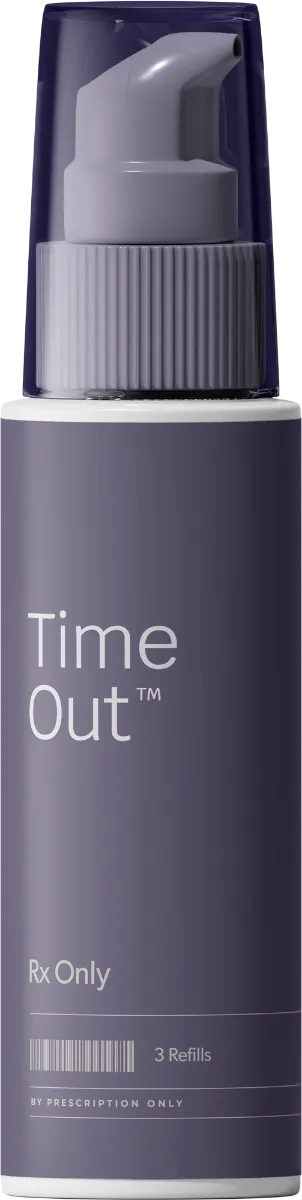
Time Out lists estriol 0.3%, vitamin C 5%, and hydrolyzed hyaluronic acid 0.5%. Estriol is an estrogen, so suitability and use require individual medical review. A facial formulation is not interchangeable with menopause hormone therapy or vaginal estrogen. Review the current Time Out™ page and bring your existing skin-care products to the provider discussion.
Related reading
- Menopausal Skin Care: Dryness, Firmness, and Treatment Questions
- Dry Skin vs. Dehydrated Skin: Making Sense of Tightness and Texture
- Hyaluronic Acid for Mature Skin: Hydration and Fine-Line Appearance
- Vitamin C for Mature Skin: Formula, Stability, and Expectations
- Tretinoin versus retinol: choosing a routine
Educational information; your prescription and clinician’s instructions guide individual care. Product details and linked sources checked September 15, 2026. Ingredient research does not establish identical results for a finished compounded formula. Photographs are illustrative and do not show treatment outcomes.