
Hyaluronic acid is a water-binding ingredient used in topical skin-care products. For mature skin, it can be part of a routine aimed at improved hydration and a smoother-looking surface. Those goals should be distinguished from the effects of injectable filler, treatment of a persistent rash, or claims that a serum rebuilds the deeper structure of the face.
The complete formula matters. A hyaluronic-acid serum, a moisturizing cream, and a prescription combination may share an ingredient name while having different directions and purposes. Choose the product by the concern and the whole preparation rather than by the most dramatic hydration claim.
What hyaluronic acid does in topical care
Hyaluronic acid, often abbreviated HA, binds water. In a topical product, it is commonly discussed as a humectant, meaning a water-attracting ingredient. Other components may smooth the surface or help reduce water loss.
A formula can combine several of these functions. You do not necessarily need a separate serum, cream, and sealing product simply because each function has a different name. A suitable moisturizer may already provide the support your skin needs.
The AAD’s moisturizer guidance explains why texture and the skin’s needs influence selection. HA should be evaluated within that broader formulation rather than treated as the only ingredient responsible for comfort.
Mature skin can need more than a water-binding serum
Dryness can involve reduced surface lipids, water loss, irritation, and other factors. A lightweight serum may feel pleasant yet provide insufficient support for a face that remains tight or flaky. Another person may prefer it within a lighter routine.
The AAD’s mature-skin guidance discusses gentle care and moisturizing. The right texture is the one that fits your skin, climate, and treatment plan, not necessarily the lightest or richest option available.
If symptoms persist despite ordinary care, ask whether dermatitis or another condition needs assessment. A product labeled hydrating is not a diagnosis or a treatment for every cause of itching and redness.
What human research suggests
A 2011 study evaluated specific 0.1% hyaluronic-acid creams of different molecular sizes in seventy-six women over sixty days. The investigators reported improvements in hydration and elasticity compared with vehicle, with some smaller-molecule preparations also improving measured wrinkle depth.
That supports a role for studied topical HA formulations. It does not establish that every HA product, strength, or combination has the same effect. The participants, application area, vehicle, and measurements define the study’s context.
Do not use the percentage alone to rank products. A higher listed concentration is not proof of proportionally greater hydration or wrinkle improvement, especially when the molecular form and base differ.
Hydration lines are not the same as every wrinkle
A hydrated surface can reflect light differently and make fine dryness lines less obvious. That is a useful cosmetic effect without demonstrating the same change as a procedure or a longer-term structural treatment.
Deep folds, expression lines, and marked laxity involve different factors. A topical HA product should not be presented as a replacement for every treatment aimed at those concerns. The clinician can help define what a cream can reasonably address.
When tracking results, record comfort and appearance separately. “My cheeks feel less tight” and “this fine line looks softer under the same conditions” are distinct observations. Neither requires a claim that you can measure new collagen from a mirror.
Topical HA and injectable filler are different
The shared ingredient name can create unrealistic expectations. An injectable filler is placed through a procedure and has a different formulation, exposure, purpose, and risk profile from a cream applied to intact skin.
Do not assume a serum can reproduce an injected volumizing effect or use the term filler as proof of equivalence. Likewise, information about injectable products should not be treated as a direct safety or benefit assessment for a topical formula.
The practical question for a cream is whether it improves the intended surface-care goal comfortably. That is enough to justify a useful moisturizer without borrowing claims from a different route of treatment.
Understand ingredient names on the label
Labels may list hyaluronic acid, sodium hyaluronate, hydrolyzed hyaluronic acid, or combinations of forms. These terms can indicate differences, but they do not always disclose exact molecular sizes or the distribution of sizes in a product.
The hydrolyzed HA guide explains why molecular size should not be turned into a simple smallest-is-best rule. Formulation and clinical evidence still matter.
| Label question | Why it helps |
|---|---|
| Which HA form is listed? | Identifies what is actually in the formula. |
| Is molecular size disclosed? | Prevents assumptions from broad marketing terms. |
| What is the concentration? | Defines one part of the preparation. |
| What else is included? | Reveals moisturizing functions and other active considerations. |
| What are the directions? | Keeps use tied to the finished product. |
Apply the product according to its own instructions
Some ordinary moisturizers are used after washing, while a prescription combination may specify clean, dry skin. Do not assume every product containing HA should be applied to damp skin. The full preparation determines the relevant directions.
Ask where it belongs relative to other treatments. A separate HA serum may be unnecessary if a moisturizer or prescription already provides adequate support. More layers can create pilling or make a reaction harder to trace.
Avoid mixing a prescription with a serum to change the feel or strength. Use each product as supplied unless the prescriber specifically directs another method.
Where Time Out fits
Time Out lists hydrolyzed hyaluronic acid 0.5%, vitamin C 5%, and estriol 0.3%. It is not a plain HA moisturizer. Estriol is an estrogen and adds a separate medical suitability and evidence discussion.
The HA percentage does not establish that the product is the same as a studied HA-only cream. The exact molecular-size information and vitamin C form are not identified by the public ingredient summary alone.
The Time Out ingredients guide explains the complete combination. For estriol, review the evidence guide and safety questions rather than assuming a hydrating ingredient makes the whole formula an ordinary cosmetic.
Keep the rest of the routine comfortable
Gentle cleansing, a suitable moisturizer, and appropriate sunscreen can provide a useful baseline. Avoid repeated exfoliation intended to remove every dry flake. An irritated surface may need less exposure, not another active.
The menopause dry-skin routine explains a practical starting point. If a retinoid or acid is prescribed, ask how moisture support should fit around it rather than adding several unfamiliar products at once.
Use a labeled sunscreen according to its directions. HA does not establish an SPF, and a hydrating serum should not be mixed into sunscreen to alter the finish.
What if HA seems to make the skin feel tighter?
Do not assume the ingredient must be pulling water out of your skin based on sensation alone. The vehicle, other ingredients, environment, and the rest of the regimen can influence the experience. A lightweight product may simply be insufficient for your needs.
Record when the tightness occurs and whether a different moisturizer or fewer active layers changes the routine’s comfort. Discuss persistent symptoms with the clinician rather than repeatedly adding more HA.
If a new product causes persistent burning, a spreading rash, swelling, or blistering, stop it and seek advice. Severe facial swelling or breathing difficulty requires urgent care. A familiar moisturizing ingredient does not guarantee universal tolerance.
Measure a result you can use
Track comfort during cleansing, how long the skin feels comfortable between applications, and whether roughness or dryness lines are less noticeable. Use consistent photographs if appearance matters, and note the timing relative to product application.
Do not compare a freshly moisturized face with a dry baseline and conclude that deep structure has changed. Keep the claim proportional to the observation. Surface hydration is a legitimate result on its own.
At follow-up, ask whether the product meets the goal and whether the routine could be simpler. If one suitable cream provides adequate support, a separate serum may not be necessary.
Keep HA in its appropriate role
Topical hyaluronic acid can be a useful part of mature-skin hydration. Its value depends on the finished formula, the skin’s needs, and realistic expectations about what a topical can do.
For a plain moisturizer, focus on comfort and usability. For Time Out or another active combination, evaluate every ingredient and follow the prescription. The presence of HA should clarify one part of the formula’s purpose without obscuring the others.
Explore Time Out™
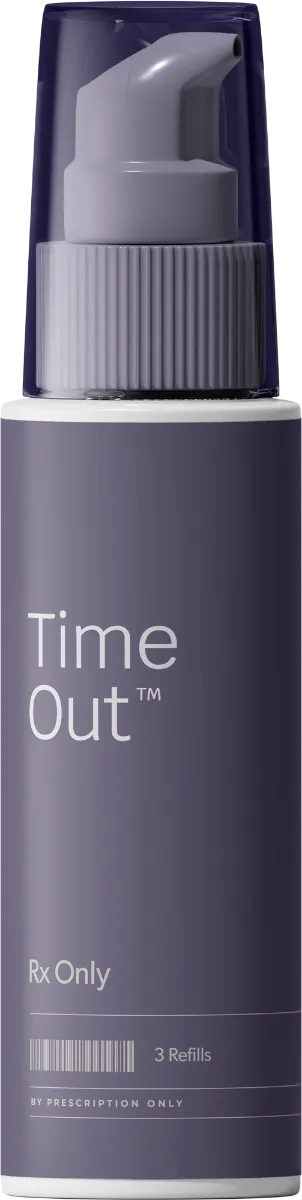
Time Out lists estriol 0.3%, vitamin C 5%, and hydrolyzed hyaluronic acid 0.5%. Estriol is an estrogen, so suitability and use require individual medical review. A facial formulation is not interchangeable with menopause hormone therapy or vaginal estrogen. Review the current Time Out™ page and bring your existing skin-care products to the provider discussion.
Related reading
- Menopausal Skin Care: Dryness, Firmness, and Treatment Questions
- Hydrolyzed Hyaluronic Acid: What Molecular Size Means in Skin Care
- Dry Skin vs. Dehydrated Skin: Making Sense of Tightness and Texture
- Time Out Ingredients: Estriol, Vitamin C, and Hydrolyzed Hyaluronic Acid
- Tretinoin versus retinol: choosing a routine
Educational information; your prescription and clinician’s instructions guide individual care. Product details and linked sources checked September 15, 2026. Ingredient research does not establish identical results for a finished compounded formula. Photographs are illustrative and do not show treatment outcomes.