Skin can become drier, more sensitive, or less firm around menopause, but not every new skin change is caused by hormones. Sun exposure, ordinary aging, medications, cleansing habits, and skin conditions can contribute. A useful routine starts by identifying the concern and supporting comfort before deciding whether another active or a prescription is appropriate.
For a hormone-containing facial formula such as CoreAge Rx’s Time Out, the discussion also needs medical history and evidence review. Estriol is an estrogen, and applying it to the face does not automatically make it a nonhormonal cosmetic or guarantee no systemic exposure. Its role should be considered separately from ordinary moisturizer and from menopause hormone therapy.
Understand the changes without assigning every symptom to menopause
The AAD’s menopause skin-care guidance describes changes including dryness, sensitivity, and reduced firmness. Hormonal changes can be part of the explanation, while other influences continue to matter.
Describe what has changed and when. Is the main problem tightness after washing, persistent itching, new acne, easy irritation, or a cosmetic concern about texture? Those observations lead to different decisions.
A new rash, a changing spot, or a wound that is not healing should not be dismissed as normal menopause. A clinician may need to assess the finding before a cosmetic routine is changed.
Put comfort and diagnosis in order
If the face is persistently burning, itchy, or inflamed, address that problem before building a long anti-aging routine. Eczema, rosacea, contact reactions, and other conditions can overlap with ordinary dryness.
Bring a list of current products, medications, and recent changes. Include hair products that touch the face, occasional peels, fragrance, and prescription topicals. A familiar product used more often can still represent a meaningful change in exposure.
For uncomplicated dryness, a gentler routine may help. For persistent symptoms, diagnosis can be more useful than another serum marketed for hormonal skin.
Adjust cleansing to the skin you have now
A cleanser that once felt comfortable may begin leaving the skin tight. Avoid very hot water, vigorous rubbing, and repeated washing intended to create a squeaky-clean feeling. Remove what needs removal without treating every trace of natural oil as a problem.
The AAD’s mature-skin guidance emphasizes gentle care and suitable moisturizers. A soft towel and less friction can make the routine more comfortable without adding an active ingredient.
If acne develops at the same time as dryness, do not assume the entire face needs stronger drying products. A clinician can coordinate acne treatment with the need for moisture support.
Choose moisturizer by function and tolerance
Moisturizers can attract water, smooth the surface, and help limit water loss. Many combine humectants, emollients, and occlusive ingredients. The best texture depends on your skin, climate, and the rest of the routine.
The AAD’s moisturizer guide explains differences among lotions, creams, gels, and ointments. A richer formula may help some dry skin, while another person may need a different texture to remain comfortable or avoid an unpleasant finish.
Do not assume a product needs hormones to improve dryness. A well-chosen nonhormonal moisturizer can have a useful role of its own. The menopause dry-skin routine develops that practical starting point.
Separate hydration from structural cosmetic goals
Fine dryness lines can look less pronounced when the surface is moisturized. That immediate effect is different from a measured change in deeper skin structure. A comfortable cream can be valuable without being described as rebuilding collagen or lifting the face.
Define the feature you want to assess: tightness, rough texture, fine lines, or laxity. Marked sagging and deep folds have different limitations from ordinary surface dryness. The clinician should explain what a topical can reasonably address.
| Main concern | Useful first discussion |
|---|---|
| Tightness or flaking | Cleansing, moisturizer, and possible dermatitis |
| Fine dryness lines | Surface hydration and realistic appearance changes |
| Persistent redness or itching | Diagnosis before more actives |
| Acne and dryness together | A coordinated, tolerable acne routine |
| Marked laxity | Limits of topical care and other options |
| New or changing lesion | Clinical assessment before cosmetic treatment |

Keep sun protection consistent
The AAD recommends broad-spectrum SPF 30 or higher, with protective clothing and shade. This remains relevant regardless of whether you choose an active cream. A product described as rejuvenating or antioxidant is not a sunscreen unless it carries the appropriate tested label.
Choose a formula that fits your skin tone and feels comfortable. If application stings, consider the skin’s current condition and the complete routine rather than assuming every sunscreen will behave the same way.
Pigment concerns may bring an additional discussion about tinted sunscreen with iron oxide. The dark-spot sunscreen guide explains that distinction.
Consider nonhormonal actives with a clear purpose
Hyaluronic acid is used for hydration support; vitamin C products vary by form and formulation; retinoids may be considered for selected concerns when appropriate. Each has its own evidence and tolerance considerations.
Do not add all of them at once because they appear in mature-skin recommendations. Start with the goal and review what is already present in moisturizer or sunscreen. A separate serum may duplicate an ingredient without adding a distinct purpose.
The hyaluronic-acid guide, vitamin C guide, and tretinoin comparison can help organize those choices. A short routine is often easier to evaluate.
What topical estriol adds to the discussion
Estriol is an estrogen. Research on topical estrogens and skin includes small studies with differing formulations and populations. The review of estrogen-deficient skin discusses this evidence and the variation across studies.
That literature does not establish that every facial estriol cream has the same benefit or long-term safety. Topical application also does not by itself prove that exposure remains entirely local. Dose, vehicle, area, skin condition, and frequency can matter.
The estriol evidence guide examines the human studies more closely. The safety questions guide explains what to review before considering a hormone-containing facial prescription.
Where Time Out fits
Time Out lists estriol 0.3%, vitamin C 5%, and hydrolyzed hyaluronic acid 0.5%. These disclosed percentages help identify the product, but they do not establish a finished-formula clinical trial or tell you the amount of each ingredient absorbed during use.
The FDA’s menopause information states that no estriol-containing drug is FDA-approved and that estriol should not be assumed to be a proven safer estrogen. A compounded prescription needs a clear discussion of rationale and uncertainty.
Ask whether a hormone-containing formula is appropriate for your particular goal and medical history, including why nonhormonal options may or may not be sufficient. The Time Out ingredient guide reviews the complete formula.
Facial care and menopause hormone therapy are separate decisions
A facial prescription should not be substituted for treatment of hot flashes, vaginal symptoms, or other menopause concerns. It is not interchangeable with a hormone patch, oral medication, or vaginal estrogen preparation.
If those symptoms are affecting daily life, discuss them with the clinician responsible for menopause care. Review all hormone products together so the facial prescription is not omitted from the medical history.
The facial estriol versus hormone therapy guide explains the distinction. Skin appearance alone should not be used to determine whether systemic hormone therapy is needed.
Track progress and review the plan
Record comfort during cleansing, persistent dryness, and a specific cosmetic goal. Use comparable photographs if helpful and note other routine changes. A smoother surface immediately after cream should be recorded differently from a longer-term change in texture.
At follow-up, ask whether the result is meaningful, whether the routine is manageable, and whether any active should change. Persistent rash, significant irritation, or an unexpected symptom needs earlier advice.
With hormone-containing products, report relevant health changes and new symptoms to the prescriber. Do not expand the amount or application area to speed a cosmetic response.
Build a routine that respects both comfort and evidence
Menopausal skin care can begin with ordinary, useful steps: gentle cleansing, suitable moisturizer, sun protection, and evaluation of persistent problems. Additional actives should earn a clear role.
Time Out may be a product to discuss within that process, with estriol treated as a hormone and the evidence kept proportional to what has actually been studied. A focused routine and a specific follow-up decision are more useful than assuming every change requires a hormonal cream.
Explore Time Out™
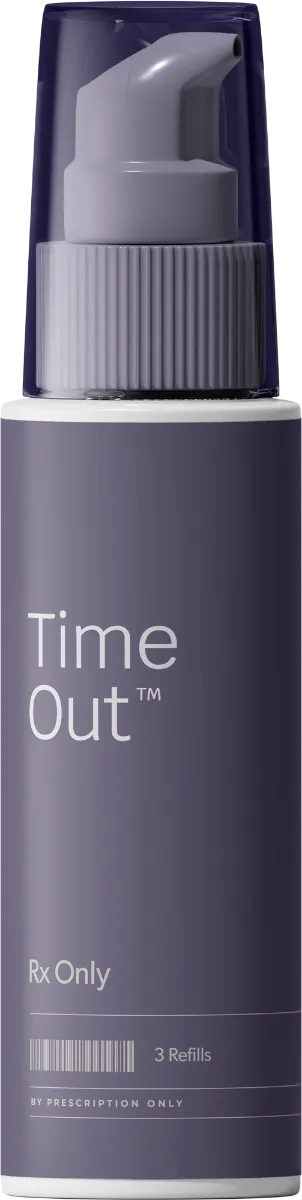
Time Out lists estriol 0.3%, vitamin C 5%, and hydrolyzed hyaluronic acid 0.5%. Estriol is an estrogen, so suitability and use require individual medical review. A facial formulation is not interchangeable with menopause hormone therapy or vaginal estrogen. Review the current Time Out™ page and bring your existing skin-care products to the provider discussion.
Explore the complete series
- Estriol Face Cream: What Human Skin Research Can Tell Us
- Topical Estriol for Facial Skin: Safety Questions for Your Prescriber
- A Practical Dry-Skin Routine During Menopause
- Hyaluronic Acid for Mature Skin: Hydration and Fine-Line Appearance
- Hydrolyzed Hyaluronic Acid: What Molecular Size Means in Skin Care
- Vitamin C for Mature Skin: Formula, Stability, and Expectations
- Dry Skin vs. Dehydrated Skin: Making Sense of Tightness and Texture
- Estriol Face Cream and Menopause Hormone Therapy: Different Decisions
- Time Out Ingredients: Estriol, Vitamin C, and Hydrolyzed Hyaluronic Acid
- Tretinoin versus retinol: choosing a routine
Educational information; your prescription and clinician’s instructions guide individual care. Product details and linked sources checked September 15, 2026. Ingredient research does not establish identical results for a finished compounded formula. Photographs are illustrative and do not show treatment outcomes.