
Sunscreen is an important part of a dark-spot treatment plan, and tinted formulas containing iron oxide can be particularly relevant for melasma and some other pigment concerns. The label should still provide appropriate ultraviolet protection. A tint, a mineral ingredient, or a makeup-like finish alone does not establish that a product is a suitable sunscreen.
The practical goal is a product that protects as labeled and fits your skin tone, comfort, and daily routine. If the finish makes you avoid using it, the pigment plan becomes harder to maintain. Product selection therefore includes both protection features and ordinary usability.
Why sunscreen matters when treating pigment
Pigment care often involves reducing relevant light exposure while treating the existing discoloration. The AAD’s dark-spot guidance places sunscreen within that overall approach. It is not simply an optional cosmetic step added after the brightening cream.
The diagnosis still matters. Melasma, post-acne marks, and a discrete sun-related spot raise different treatment questions. A new or changing lesion should be assessed before assuming it is a cosmetic pigment concern.
The hyperpigmentation guide explains that starting point. Sunscreen can support the plan, but it does not diagnose a spot or replace treatment of ongoing acne or dermatitis that creates new marks.
Separate ultraviolet light from visible light
Broad-spectrum sunscreen labeling concerns UVA and UVB protection. Visible light is a different part of the light spectrum and can be relevant to melasma, particularly in darker skin tones. This is why a pigment-focused discussion may go beyond the SPF number.
The AAD’s melasma self-care guidance recommends tinted sunscreen containing iron oxide in addition to appropriate SPF. Iron oxide is a pigment ingredient that can contribute to visible-light protection in suitable formulations.
Do not assume that all products labeled tinted contain the same ingredients or provide identical coverage. Check the ingredient list and the sunscreen label together. The precise finished formulation matters.

Read the key label features
| Label feature | What to look for | Why it matters |
|---|---|---|
| SPF | 30 or higher for the AAD’s general recommendation | Describes the product’s labeled UVB protection level. |
| Broad spectrum | An explicit claim | Indicates UVA as well as UVB protection. |
| Water resistance | Relevant directions for sweating or swimming | Helps guide reapplication in those conditions. |
| Iron oxide | Listed among ingredients when relevant to pigment care | Supports the visible-light discussion for a tinted formula. |
| Suitable finish | A shade and texture you can use consistently | Makes the plan practical. |
The AAD sunscreen guide explains the general protection features. Do not replace them with assumptions based on the product’s color, thickness, or mineral marketing language.
Zinc oxide and iron oxide are different ingredients
Zinc oxide is a familiar sunscreen filter in tested mineral formulations. Iron oxides are pigments used in tinted products and are relevant to visible-light protection. Their names sound similar, but they should not be treated as interchangeable.
This matters if you use Pore Favor, which lists zinc oxide as one of its ingredients. Its public summary does not establish a tested SPF, so it should not be assigned the role of sunscreen. The zinc oxide in acne cream guide explains the distinction.
Likewise, a treatment containing vitamin C, niacinamide, or kojic acid does not become sunscreen because an ingredient has been studied in relation to pigmentation or oxidative stress. Protection claims belong to the labeled finished product.
Choose a tint you will actually wear
A shade mismatch can make adequate application difficult. If the product looks too light, dark, orange, or gray, you may use less than intended or skip it entirely. Consider the finish in ordinary daylight rather than only under store lighting.
Ask about options that suit your skin tone and preferred texture. A broad range of skin tones exists within any general category, so a single universal shade may not be a comfortable match for everyone.
Do not try to correct the color by mixing sunscreen with foundation or another cream unless the product directions specifically support that use. Mixing changes the way the labeled sunscreen is applied. Separate makeup application may be a more appropriate topic to discuss with the clinician.

Make reapplication part of the day
The AAD’s melasma guidance advises applying sunscreen before going outdoors and reapplying at least every two hours, with attention to swimming and sweating. Follow the exact label for the product and activity. One morning application should not be assumed to cover every later exposure.
Think through the practical setting: commuting, outdoor meals, exercise, errands, or a workday near frequent outdoor activity. Keep the product accessible and plan for the situations where application is usually forgotten.
If makeup makes reapplication difficult, ask for a workable method that still uses an appropriate sunscreen amount and product. A light dusting of a cosmetic should not automatically be treated as equivalent to a full labeled sunscreen application.
Support sunscreen with clothing and shade
A wide-brimmed hat and shade can reduce exposure in ways that do not depend on adding more product layers. They are useful parts of a pigment plan, especially during prolonged outdoor time. Sunscreen works within those habits rather than replacing them.
Choose protection that fits the activity. A hat that is easy to carry and a place to sit out of direct sun may be more consistently used than an elaborate plan that is impractical. The goal is repeatable behavior, not a perfect routine followed once.
If you are recovering from a procedure, the treating clinician should guide when and which products can be applied. Routine sunscreen advice should not override procedure-specific aftercare.
Layer with a dark-spot prescription clearly
Follow the directions for the prescription and the sunscreen. If your clinician provides a specific order, use it. Do not blend Spot On into sunscreen to save time or assume that applying more treatment compensates for missed protection.
Pilling can arise from the combination of textures and layers. Review optional serums, the amount of each product, and the prescribed application instructions. Avoid scrubbing the face to remove product buildup when the skin is already sensitive.
Spot On lists hydroquinone, kojic acid, and niacinamide. The ingredient guide explains why it needs its own treatment area and duration, separate from the ongoing sunscreen plan.
If sunscreen stings, investigate the problem
Stinging can reflect an unsuitable formula, irritated skin, or another issue that needs review. Record whether the discomfort began with a new sunscreen or after a change in the treatment routine. Include cleanser, acids, retinoids, and peels in the history.
Do not repeatedly test many unfamiliar products on a face with a significant rash. Ask for advice and a simpler plan. The dark-spot treatment irritation guide can help organize the timeline.
Stop a newly introduced product that causes persistent burning, a spreading rash, marked swelling, or blistering. Severe facial swelling or breathing difficulty requires urgent care. A protection step still needs to be tolerable.
Keep expectations realistic
Sunscreen supports prevention and management of relevant pigment concerns, but it does not guarantee that every existing spot will disappear. Melasma can persist or recur, and post-acne marks may continue if new inflammation occurs.
Track the original pigment, new marks, treatment tolerance, and protection habits separately. Comparable photographs can help, but a single good or bad skin day should not determine whether the entire plan is working.
At follow-up, discuss whether the sunscreen is practical, whether the prescription is meeting its goal, and whether the diagnosis or maintenance strategy needs review. A more useful sunscreen is sometimes one you can reliably wear and reapply, provided it meets the needed protection features.
A short selection checklist
Confirm broad-spectrum SPF 30 or higher, appropriate water-resistance directions, and iron oxide when a tinted formula is recommended for your pigment concern. Then assess shade match, comfort, and compatibility with the prescribed routine.
Keep the bottle in its original container, follow storage and expiration instructions, and avoid leaving it in conditions outside the label’s guidance. A clear label and a workable application habit are the foundation of the step.
For dark-spot care, sunscreen selection should be specific enough to use, not just a reminder to wear SPF. The right label, a suitable tint when indicated, and a practical daily plan make protection easier to maintain alongside treatment.
Explore Spot On™
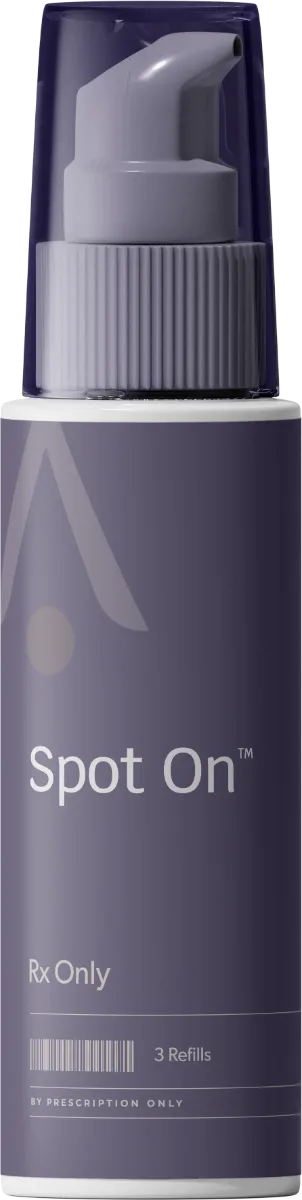
Spot On lists hydroquinone, kojic acid, and niacinamide. Confirm the dispensed strengths, treatment area, and planned treatment duration with your provider. A new or changing dark spot should be assessed before cosmetic treatment. Review the current Spot On™ page and bring your existing skin-care products to the provider discussion.
Related reading
- Hyperpigmentation Treatment: Dark Spots, Diagnosis, and Daily Care
- Melasma, Sunspots, and Post-Acne Marks: Why the Difference Matters
- Dark Spots After Acne: Treating Marks While Preventing New Breakouts
- When Dark-Spot Treatment Irritates Skin: What to Review
- A gentle routine for acne-prone skin
Educational information; your prescription and clinician’s instructions guide individual care. Product details and linked sources checked September 15, 2026. Ingredient research does not establish identical results for a finished compounded formula. Photographs are illustrative and do not show treatment outcomes.