Basmati rice can fit a healthy eating pattern, including a plan for weight management. The useful questions are whether you choose white or brown rice, how much cooked rice you eat, how it is prepared, and what completes the meal. The word “basmati” does not make a food low-carbohydrate or establish a special fat-loss effect.
You do not have to remove a familiar staple to make a meal more balanced. This guide explains the main comparisons, a common cooked-versus-dry labeling mistake, and the questions that matter when diabetes, digestive symptoms, or a GLP-1 medicine affects your eating plan.
White and brown basmati: what is the difference?
Brown rice is a whole grain. Whole grains retain the bran, germ, and endosperm, whereas refining removes grain components. White rice is a refined form; enriched versions may have selected nutrients added back. “Enriched” and “whole grain” therefore describe different things. USDA’s grain resource identifies brown rice as a whole grain and distinguishes whole and enriched grain categories. USDA grain definitions
For shopping, read the actual product name and ingredient list rather than assuming every bag of basmati is whole grain. Check dietary fiber and other nutrients on the label using equivalent serving amounts. Seasoned pouches and rice mixes can have added oil, salt, or other ingredients that make them different from plain rice.
Brown and white versions can also differ in texture, cooking needs, and how easily they fit a particular dish. Choosing the version you will enjoy and prepare reliably is a practical consideration. A whole-grain option can help increase fiber, but one rice choice does not determine the nutritional quality of an entire day.
If you prefer white basmati, consider the rest of the meal rather than treating the preference as a failure. Beans, lentils, vegetables, fruit, and other whole grains can contribute variety and fiber elsewhere. The balanced-meal guide shows how to look beyond a single ingredient.
Is basmati rice good for weight loss?
No rice variety guarantees weight loss. A portion of basmati can be part of an eating pattern that supports your goals, but the overall amount of food, meal composition, preparation, activity, sleep, health conditions, and sustainability still matter.
A useful question is what the rice meal looks like in practice. A modest amount of rice with vegetables and a protein food is different from a large bowl that contains mostly rice and a rich sauce. Both can be described as “basmati,” so the name alone cannot explain their role in someone’s eating pattern.
Try evaluating the meal you already eat. Is it satisfying? Does it include a protein source? Are vegetables regularly present? Do you understand the portion you serve? Do you tend to skip meals and arrive very hungry? These observations can lead to a workable adjustment without requiring a completely different cuisine.
NIDDK emphasizes individualized meal planning and notes that favorite foods can still fit, sometimes with different portions or frequency. A sustainable plan should account for preferences and medical needs rather than dividing familiar staples into universally good and bad foods. NIDDK healthy living with diabetes
The cooked-versus-dry mistake can distort the comparison
Rice takes up water during cooking. A dry measurement and the same volume of cooked rice do not represent the same amount of grain. If you use a nutrition label or tracking entry, check whether its serving is dry, cooked, or prepared according to specific directions.
For example, a label might describe a dry portion while your bowl is measured after cooking. Entering the cooked bowl as that same dry amount can produce a misleading estimate. The opposite mismatch can also occur. The solution is to match the food’s state and measurement, not to assume one universal cooking conversion.
For a shared pot, start with the quantity used and any added ingredients, then account for the portion of the prepared dish you eat. Water changes the weight and volume; added oil, butter, sauce, or other foods change the recipe itself. Different cooking methods can yield different final amounts.
The FDA explains that Nutrition Facts values refer to the stated serving and that serving size is not a personalized portion recommendation. Use that principle when comparing rice products or planning a recipe. FDA label-reading guide
A practical comparison before you buy or cook
| Choice | What to look at | What the label does not decide for you |
|---|---|---|
| Plain white basmati | Serving state, carbohydrate, enrichment information | Your personal portion or glucose response |
| Plain brown basmati | Whole-grain ingredient and fiber per comparable serving | Whether a very large portion fits your needs |
| Ready-to-heat rice pouch | Servings per pack, sodium, added fats, ingredients | That the entire pouch is one recommended meal |
| Seasoned rice mix | Full ingredient list and prepared nutrition information | That all basmati dishes have the same nutrition |
| Restaurant rice | Approximate serving and preparation details if available | An exact calorie or carbohydrate amount from the rice name alone |
| Home-cooked mixed dish | Rice quantity plus vegetables, protein, fats, and sauces | A meaningful comparison if only the rice is counted |
This approach is useful when two packages look similar but have different serving sizes. Compare equal amounts in the same prepared state before drawing a conclusion from the numbers.
How much basmati rice should be on the plate?
There is no single portion that fits every adult. Needs differ with body size, activity, appetite, medical conditions, the rest of the meal, and the purpose of the eating plan. A dietitian can help translate those factors into a practical amount without turning every meal into a calculation.
One general visual tool is the diabetes plate method described by NIDDK: about half the plate is nonstarchy vegetables, one quarter is a carbohydrate food, and one quarter is a protein food. It is a starting framework, not a personalized prescription. Rice belongs in the carbohydrate portion, alongside any other carbohydrate foods in the meal. NIDDK plate-method guidance
A rice meal can therefore be adapted by adding vegetables, including a protein source, and noticing how much rice and sauce are served. You do not need to remove every other carbohydrate food automatically, but a meal containing rice, bread, beans, and a sweet drink has more to consider than rice alone.
Our chicken and rice guide gives another example of looking at the whole plate. For a vegetarian meal, tofu, lentils, or beans may play useful roles, while remembering that legumes can contribute both protein and carbohydrate.
Basmati rice and blood glucose
Rice contains carbohydrate, which the body can turn into glucose. A claim that basmati has a favorable glycemic index does not make it carbohydrate-free or guarantee the same glucose response for everyone. The amount eaten and the complete meal remain relevant.
Do not rely on one internet glycemic-index number as a personal prediction. Rice products, preparation, serving amounts, accompanying foods, and individual responses can differ. If your care team recommends glucose monitoring, use the timing and interpretation they provide rather than changing medicine based on a single meal or isolated reading.
Carbohydrate counting can be useful for some people, particularly those using insulin, but not everyone needs the same tracking method. Ask whether your plan uses a plate approach, carbohydrate targets, or another strategy. The goal is to connect eating choices with the treatment you actually use. NIDDK carbohydrate and meal-planning guidance
The rice and keto guide addresses a different question: whether rice fits a very low-carbohydrate pattern. A food can fit a balanced eating plan without fitting every restrictive diet, and a diet label is not a universal measure of health.
Fiber, digestive comfort, and gradual changes
Brown rice can contribute to a higher-fiber pattern, but changing several foods at once can be uncomfortable for some people. NIDDK recommends increasing fiber gradually and considering fluid intake and personal needs when addressing constipation. A large immediate increase is not required to make progress. NIDDK constipation nutrition guidance
If you are trying brown basmati for the first time, follow its cooking directions and consider how the texture fits the dish. Some people prefer a gradual transition or use different grains in different meals. The aim is variety and tolerability, not proving that one version must replace another at every meal.
Persistent abdominal pain, vomiting, severe bloating, or a major change in bowel habits should not be attributed to the rice type without assessment. A person with a specific digestive condition may receive advice that differs from a general high-fiber message. Follow that individualized guidance.
Our jasmine rice nutrition guide offers a related comparison. Switching the rice’s name alone is usually less informative than understanding whole versus refined grain, portion, and the complete meal.

Eating rice while taking semaglutide or tirzepatide
A GLP-1-based treatment can change appetite and digestive tolerance, so the priority is a meal pattern that you can comfortably eat and that meets your needs. Do not reduce meals to a few bites of plain rice repeatedly because it feels easy while allowing protein, vegetables, and other nutrients to disappear from the routine.
If larger meals are uncomfortable, discuss practical meal size and timing with the care team. Persistent nausea, repeated vomiting, or difficulty maintaining hydration needs review. A particular rice preparation is not a treatment for medication side effects or proof that the dose is appropriate.
The guide to eating on GLP-1 medicines covers broader meal questions. For assessment-based treatment information, CoreAge Rx semaglutide care explains its service. Confirm the exact preparation and clinical plan; choosing a familiar carbohydrate food is only one part of care.
Is there a best time to eat rice for weight loss?
There is no rice-specific clock time that guarantees weight loss. Rice at lunch and rice at dinner can both fit an appropriate eating pattern. The practical question is how the timing interacts with the amount eaten, the rest of the meal, your work and sleep routine, and any medicines or digestive conditions.
That does not mean timing can never matter. If skipping lunch leads to an uncomfortably large late dinner, the daily pattern deserves attention. If your usual evening meal is balanced, satisfying, and compatible with your medical needs, an internet rule against rice after a certain hour is not enough reason to remove it.
NIDDK recommends considering meal timing alongside food choices and portions, and notes that diabetes medicines, activity, work schedules, and other conditions can influence the best times to eat. NIDDK meal-timing guidance
What can a late-dinner study tell us about rice?
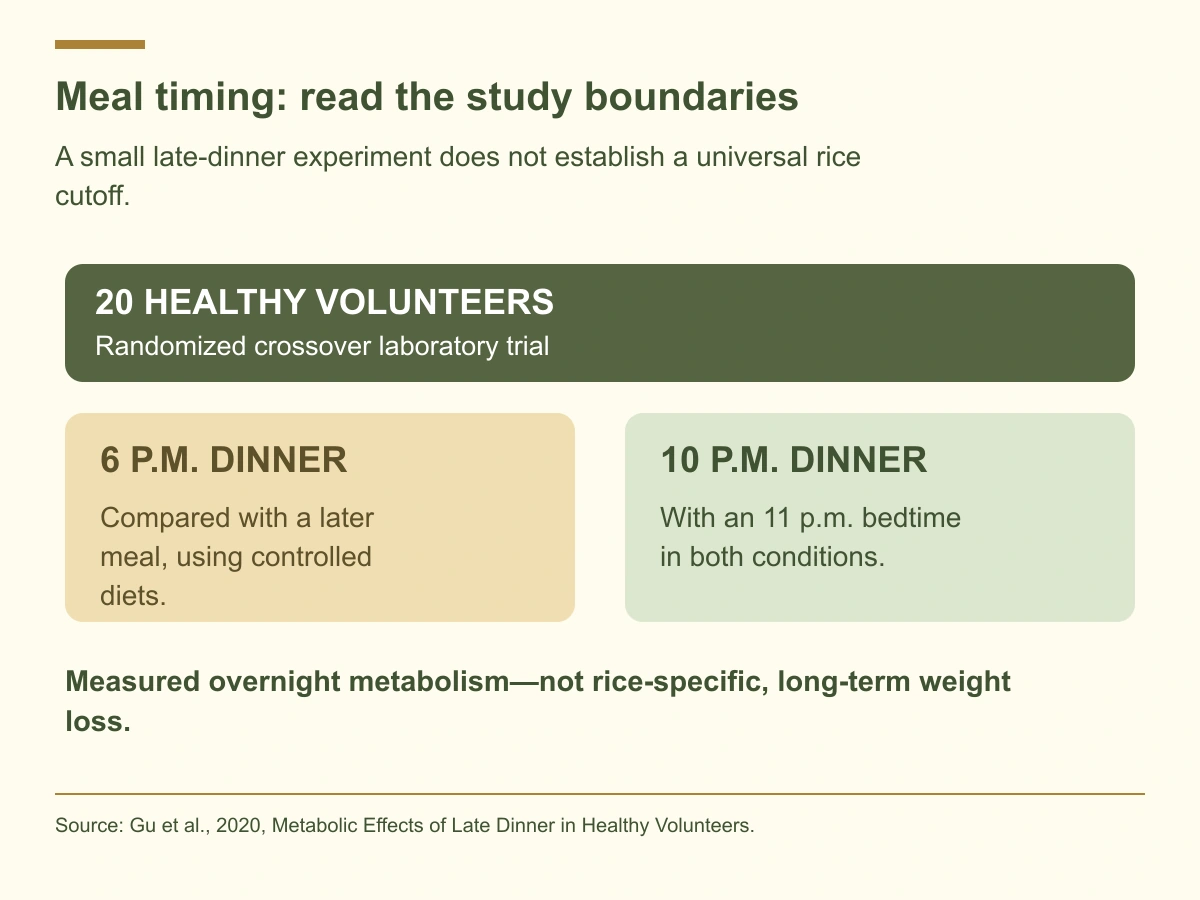
A randomized crossover laboratory trial in 20 healthy volunteers compared dinner at 6 p.m. with dinner at 10 p.m., with an 11 p.m. bedtime. The later dinner produced higher post-meal glucose and lower dietary fat oxidation overnight. The study used controlled meals and measured short-term metabolic responses. Original late-dinner trial
It did not compare basmati at lunch versus dinner, test a rice-free diet, or demonstrate a long-term weight-loss result from avoiding rice after sunset. Its findings support taking timing seriously as a research question. They do not establish a universal rice cutoff for people with different sleep schedules, health conditions, or medications.
You can use that distinction when reading a headline: ask which meal was tested, who participated, what outcome was measured, and for how long. A glucose measurement over one night and a sustained change in body weight are different outcomes.
When an evening rice meal needs individual planning
For someone using insulin or a sulfonylurea, delaying or skipping dinner can create low-glucose concerns. Follow the meal and medication plan agreed with the diabetes team rather than moving food around to imitate a fasting schedule. The amount of carbohydrate in the complete meal remains relevant. NIDDK diabetes guidance
For someone with nighttime reflux, the interval before lying down may matter more than the name of the grain. NIDDK notes that eating at least three hours before lying down or bed may improve nighttime GERD symptoms. That is a reflux-management suggestion, not a rule that rice eaten later becomes fat. NIDDK GERD nutrition guidance
If late work makes earlier dinner difficult, discuss a realistic plan instead of simply skipping needed food. A dietitian can help consider a smaller earlier meal, a different distribution of food, or another routine suited to you. For another familiar evening-food question, see idli at night and meal balance.
A lunch-versus-dinner comparison you can actually use
Describe the whole meal at each time: the cooked rice amount, vegetables, protein food, sauce, drink, and how you feel afterward. Also note whether one meal follows a long gap without food. This gives you something concrete to review beyond the statement “I eat rice at night.”
Choose a useful adjustment, then evaluate comfort and consistency. You might change the meal size, add a missing food group, or move dinner earlier because it helps reflux. Do not treat a short-term scale change after a different meal as proof that the timing caused fat gain or loss. Sustainable patterns are more informative than one evening’s result.
Three ways to improve a familiar rice meal
First, make the existing meal easier to describe. Note whether the rice is white or brown, how it is prepared, and what usually accompanies it. You do not need perfect measurement to notice that vegetables are missing or a sauce is doing much of the flavoring.
Second, choose one manageable adjustment. You might include a vegetable you enjoy, add a suitable protein food, serve rice separately so portions are easier to see, or compare a plain pouch with a seasoned one. Changing every component at once can make the meal less appealing and harder to repeat.
Third, evaluate the result beyond the scale. Consider satisfaction, energy, digestive comfort, cost, preparation time, and any glucose information your clinician asks you to track. A meal that works repeatedly is more useful than an elaborate “weight-loss rice” recipe that does not fit your life.

Frequently asked questions
Is brown basmati healthier than white basmati?
Brown basmati is a whole-grain option and can help contribute fiber. The most useful comparison still includes the actual label, portion, preparation, and your needs. White basmati can fit a balanced meal too.
Can I eat basmati rice every day?
It can be part of a regular eating pattern if the overall diet is varied and appropriate for you. Consider other grains, vegetables, protein foods, and individual carbohydrate needs rather than treating daily rice as automatically healthy or unhealthy.
Does basmati rice burn fat?
No specific fat-burning effect is established by choosing basmati. Weight management depends on the broader plan and cannot be predicted from one rice variety.
Should I measure it before or after cooking?
Match the measurement to the label, recipe, or tracking entry you are using. Dry and cooked measurements are not interchangeable. Use one consistent method that fits your plan.
Can people with diabetes eat basmati rice?
Many can include rice in an individualized meal plan. Portion and total carbohydrate matter, and glucose-monitoring or insulin instructions should come from the care team. The rice name does not guarantee a particular response.
What is the simplest place to start?
Look at one usual rice meal and choose a useful adjustment to portion, vegetables, protein, or preparation. Keep the food enjoyable and evaluate the whole pattern instead of searching for a universally healthiest rice.
References reviewed for this update
Healthy Living with Diabetes – NIDDK; Metabolic Effects of Late Dinner in Healthy Volunteers—A Randomized Crossover Clinical Trial – PMC; Eating, Diet, & Nutrition for GER & GERD – NIDDK.
Educational information for adults; individual treatment decisions require a qualified clinician. Sources reviewed October 7, 2026. Original AI-generated article images depict fictional people and objects, not patient outcomes. Other editorial images are illustrative. Graphics summarize the cited sources.