Jasmine rice can fit a balanced eating pattern and a weight-management plan. It is not inherently fattening, and it is not a food that everyone with diabetes or a weight goal must avoid. The useful questions are how much you eat, whether the amount is measured dry or cooked, and what else is on the plate.
The word “jasmine” describes a rice variety. It does not by itself tell you whether the rice is white or brown, how it was prepared, or what nutrients and calories the finished dish contains. Those details matter more than a simple healthy-versus-unhealthy label.
The first distinction: dry rice versus cooked rice
Rice absorbs water during cooking. Its weight and volume therefore change, even when no oil or other calorie-containing ingredient is added. A quarter cup of dry rice and a quarter cup of cooked rice are different amounts of rice.
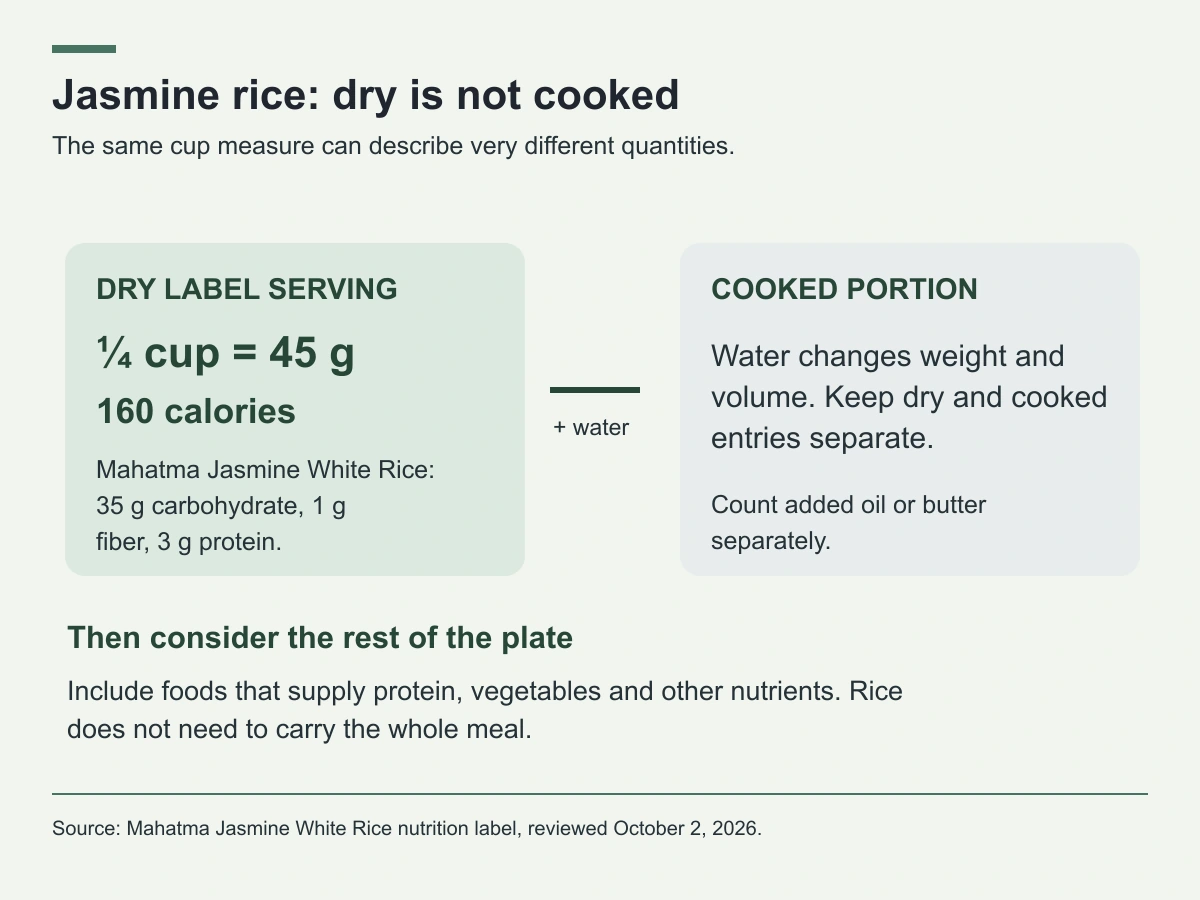
The current Mahatma Jasmine White Rice product and nutrition label, reviewed October 2, 2026, gives this named example:
| Nutrition item | One-quarter cup, 45 grams dry |
|---|---|
| Calories | 160 |
| Total carbohydrate | 35 grams |
| Dietary fiber | 1 gram |
| Protein | 3 grams |
These values describe the manufacturer’s dry label serving. They do not describe an arbitrary cooked bowl, a restaurant rice dish or the illustrated cover image. The exact label image explicitly identifies the serving as dry.
If you use a food-tracking app, select an entry that matches how you measured the rice. A cooked weight entered into a dry-rice listing can give a misleading estimate. The reverse can also distort the record.
The FDA’s Nutrition Facts guidance explains how amounts scale with the labeled serving. It also explains that a label serving is not a personal portion recommendation. You can use the information to understand a meal without making that serving size a mandatory diet rule.
How to describe a pot of rice accurately
For a batch prepared at home, keep the dry quantity and added ingredients together in your notes. After cooking, the pot’s water content can vary with the rice, cooking method and final texture. An assumed universal dry-to-cooked cup conversion may not describe your batch accurately.
If you need a consistent record, one approach is to note the dry amount used, include any added butter or oil, and divide the finished batch according to the portions actually served. Another is to use a suitable cooked-rice entry and measure the cooked amount. Avoid mixing those two methods within the same calculation.
You do not need perfect measurement at every meal to eat well. The distinction is especially useful when a familiar bowl seems to have a very different calorie value in two apps or when you are comparing a package with a restaurant menu.
A dietitian can help you decide whether tracking is useful for your goals. If recording foods increases anxiety or encourages excessive restriction, a different meal-planning approach may be more appropriate.
Is jasmine rice good for weight loss?
No rice variety guarantees weight loss. Jasmine rice can supply part of a meal’s energy, but the result depends on your broader intake, activity, health and treatment plan.
Look at what the rice is doing in the meal. A modest rice portion alongside vegetables and a protein food is different from a large bowl of rice that replaces nearly everything else. Rice fried in oil also differs from rice cooked in water, even if both dishes use jasmine rice.
Try to identify the meal’s missing pieces rather than treating rice as the problem by default. Is there a protein food? Are there vegetables or another source of fiber? Is the amount comfortable, or are you eating past fullness because the portion was served that way?
Our balanced meals guide explains a flexible framework for answering those questions. The calorie-intake guide also explains why the appropriate overall amount differs between people. Neither framework requires avoiding all rice.
White jasmine rice and brown jasmine rice
Variety and processing are different details. White jasmine rice has been processed differently from brown jasmine rice, which retains bran. Their texture, cooking time and nutrition labels can differ.
If you are comparing products, read the fiber value and ingredient information for the amount you intend to eat. Do not assume that every brown-rice package has the same values or that a white-rice label can stand in for a brown-rice product.
Brown rice may suit someone seeking a different texture or more fiber from the rice itself. White rice may be easier for another person to enjoy or tolerate as part of a varied meal. The complete plate still matters: choosing brown rice does not supply every nutrient a meal needs, and choosing white rice does not prevent you from including vegetables, beans or other foods.
For more information about sources of fiber, read food fiber versus supplements. A rice swap is one possible change within a broader eating pattern, not a requirement to add a supplement.
What about blood sugar and glycemic index?
People often search for a single glycemic-index number to decide whether jasmine rice is acceptable. That number does not by itself describe your mixed meal, actual portion, medications or individual glucose response.
If you have diabetes, use your clinician’s meal and glucose-management plan. The amount of carbohydrate matters, and the other foods in the meal and your treatment also need context. A universal statement that rice is forbidden gives less useful information than knowing what you ate and how it fits that plan.
Keep the dry-versus-cooked distinction in mind when counting carbohydrate. The 35 grams in the named Mahatma example apply to its 45-gram dry serving. They are not the carbohydrate amount in every quarter cup of cooked rice.
If readings repeatedly fall outside your agreed range, discuss the meal and your medicine plan with your team. Do not adjust insulin or another diabetes medicine based on a blog’s rice portion or a generic glycemic-index chart.
Does cooling rice make it a weight-loss food?
Cooling and reheating are often promoted online as ways to make rice “free” or cancel its calories. That is not a sound way to interpret a meal. Preparation-related changes do not establish a dependable personal calorie deduction or a guaranteed weight-loss effect.
You can choose leftovers for convenience and taste. Keep the rice’s actual quantity, recipe and food safety in view. Do not subtract an invented percentage from your meal record simply because the rice spent a night in the refrigerator.
For weight-management decisions, an adjustment you can verify—such as a different amount of oil, a change in the served portion, or more variety on the plate—is easier to assess than a promised resistant-starch shortcut.
The difference between a short-term scale change and a body-fat change also matters. Our water weight versus fat loss guide explains why one day’s number cannot show whether a rice preparation method worked.
Store leftovers safely
Cooked rice needs appropriate handling. Convenience does not make food safe when it has remained at room temperature for too long.
The FDA’s food-storage guidance recommends refrigerating perishable foods within two hours, or within one hour when the temperature is above 90°F, and keeping the refrigerator at 40°F or below. Apply safe storage practices to the complete dish, including meat, eggs and other ingredients served with the rice.
Arrange leftovers so they can cool appropriately rather than leaving the meal out for the rest of the evening. Follow applicable package and food-safety instructions for storage and reheating. Smell and appearance alone are not reliable proof that food is safe.
If you routinely cook ahead, consider how you will portion, refrigerate and use the meals before you prepare a large batch. A realistic storage routine is more useful than a meal-prep plan you cannot keep chilled.
Eating rice while taking a GLP-1 medicine
Semaglutide and tirzepatide can change appetite and meal tolerance. A familiar rice bowl may feel different when you are newly taking a medicine, after a dose change, or during a period of nausea.
Pay attention to the whole meal. A very large portion, a rich sauce and eating quickly may all complicate your experience. Keeping a brief record of the dish, amount, timing and symptoms can help your clinician understand what is happening.
Eating only small amounts of plain rice for many days because everything else feels difficult can leave important nutritional needs unmet. The joint nutrition advisory for GLP-1 treatment emphasizes assessment of intake and nutritional risks. Reduced appetite should not become a reason to ignore protein or fluid intake.
Our guides to semaglutide nausea and vomiting and tirzepatide nausea and reflux explain issues to discuss with your care team. Persistent vomiting, severe abdominal pain or inability to keep fluids down needs prompt advice rather than another rice-only diet experiment.
If you are considering medication, review the tirzepatide product information with a clinician who can explain the exact formulation, eligibility and follow-up. Whether rice fits a meal does not establish a need for a prescription.

Practical ways to make a rice meal more complete
Start with foods you already eat. You might serve rice with fish and vegetables, tofu and a vegetable stir-fry, chicken and a side salad, or beans with other ingredients you enjoy. Adjust the amount and preparation to your appetite, cultural preferences and medical needs.
The aim is a meal with multiple nutritional contributions. Rice does not need to become the sole food in a weight-loss plan, and it does not need to disappear from that plan either.
When a meal feels unsatisfying, review the whole combination before cutting the rice again. If you are consistently unable to eat enough, discuss that problem rather than congratulating yourself on progressively smaller portions. Protein and muscle during tirzepatide treatment offers additional context for conversations about adequate intake.
Frequently asked questions
Can I eat jasmine rice every day?
Frequency alone does not establish whether your diet is appropriate. Consider the portion, other foods, nutritional variety and any condition-specific advice. Daily rice can fit some eating patterns; it does not guarantee or prevent weight loss.
Is the 160-calorie label value for cooked rice?
In the named Mahatma example, it is for one-quarter cup or 45 grams dry. Check the actual package and the measurement method before applying that figure to your bowl.
Is brown jasmine rice always lower in calories?
Do not assume so. Compare the actual labels for a similar measured amount. Fiber, processing, flavor and tolerance may differ even when calorie values are similar.
Can I eat rice if I have diabetes?
Use your individual carbohydrate and glucose-management plan. The exact portion matters more than a blanket prohibition. Ask your care team about repeated glucose changes rather than changing medicine doses yourself.
Should I replace rice with supplements or a detox drink?
A supplement or drink does not recreate a balanced meal. The NIDDK’s weight-management guidance favors sustainable plans with nutritional and behavioral support. Make a change that serves your needs, rather than assuming a familiar food requires an unproven replacement.
Educational information for adults; individual treatment decisions require a qualified clinician. Sources reviewed October 2, 2026. Original AI-generated article images depict fictional people and objects, not patient outcomes. Other editorial images are illustrative. Graphics summarize the cited sources.