
A gentle acne routine gives each product a clear job: cleanse, treat the acne, support comfort, and protect exposed skin from the sun. It does not need a separate active for every visible pore or blemish. The right number of steps is the number that addresses your needs without making the skin unnecessarily irritated or the instructions difficult to follow.
If you use a prescription such as Pore Favor, build the routine around its actual directions. Do not automatically add it to an existing collection of acne cleansers, acid toners, retinoids, and peels. First review which steps it is intended to replace or accompany.
Begin with the acne pattern
Blackheads, whiteheads, inflamed pimples, and deep tender lesions can require different treatment decisions. Scarring and the effect of acne on daily life also matter. A routine suitable for occasional congestion may be inadequate for painful or persistent acne.
Normal pores and sebaceous filaments should not be counted as treatment failures. If your main concern is uniform dots on the nose, read sebaceous filaments versus blackheads before increasing exfoliation.
If the diagnosis is uncertain, ask for an assessment. Some itchy bumps, redness, and facial rashes have causes other than ordinary acne. A longer skin-care routine can make those conditions harder to interpret.
Give cleansing a limited, useful purpose
Cleansing removes surface substances such as makeup, sunscreen, sweat, and excess oil. It does not need to leave the face tight or squeaky to be useful. Gentle handling is particularly important when a treatment already causes dryness.
The AAD’s pore-care guidance recommends gentle washing and avoiding scrubbing. Use comfortable water temperature and avoid repeated vigorous rubbing with towels, brushes, or rough cloths. Removing flakes by force can add irritation.
If your cleanser contains an acne active, count it as part of the treatment exposure. It is not automatically a neutral step simply because it rinses off. Include it in the product list you discuss with the prescriber.
Put the main treatment at the center
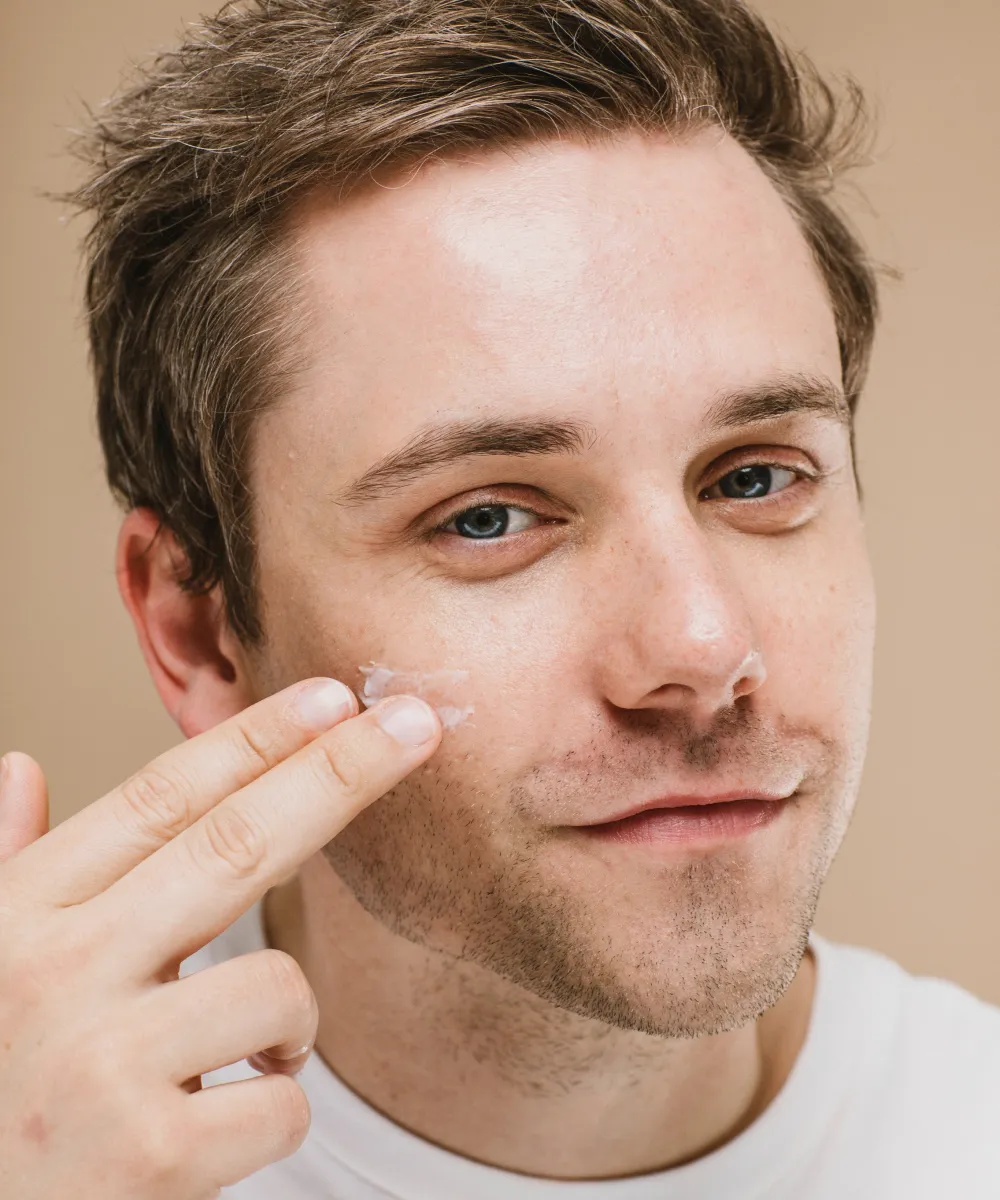
The AAD acne guidelines support several therapies, including topical retinoids and benzoyl peroxide, with conditional recommendations for options such as salicylic acid. The appropriate choice depends on the individual pattern and medical context.
Write down the exact directions: amount, frequency, treatment area, and any products to avoid or separate. If the medication is prescribed for an acne-prone area, do not assume it should be used only as a spot treatment; if it is prescribed for limited use, do not spread it more broadly without asking.
A clear plan is more useful than a collection of vague rules such as alternate your actives. You should know which product is used on which occasion and what to do if a step is missed or causes symptoms.
Moisturizer supports the routine
Acne-prone skin can still feel dry, tight, or irritated. A suitable moisturizer can make treatment easier to tolerate. Choose a texture that fits your skin and consider products labeled noncomedogenic, while recognizing that individual experience still matters.
The AAD moisturizer guide explains differences among gels, lotions, creams, and ointments. You do not need the richest texture available simply because an acne treatment causes some dryness. Nor should you avoid every moisturizer because the forehead becomes shiny.
Ask where moisturizer should fit relative to the prescription. Some treatments have specific application instructions. Do not invent a layering method that conflicts with the label or dilute the medication into another product.
Sunscreen deserves its own step
Choose a labeled broad-spectrum sunscreen with SPF 30 or higher and follow its application and reapplication directions. The AAD sunscreen guide explains the key label features. Clothing and shade also contribute to protection.
An acne cream containing zinc oxide is not automatically a sunscreen. Pore Favor’s public ingredient summary does not establish a tested SPF. Keep that distinction clear so that a familiar ingredient does not accidentally replace your protection step.
If sunscreen pills, stings, or feels too heavy, identify the specific issue and discuss alternatives. Simplifying optional layers may help. Do not mix sunscreen into another cream to change the finish, because that changes how the labeled product is applied.

A practical morning-and-evening framework
| Time | Main tasks | What needs individual instructions |
|---|---|---|
| Morning | Gentle cleansing as needed, moisturizer if useful, sunscreen | Any morning prescription step and its placement |
| Evening | Remove sunscreen and makeup gently, use the planned treatment, support comfort | Treatment amount, area, frequency, and moisturizer order |
| After substantial sweating | Cleanse or rinse as appropriate without harsh scrubbing | Avoiding unnecessary extra active applications |
| Follow-up | Review lesions, comfort, and practical barriers | Whether to continue, adjust, or change treatment |
This framework does not prescribe a medication schedule. It makes the routine’s jobs visible so you can fit the actual prescription into them. The clinician may recommend a different pattern based on your condition.
Remove duplicate treatment steps
Look for repeated salicylic acid, multiple retinoids, exfoliating acids, and overlapping spot treatments. Include masks and peels used only occasionally. A weekly product can still contribute to an irritation pattern.
If Pore Favor is introduced, ask whether a current acid toner or salicylic-acid cleanser remains useful. Its formula already lists salicylic acid with zinc oxide, niacinamide, and urea. Supporting ingredients do not guarantee that extra exfoliation will be comfortable.
The Pore Favor guide helps organize this review. The salicylic-acid versus retinoid comparison explains why combinations should have a defined purpose.
Make adherence easy to describe
Keep the directions with the products and use a simple reminder if helpful. If the routine is too time-consuming, say so at follow-up. A shorter plan you can follow may be more useful than a theoretically complete plan that is repeatedly skipped.
Do not apply extra medication to compensate for a missed use unless the specific instructions direct it. Ask the pharmacist if the missed-dose guidance is unclear. More product can increase irritation without providing a sensible catch-up effect.
When traveling, keep prescriptions labeled and follow storage directions. Avoid leaving products in a hot car or transferring them to an unmarked container that separates them from their instructions and beyond-use date.
Track treatment and irritation separately
Record new inflamed lesions, persistent comedones, tenderness, and any scarring concerns. Separately note dryness, burning, itching, or scaling. A treatment can improve one aspect while making another worse, and the clinician needs both parts of the picture.
Use comparable photographs if they help, but avoid daily magnified inspection. Acne treatment is usually assessed over weeks, with a review point chosen for the actual regimen. Do not switch every few days because the face is not immediately clear.
At the same time, significant worsening should not be dismissed as patience being required. A spreading rash, new painful lesions, or persistent burning may need earlier advice.
Include post-acne marks in the conversation
Flat dark marks can remain after acne lesions settle. They are different from active pimples and from depressed scars. The AAD’s acne guidance for darker skin tones discusses the importance of treating acne while avoiding irritation that can contribute to pigmentation.
Do not add several brightening products at once to an already uncomfortable regimen. Review the acne control, sunscreen, and tolerance first. A clinician can then decide whether a separate pigment treatment has a role.
The dark spots after acne guide explains how these goals can be coordinated. A new or changing spot that does not fit the expected pattern should be assessed before cosmetic treatment.
When to ask for a different plan
Seek review for deep painful acne, scarring, persistent disease despite a consistent regimen, or distress that affects daily life. Also discuss pregnancy, breastfeeding, known allergies, other medications, and recent procedures before choosing or combining treatments.
Stop a newly introduced product that causes persistent burning, marked swelling, blistering, or a spreading rash and obtain advice. Severe facial swelling or breathing difficulty requires urgent care. Do not layer additional actives onto a significant reaction in an attempt to calm it.
Keep the routine accountable to the goal
At follow-up, ask whether the acne is improving enough, whether the skin remains comfortable, and whether the steps are practical. If not, decide which part of the plan should change rather than adding another product without a clear reason.
A gentle acne routine is still an active treatment plan. It uses appropriate therapy, removes unnecessary duplication, and makes it easier to recognize both progress and problems. Clearer skin and a manageable daily routine are useful outcomes; a permanently poreless face is not a realistic requirement.
Explore Pore Favor™
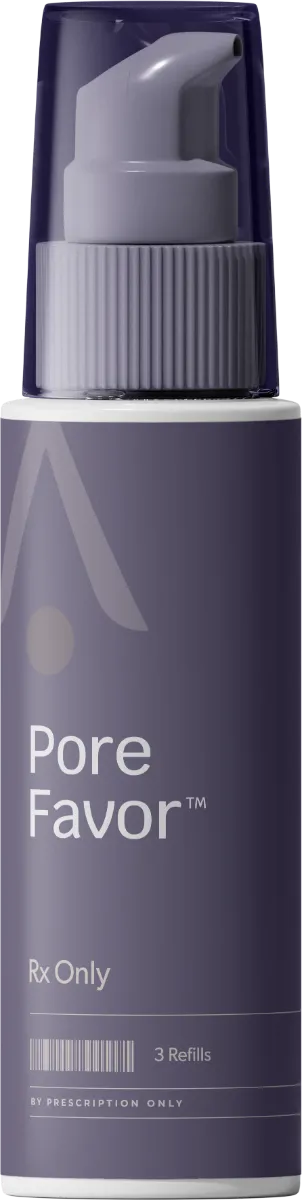
Pore Favor lists salicylic acid, zinc oxide, niacinamide, and urea. The public ingredient summary does not disclose individual concentrations. Use the prescribed formula and directions; zinc oxide in this cream does not establish a tested SPF. Review the current Pore Favor™ page and bring your existing skin-care products to the provider discussion.
Related reading
- Acne and Visible Pores: A Practical Treatment Guide
- Salicylic Acid and Sensitive Skin: Avoiding an Irritation Cycle
- Salicylic Acid vs. Retinoids for Clogged Pores
- Pore Favor Ingredients: Salicylic Acid, Zinc Oxide, Niacinamide, and Urea
- Dark spots after acne: marks and breakout prevention
Educational information; your prescription and clinician’s instructions guide individual care. Product details and linked sources checked September 15, 2026. Ingredient research does not establish identical results for a finished compounded formula. Photographs are illustrative and do not show treatment outcomes.