
Sermorelin and human growth hormone act at different points in the same hormonal system. Sermorelin stimulates the pituitary to release growth hormone; prescribed recombinant human growth hormone supplies the hormone itself. That distinction affects the clinical reasoning, but it does not by itself tell someone which treatment is appropriate.
The most useful comparison starts with the diagnosis and desired outcome. Confirmed adult growth hormone deficiency, age-related changes, and a general wish to build muscle are different situations. Evidence from one should not be used as a shortcut to treatment in another.
Picture the pathway before comparing products
The hypothalamus and pituitary help regulate growth hormone secretion through several signals. Growth hormone-releasing hormone is a stimulatory signal, while other influences can reduce or modify secretion. Growth hormone then affects tissues directly and through pathways involving IGF-1.
Sermorelin acts through the GHRH signaling route at the pituitary. Its response depends on a functioning, responsive part of that system. Recombinant human growth hormone does not require the same upstream stimulation to supply circulating hormone.
The main Sermorelin guide introduces this mechanism. “Stimulates your own production” is a description of where the intervention acts, not a complete evaluation of its clinical benefits or risks.
Put the diagnosis ahead of the product choice
Symptoms such as fatigue, increased abdominal fat, or reduced exercise tolerance are not specific to growth hormone deficiency. They can occur for many reasons, and age-related hormone changes do not automatically establish disease.
The Endocrine Society’s adult deficiency guideline states that confirmation usually requires stimulation testing, with certain exceptions in defined clinical circumstances. The provider also considers medical history, other pituitary functions, and the broader presentation.
If deficiency is suspected, the next question is how to evaluate it properly. Choosing between products based on a symptom list before establishing the clinical problem can lead to a comparison that does not fit the patient.

Understand the evidence for replacement therapy
In appropriately selected adults with growth hormone deficiency, growth hormone therapy has evidence for benefits in areas such as body composition, exercise capacity, skeletal health, and quality of life. The balance depends on the severity of deficiency and the individual’s situation, as described in the guideline.
These findings concern treatment of a diagnosed condition. They should not be restated as proof that growth hormone benefits every adult whose hormone levels have declined with age.
Nor do they establish that Sermorelin produces the same outcomes. An intervention that increases a hormone signal is not automatically clinically equivalent to replacing the hormone in patients who have a demonstrated deficiency.
Separate healthy-aging use from deficiency care
The Endotext review discusses the interest in growth hormone approaches for aging and the limits of the clinical results. Changes in lean mass or fat measures have not reliably translated into greater strength or physical performance in healthy older adults.
A laboratory value associated with youth is not automatically a treatment target for an older person. The clinical aim should not be assumed to be the highest possible IGF-1 or the recreation of a younger adult’s measurement.
This distinction keeps the comparison grounded. A therapy can have an established role in a disease while having uncertain value for a broader wellness goal.
Do not turn feedback into a safety guarantee
Sermorelin’s action still interacts with the body’s regulatory system. That feature is often presented as a reason it must be safer than direct growth hormone. The conclusion is stronger than the mechanism alone can support.
A safety comparison requires relevant human data, including adverse events and follow-up over an appropriate period. It also needs comparable populations and treatment conditions. A small study or an appealing mechanism cannot establish a universal advantage.
Ask what evidence supports any comparative safety claim being made. The answer should identify the actual preparation, study design, and outcome, rather than relying solely on the phrase “natural production.”

Compare like outcomes with like outcomes
| Outcome | What a meaningful comparison would require |
|---|---|
| Hormone response | Comparable assays, timing, populations, and treatment conditions |
| Body composition | Consistent measurement of fat and lean tissue |
| Physical function | Strength, mobility, or exercise outcomes that matter clinically |
| Sleep | Defined sleep measures, ideally beyond a vague impression |
| Safety | Observed adverse events and an adequate follow-up period |
A comparison that uses an IGF-1 increase for one treatment and a strength outcome for another is not comparing the same result. The same applies when one study involves diagnosed deficiency and another involves healthy volunteers.
Keep lean mass distinct from muscle performance
Lean body mass includes more than contractile muscle, and measurement can be influenced by factors such as body water. A favorable scan result may therefore require additional interpretation before it is described as stronger or more capable muscle.
Research summarized in Endotext includes GHRH-related changes in body composition without corresponding strength or aerobic-fitness improvement. This is a concrete example of why biological activity and useful function must be evaluated separately.
The body-composition guide explains how weight, waist measurements, scans, and performance can answer different questions. No single measure should carry every claim about the treatment.
Recognize the different product histories
Historical GEREF products containing Sermorelin had specific diagnostic and pediatric indications. FDA later determined that their withdrawal from sale was not for safety or effectiveness reasons. The 2013 notice does not approve current compounded adult anti-aging preparations.
Recombinant growth hormone products have their own approved labeling and indications. Those instructions and evidence belong to the particular product and clinical setting; they are not a template for a compounded Sermorelin prescription.
The FDA compounding explanation also helps distinguish a compounded preparation from an approved finished drug. Product status should be described accurately on both sides of the comparison.
Evaluate the monitoring plan, not just the starting prescription
Ask how the clinician will assess hormone response, symptoms, and the original goal. IGF-1 may be part of the plan, but interpretation requires age-appropriate context and attention to the assay and clinical situation.
Other medical factors may influence the assessment, including glucose regulation, thyroid function, prior pituitary treatment, and other medicines. The provider determines which evaluations are indicated rather than applying an identical panel to every patient.
The testing article describes the questions to ask about each result. A monitoring plan is useful when it explains what information would change the decision to continue, adjust, investigate further, or stop under guidance.
Compare the practical burden accurately
The actual preparation determines administration, storage, usable period, and supply needs. Do not assume that two injectable treatments use the same device, concentration, or schedule. An apparently familiar syringe can still deliver a different amount when the concentration changes.
Ask about teaching, access to the pharmacy, refill planning, and management of travel or interruptions. Include the cost of follow-up and any clinically indicated testing in the comparison.
Practical convenience can influence a preference, but it does not establish equivalent effectiveness. It should be considered alongside evidence and suitability, not used as a substitute for them.
Avoid dose conversion and unsupervised substitution
There is no general consumer conversion that turns a Sermorelin amount into an equivalent HGH amount. Their mechanisms and formulations differ, and hormone responses vary between people and clinical conditions.
Do not substitute one for the other, combine them, or copy a research protocol based on an online comparison. A change in treatment requires an explicit clinical plan and the correct product-specific instructions.
The same applies to other growth hormone-related peptides. The peptide comparison explains why tesamorelin, CJC-1295, and ipamorelin should not be treated as interchangeable versions of Sermorelin.
Bring the comparison back to the original goal
A useful consultation can be organized around three questions: what condition or concern are we treating, what outcomes are supported by the relevant evidence, and how will we know whether the decision remains worthwhile?
For one person, the answer may require a formal endocrine evaluation. For another, it may involve investigating sleep, nutrition, medication effects, or another cause of reduced function before considering a hormone-related treatment.
The comparison is complete only when the diagnosis, evidence, product, and follow-up fit together. A mechanism explains how a treatment might act; the clinical plan explains why it would be considered for a particular person.
Explore Sermorelin
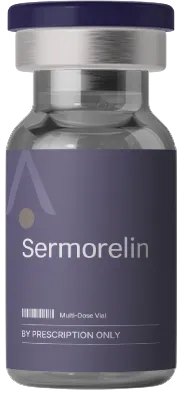
CoreAge Rx offers provider-guided compounded Sermorelin. It acts on the growth hormone signaling pathway. Individual suitability, prescription directions, and follow-up need to be established with the treating clinician; historical GEREF approval does not mean this compounded product is FDA-approved. Review the current Sermorelin page and bring a complete medication and supplement list to the provider discussion.
Related reading
- Sermorelin: How It Works, Evidence, and Treatment Questions
- Sermorelin and Sleep: What Hormone Research Can Tell Us
- CoreAge Rx Sermorelin: A Product and Evidence Guide
- Creatine after 50 and strength training
Educational information; your prescription and clinician’s instructions guide individual care. Product details and linked sources checked September 15, 2026. Studies of another preparation or delivery route do not establish identical results for a finished compounded product. Photographs are illustrative and do not show treatment outcomes.