
After 50, creatine is most sensibly considered alongside a strength-training plan. Research suggests it can add to some training benefits in older adults, but it is not a substitute for using your muscles, eating enough, or addressing an underlying cause of weakness.
Begin with function
Choose a goal you can recognize in daily life: getting out of a chair more comfortably, carrying groceries, or improving a supervised exercise routine. Then decide how to measure progress safely. The supplement is one possible tool within that plan, not the definition of success.
The creatine evidence review discusses older-adult studies and emphasizes the importance of resistance training. Evidence for preventing muscle loss with creatine alone is less convincing. A claim that a daily scoop automatically prevents age-related muscle loss goes beyond what those studies establish.
Training and protein still have separate roles
Resistance exercise gives muscle a reason to adapt. Protein supplies building blocks, and overall food intake supports the work and recovery. Creatine supports a different energy-related process. Buying a creatine powder does not resolve an inadequate meal pattern.
If appetite is low, chewing is difficult, or weight is falling without intention, bring that information to your clinician. A dietitian can help build a practical meal plan rather than layering supplements onto an unresolved nutrition problem. Our creatine-versus-protein comparison explains the distinction.

Review health conditions before starting
Age alone is not a diagnosis, but medication use, kidney disease, and other health conditions become important in an individual decision. Bring a complete medicine and supplement list. Include over-the-counter pain medicines and combination workout products.
Creatine may affect how a creatinine-based kidney test is interpreted. A 2025 systematic review found a modest rise in serum creatinine without a significant decline in measured filtration across the included studies, while noting limitations in longer-term evidence. This is a reason to tell your clinician about use, not a reason to dismiss an abnormal test.
Make the plan easy to follow
Strong Suit’s pictured directions specify one scoop daily, providing 5 g creatine monohydrate. Check the current bottle and get individualized advice if you have a medical condition or take medication. The product does not require a complicated cycle of training-day and rest-day amounts.
Use a familiar meal as a reminder, and track function or exercise progress over several weeks. If the routine causes persistent stomach symptoms, reassess it. If weakness worsens or interferes with daily tasks, seek evaluation rather than simply increasing the serving.
Set a review point
At a planned follow-up, review consistency, comfort, and your chosen functional measures. The timeline guide can help avoid expecting visible muscle growth in a few days. A useful plan should make sense for your abilities, health, and priorities.

Translate a broad muscle goal into a daily-life goal
“Maintain muscle” is a reasonable aim, but it can be difficult to evaluate at home. A more concrete goal might involve rising from a chair, carrying a bag, climbing familiar stairs, or completing a supervised resistance exercise. Choose an activity that matters to you and can be assessed safely.
This is especially useful when appearance is not the main priority. A person can value improved confidence and function without wanting a dramatic change in body size. The supplement discussion should follow those priorities rather than assuming everyone is trying to achieve the same gym-based outcome.
If an activity has recently become difficult, do not assume normal aging is the only explanation. New or worsening weakness, unintentional weight loss, pain, or reduced endurance can warrant clinical evaluation. A supplement purchase should not delay identifying a treatable cause of a change in function.
Build the exercise plan before judging the supplement
An appropriate resistance program gives you repeatable work to progress. The exercises, equipment, and starting level should fit your abilities and any limitations. Someone returning after an injury may need a different plan from someone who has lifted regularly for years.
A trainer, physical therapist, or other qualified professional can help with exercise selection when needed. The key is to know what you are trying to improve and how the program will progress. Creatine cannot tell you whether a movement is suitable, correct poor technique, or replace a rehabilitation plan.
Keep a modest record of sessions and a few functional measures. For example, record the resistance and repetitions in a familiar supervised exercise rather than repeatedly testing a maximum effort. Review the pattern over time. An isolated good day may reflect sleep, pain, food intake, or confidence as well as any supplement contribution.
Review nutrition barriers that a scoop cannot solve
Later-life nutrition challenges can be practical: reduced appetite, difficulty shopping, trouble preparing meals, dental issues, or a schedule organized around multiple medicines. These barriers deserve direct attention. Creatine does not provide the energy, protein, and variety missing from an inadequate meal pattern.
Start by describing a typical day of eating, including meals that are often skipped or too small. If you live alone, consider whether meal preparation is the main obstacle. If chewing or swallowing is difficult, tell a clinician rather than simply switching to more powders or capsules on your own.
A dietitian can help adapt foods to preferences, appetite, and medical needs. The objective is a workable routine that supports daily activity and recovery. A creatine product may be an optional addition, but it should not become the only visible part of a broader nutrition plan.
Make a complete medication and supplement list
Write down prescription medicines, over-the-counter products, vitamins, and workout supplements. Include the amount and frequency when known. Bring labels or photographs, because a product name alone may not reveal all ingredients.
This list matters even when each item appears ordinary. A clinician needs the whole picture to assess whether supplementation and monitoring make sense. If a combination product already contains creatine, adding Strong Suit changes the total. If an ingredient amount is undisclosed, identify that uncertainty instead of guessing.
Kidney history and planned laboratory tests deserve particular attention in the creatine discussion. Ask how use should be documented and whether any monitoring is appropriate. Do not decide on your own that an abnormal creatinine result is harmless because you have read that creatine can affect interpretation.
A practical first review appointment
Bring a short record rather than an elaborate spreadsheet. Useful items include the start date, the actual serving used, any missed days, digestive symptoms, and a few training or function observations. Note major changes in illness, appetite, or medicines during the same period.
Ask whether the original goal remains appropriate and whether the exercise and nutrition plans need adjustment. If the routine is easy and comfortable, that is useful information. If it is burdensome or symptoms have appeared, discuss whether continuing makes sense. The review should allow an honest decision rather than assuming the only acceptable outcome is to keep taking the product.
| Review topic | Example of useful information |
|---|---|
| Function | A familiar daily task feels easier, unchanged, or harder |
| Training | Sessions completed and progression in comparable exercises |
| Intake | The actual labeled serving and any overlapping products |
| Tolerance | Timing and severity of symptoms, if present |
| Health context | New medicines, illness, test results, or appetite changes |
Keep age-related claims specific
Research suggesting an added benefit with resistance training does not establish that creatine alone prevents every form of age-related muscle loss. It also does not make the product a treatment for falls, osteoporosis, frailty, or an unexplained decline in function.
When you see a broad “healthy aging” claim, ask which outcome was measured and whether the participants resemble your situation. A study can be relevant without answering every question. Matching the claim to the evidence helps you decide whether the product deserves a place in your plan.
Frequently asked questions
Is 50 a special cutoff for creatine use?
No single birthday determines the decision. Training goals, medical history, medications, nutrition, and tolerance are more informative than age alone. This guide uses 50 as a practical life-stage topic, not a threshold at which everyone should begin supplementation.
Can I take creatine if I do not currently lift weights?
Discuss the reason for use and what activity is appropriate for you. The stronger practical case in this context involves pairing supplementation with suitable resistance exercise. A scoop should not be treated as a substitute for an individualized movement plan.
Should I take more because I feel weaker?
Do not increase the serving in response to unexplained weakness. Seek evaluation, especially if the change is new, progressive, or affects daily tasks. Follow the current label and review the underlying problem rather than assuming it reflects a need for more creatine.
Explore Strong Suit™
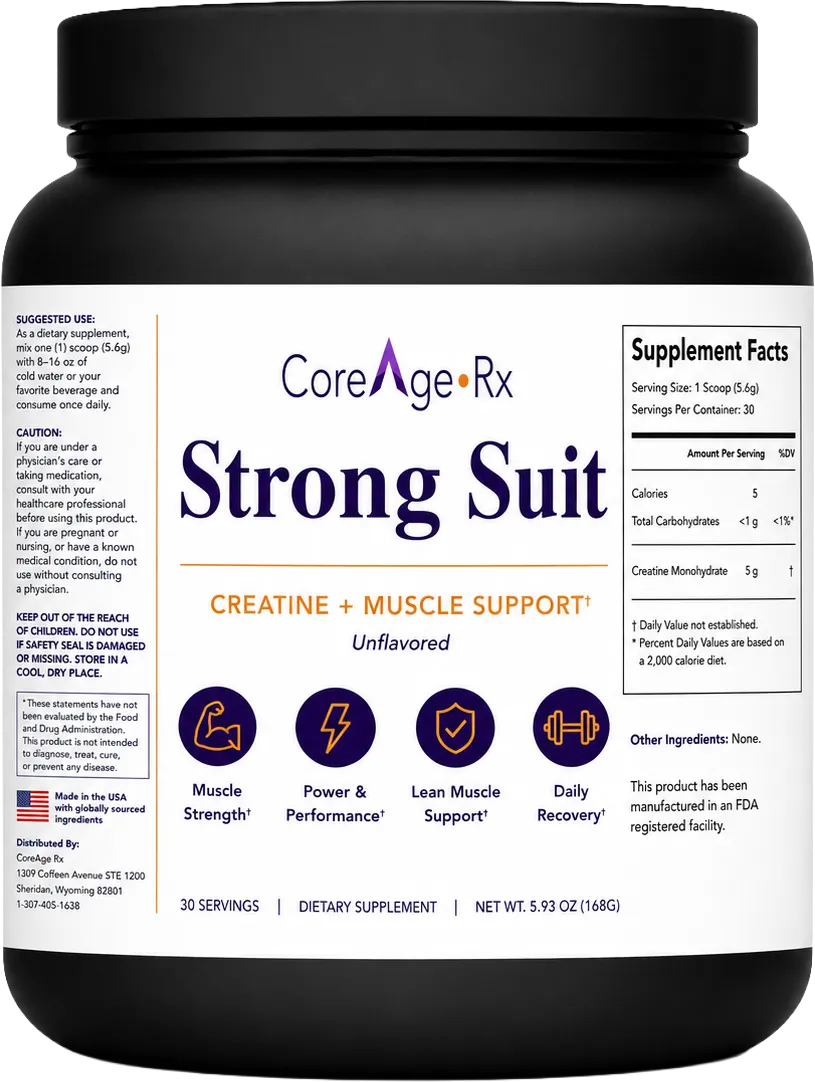
Strong Suit is CoreAge Rx’s unflavored creatine monohydrate powder. The pictured label lists 5 g creatine per scoop and 30 servings. See the current Strong Suit™ page and check the bottle you receive before use.
Related reading
- Creatine Monohydrate: Benefits, Dosing, and What to Expect
- Creatine for Women: Strength, Dosing, and Common Questions
- Creatine vs. Protein Powder: Different Jobs, Different Needs
- Nutrition during GLP-1 treatment
Educational information, not individualized medical advice. Product information and linked research checked September 15, 2026. Ingredient research does not establish identical effects for a finished supplement.