
Salicylic acid and topical retinoids can both be discussed for clogged pores, but they are different treatment options. Choosing between them depends on the acne pattern, other skin concerns, tolerance, and medical history. They should not be ranked only by which product feels stronger or produces more peeling.
Some routines use one approach; others combine treatments deliberately. The useful question is what each product adds to the plan and whether the combination remains manageable. Adding both without reviewing the full routine can increase irritation and make progress harder to assess.
Understand the basic difference
Salicylic acid is a beta-hydroxy acid used in acne products for exfoliation and clogged pores. It appears in wash-off and leave-on preparations with different concentrations and directions. A professional peel or wart product is not equivalent to a facial acne preparation.
Retinoids are vitamin A-related compounds. Topical acne options include different medications, while retinol appears in many cosmetic products. Tretinoin is a prescription retinoid. A broad label such as vitamin A cream does not tell you which compound or strength you have.
The AAD’s retinoid explanation helps distinguish this family. When comparing products, write down the exact active and formulation rather than using salicylic acid and retinoid as if each described one standardized bottle.
How the acne evidence compares
The AAD’s updated acne guidelines strongly recommend topical retinoids and include salicylic acid as a conditional recommendation. This reflects the supporting evidence and the circumstances in which treatments may be useful. It does not mean every person should start the same retinoid or that salicylic acid has no role.
A clinician considers the full acne pattern, including comedones, inflammation, painful lesions, and scarring. Other therapies may be needed. A comparison limited to two ingredients can miss the more important question of whether the condition requires a different treatment plan.
If your concern is mainly normal sebaceous filaments rather than acne, the goal changes again. No treatment should be presented as permanently removing every normal pore structure.
Match treatment to the concern
| Main concern | Discussion to have |
|---|---|
| Blackheads and whiteheads | Which acne treatment best fits the pattern and tolerance? |
| Inflamed pimples | Is a broader combination or another medication needed? |
| Painful deep lesions or scarring | Is prompt specialist treatment appropriate? |
| Fine lines and photoaging | Does a retinoid have a relevant additional role? |
| Dry, stinging skin | Should irritation or another diagnosis be addressed first? |
| Uniform dots on the nose | Are these normal sebaceous filaments rather than acne? |
Use the acne and pore overview to organize these possibilities. A clear target makes it easier to understand why one product is chosen and how success will be judged.
Compare complete products, not percentages
Salicylic acid and tretinoin percentages are not on a shared strength scale. A larger number does not mean a product is proportionally more powerful. The chemicals, biological activity, vehicles, and directions differ.
Even products within one category can vary. A wash-off acid cleanser has a different exposure from a leave-on prescription cream. Retinol and tretinoin cannot be compared simply by choosing the higher percentage on the label.
Ask for the exact active, strength, intended area, and schedule. If a public page omits a concentration, do not assume the common strength from a study or another brand. The dispensed label and pharmacist can provide the relevant information.
Tolerance can determine whether a plan is workable
Both approaches can cause dryness and irritation. The amount of peeling is not a score of effectiveness. A treatment that makes cleansing painful or causes repeated interruptions may need a different formulation, schedule, or overall plan.
Review the supporting products too. A harsh cleanser, scrub, acid toner, and frequent mask can undermine tolerance of a prescribed treatment. The solution may involve removing unnecessary exposures rather than abandoning an otherwise useful active.
Moisturizer and sun protection have separate roles. Choose products that fit the skin and are comfortable enough to use consistently. The gentle acne routine guide explains how to give each step a clear purpose.

When combining them may be considered
A provider may choose a combination when each treatment addresses a defined need. The plan should specify which products, when they are used, and what to do if irritation develops. Do not assume that using one in the morning and one at night makes every pairing appropriate.
Introduce changes in a way that is possible to interpret. If several new actives begin at once, a reaction can be difficult to trace. Keep a list of product names and frequencies, including occasional exfoliation.
Do not mix the products together to make a homemade combination. Use each as supplied and directed. A deliberately compounded preparation is different from combining separate creams in your hand or a jar.
Where Pore Favor and Smooth Move fit
Pore Favor lists salicylic acid, zinc oxide, niacinamide, and urea. Smooth Move lists tretinoin, niacinamide, and vitamin C. Their public ingredient summaries do not disclose the individual strengths.
These products have different ingredient combinations and intended discussions. They have not been established here as interchangeable or as a tested pair. Ask the provider which concern each would address and whether there is a reason to use both.
The Pore Favor guide and Smooth Move guide separate product facts from ingredient evidence. A product comparison should preserve those distinctions rather than turn into a contest between marketing names.
Pregnancy and other circumstances change the choice
The AAD advises against retinoid use during pregnancy. Discuss pregnancy plans and breastfeeding before starting or continuing the routine. Do not assume that switching to any salicylic-acid product is automatically appropriate; the exact preparation and exposure still need review.
Also disclose eczema, rosacea, allergies, other prescription topicals, and recent procedures. A routine that was comfortable before a peel or a flare may need different instructions afterward.
Ask before applying either treatment to broken, sunburned, or significantly irritated skin. The prescriber should define the intended application area and any exclusions, particularly around eyes and lips.
Set a review point for the selected treatment
Track actual lesions and comfort rather than expecting immediate smoothness. Acne treatment is usually assessed over weeks, while a fine-line goal may involve a different timeline. The selected medication and the provider’s plan should determine when to review the response.
Keep photographs comparable and record other changes. A new sunscreen, moisturizer, or cleansing pattern can affect the appearance and tolerance of the regimen. Acknowledge those contributions rather than assigning every change to one active.
For tretinoin, the patient information explains gradual results and the importance of using the medication as directed. Do not increase applications or use extra product to compensate for missed doses or a slow cosmetic response.
Know when the comparison is no longer the main issue
Persistent painful acne, scarring, or substantial distress may require a broader treatment discussion. A recurring itchy rash or unexpected facial redness may not be ordinary acne. Repeatedly switching between an acid and a retinoid can delay assessment of the actual problem.
Stop a newly introduced product that causes persistent burning, marked swelling, blistering, or a spreading rash and seek advice. Severe facial swelling or breathing difficulty requires urgent care. Significant symptoms should not be dismissed as a necessary purge.
Make the final plan easy to explain
Include a practical refill and travel plan in that discussion. If the prescription runs out or a product is unavailable, ask what to use while waiting rather than substituting a different acid or retinoid by name alone. Keep medicines in labeled containers, follow the storage instructions, and check the beyond-use date. Consistency includes using the intended preparation, not merely applying something from the same broad ingredient family.
You should be able to state which concern the product treats, where and when to apply it, which other actives remain in the routine, and what would prompt contact with the clinician. If those answers are unclear, resolve them before adding more steps.
Salicylic acid and retinoids can each have useful roles. The best choice is the one supported by the actual skin concern and a tolerable, understandable plan. More exfoliation is not the goal; better control of acne and a routine you can maintain are.
Explore Pore Favor™
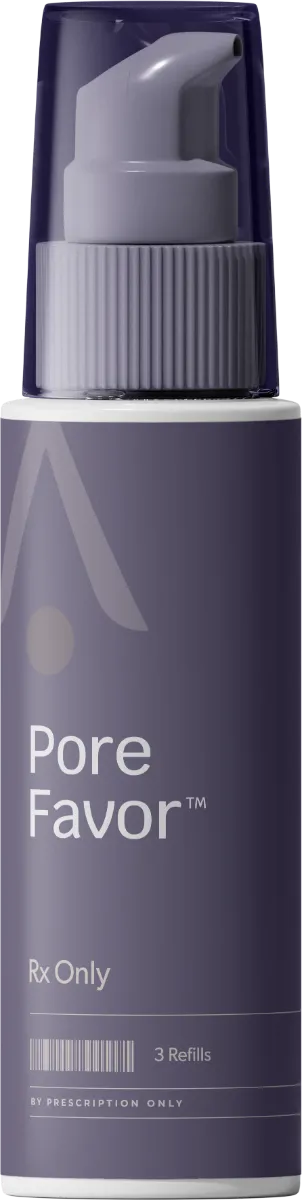
Pore Favor lists salicylic acid, zinc oxide, niacinamide, and urea. The public ingredient summary does not disclose individual concentrations. Use the prescribed formula and directions; zinc oxide in this cream does not establish a tested SPF. Review the current Pore Favor™ page and bring your existing skin-care products to the provider discussion.
Related reading
- Acne and Visible Pores: A Practical Treatment Guide
- Salicylic Acid for Blackheads: How It Fits Into Skin Care
- Salicylic Acid and Sensitive Skin: Avoiding an Irritation Cycle
- Building a Gentle Routine for Acne-Prone Skin
- Dark spots after acne: marks and breakout prevention
Educational information; your prescription and clinician’s instructions guide individual care. Product details and linked sources checked September 15, 2026. Ingredient research does not establish identical results for a finished compounded formula. Photographs are illustrative and do not show treatment outcomes.