
Zinc oxide in an acne cream does not automatically make the cream a sunscreen. Sunscreen protection is a property of a tested, labeled finished product, not a benefit you can assign from one ingredient name. This distinction matters for Pore Favor, which lists zinc oxide alongside salicylic acid, niacinamide, and urea without presenting a tested SPF in its public ingredient summary.
To evaluate zinc oxide sensibly, ask what role it has in the specific preparation and keep acne treatment, skin comfort, and sun protection as separate goals. A multi-ingredient cream may address more than one concern, but each claim still needs appropriate support.
Why the same ingredient appears in different products
Ingredients can serve different functions depending on how they are formulated. Zinc oxide is familiar from mineral sunscreens and protective skin products. That familiarity can encourage the assumption that any cream containing it will provide all the same benefits.
In reality, concentration, particle characteristics, dispersion, the rest of the formula, and testing all matter. A product’s texture or pale appearance cannot tell you its level of ultraviolet protection. Nor does the presence of zinc oxide establish that a cream treats every kind of acne.
Start with the product’s actual label and intended use. If it is supplied as an acne treatment, evaluate the acne directions. If it is a sunscreen, look for the labeled protection and use instructions. If both roles are claimed, the finished product should clearly support both.
What a sunscreen label tells you
The AAD’s sunscreen guidance recommends broad-spectrum SPF 30 or higher, with water resistance when appropriate. Broad spectrum refers to protection against both UVA and UVB. Water-resistance directions matter when swimming or sweating.
These are product-level claims. You cannot calculate an SPF by seeing zinc oxide in an ingredient list or by estimating how thickly a cream is applied. A formula that has not supplied the relevant label should not be used as the only sunscreen step.
If you are uncertain whether a product is intended as sunscreen, ask the pharmacy or manufacturer for the label information. Do not rely on a social-media explanation that assigns a protection number to a raw ingredient percentage.
Apply the distinction to Pore Favor
Pore Favor lists salicylic acid, zinc oxide, niacinamide, and urea. The public ingredient summary does not disclose each ingredient’s concentration or a tested SPF. Use it according to the prescription and maintain a separate labeled sunscreen as directed.
Ask the provider what zinc oxide is intended to contribute within the combination. The answer should relate to the supplied formula rather than a broad list of every use of zinc in medicine or cosmetics.
The Pore Favor ingredients guide explains the other components. Salicylic acid’s acne role, niacinamide’s supporting evidence, and urea’s concentration-dependent properties should also be distinguished from claims about the finished cream.
Topical zinc oxide is not an oral zinc supplement
Studies of oral zinc, other zinc salts, or nutritional deficiency do not establish the same effects for topical zinc oxide. The chemical form and route of use matter. Do not translate a supplement dose or study result into a claim about a facial cream.
Likewise, applying a zinc-containing product does not diagnose or treat a dietary deficiency. If a clinician suspects a nutritional issue, that requires its own evaluation. A cosmetic ingredient list is not a substitute for that process.
For an acne routine, focus on the actual product and the concern it was chosen to address. This keeps the evidence discussion specific and avoids turning an ingredient’s many possible uses into an unsupported promise.
Acne treatment needs its own evidence
The AAD’s acne recommendations include established therapies such as topical retinoids, benzoyl peroxide, and selected other treatments. The choice depends on the acne pattern and severity. Zinc oxide’s presence in a combination does not replace that assessment.
If you have deep painful lesions, scarring, or persistent acne, ask whether the current plan is sufficient. A cream that feels soothing may still leave the acne inadequately treated. Conversely, an effective acne active may need supporting care to remain tolerable.
The acne and pore guide separates normal pores, comedones, and inflammatory acne. That distinction makes it easier to understand what an individual ingredient can reasonably contribute.
Choose sunscreen for the routine you actually use
Acne-prone skin can make sunscreen selection frustrating when a product feels heavy, pills, or leaves an unwanted cast. Discuss noncomedogenic options and a texture you can use consistently. The best label is of limited practical value if the finish makes you avoid applying it.
Try to identify the specific problem. Stinging, greasiness, visible residue, and new bumps are different observations. Record the product and the rest of the routine rather than deciding that all mineral or all chemical sunscreens will behave identically.
If pigmentation is also a concern, the tinted sunscreen guide explains the additional discussion around visible light and iron oxide. Zinc oxide and iron oxide are different ingredients with different roles in that conversation.
Keep application steps distinct
Use the acne treatment according to its prescription and the sunscreen according to its label. Do not mix the two in your palm to save time. Mixing can change the way the sunscreen spreads and makes the amount of each product less clear.
If layering pills, ask whether optional steps can be simplified or whether a different texture would fit better. Avoid scrubbing the skin to remove the pilling, especially if acne treatment already causes sensitivity.
| Routine issue | More useful question |
|---|---|
| White cast | Which labeled sunscreen blends comfortably with my skin tone? |
| Pilling | Are the layers, amounts, or textures making application difficult? |
| Stinging | Is the skin irritated, or is this formula unsuitable for me? |
| Greasy finish | Is a different vehicle easier to use consistently? |
| New lesions | What changed in the whole routine, and is this actually acne? |
Supporting the skin does not mean eliminating every reaction
A formula containing zinc oxide can still irritate or trigger a reaction through other components. A protective-sounding ingredient does not cancel a known allergy or make excessive acid use comfortable.
Review all active products with the prescriber. If Pore Favor is added, ask whether an existing salicylic-acid cleanser or toner should remain. The sensitive-skin salicylic-acid guide explains how cumulative irritation can develop.
Stop a newly introduced product that causes persistent burning, swelling, blistering, or a spreading rash and seek advice. Severe allergic symptoms need urgent care. Do not apply more cream in the hope that zinc oxide will automatically soothe the reaction it may be part of.
Track acne and protection separately
For acne, record new lesions, tenderness, congestion, and treatment tolerance. For sunscreen, assess whether you can apply and reapply it according to the label and whether the texture works in your day. One set of observations does not substitute for the other.
A less shiny face does not prove acne control. A lack of sunburn does not establish that an unlabeled cream provided adequate broad-spectrum protection. These outcomes require different kinds of evidence and different habits.
At follow-up, discuss both practical barriers and clinical progress. A regimen that is theoretically sensible but too uncomfortable or complicated to follow may need redesign.
Questions for the pharmacy or provider
- What is the zinc oxide concentration and intended role in this formula?
- Is the product labeled with a tested SPF and broad-spectrum claim?
- Which separate sunscreen fits the prescribed routine?
- Does this cream replace any current acne product?
- What should I do if the combination pills or stings?
- Which symptoms need a pause or an examination?
Keep the answers with your product directions. They can prevent a familiar ingredient name from creating an assumption that was never part of the treatment plan.
A clear role makes the routine safer and easier
Zinc oxide can be a reasonable component of a skin product, but its presence alone does not prove sunscreen protection or a particular acne result. Evaluate the finished preparation and the claims it actually supports.
For Pore Favor, use the prescribed acne-care plan and keep labeled sunscreen as its own step. That simple distinction preserves the intended role of both products and avoids asking one cream to do a job its public label has not established.
Explore Pore Favor™
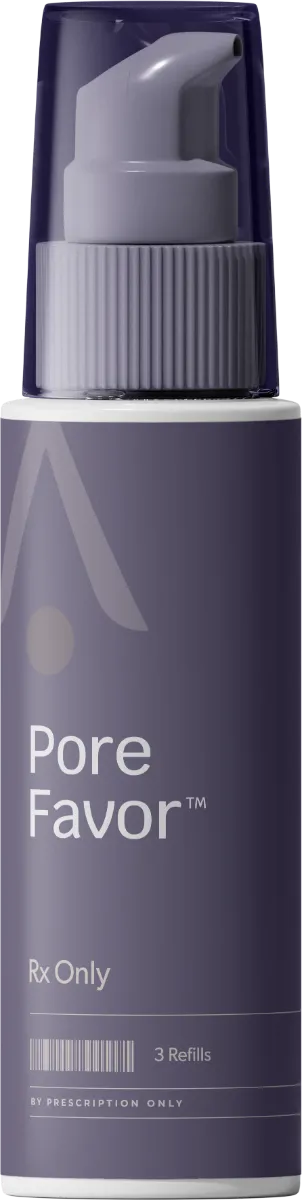
Pore Favor lists salicylic acid, zinc oxide, niacinamide, and urea. The public ingredient summary does not disclose individual concentrations. Use the prescribed formula and directions; zinc oxide in this cream does not establish a tested SPF. Review the current Pore Favor™ page and bring your existing skin-care products to the provider discussion.
Related reading
- Acne and Visible Pores: A Practical Treatment Guide
- Building a Gentle Routine for Acne-Prone Skin
- Pore Favor Ingredients: Salicylic Acid, Zinc Oxide, Niacinamide, and Urea
- Niacinamide for Oily Skin and Visible Pores: What to Expect
- Dark spots after acne: marks and breakout prevention
Educational information; your prescription and clinician’s instructions guide individual care. Product details and linked sources checked September 15, 2026. Ingredient research does not establish identical results for a finished compounded formula. Photographs are illustrative and do not show treatment outcomes.