
Chicken and rice can be part of a healthy meal and a weight-management plan. The result depends on the whole meal, preparation, portions, and the rest of your eating pattern—not simply the presence of those two ingredients. Adding vegetables, varying flavors, and making the meal practical to repeat can be more useful than searching for a single “fat-burning” version.
This guide offers meal ideas and questions about rice type, sauces, calories, meal prep, diabetes, and eating during GLP-1 treatment. The photographs are illustrative meals, not measured servings or a promise that the pictured plate produces a particular weight result.
What chicken and rice contribute
Chicken is a protein food, and rice supplies carbohydrate. Those categories help describe the meal, but they do not give it one fixed nutrient total. The cut of chicken, skin, preparation, rice portion, cooking additions, and sauces can all change what you eat.
A plain cooked combination is also different from a breaded chicken dish, a creamy rice casserole, or a restaurant bowl with multiple toppings. All can be assessed in context. A food does not become automatically unsuitable because the recipe is enjoyable or culturally familiar; the useful question is how the whole meal fits your needs.
The current federal nutrition site encourages whole, nutrient-dense foods, varied vegetables and fruits, and whole grains. It does not establish that one chicken-and-rice recipe is a complete diet. Current federal nutrition guidance.
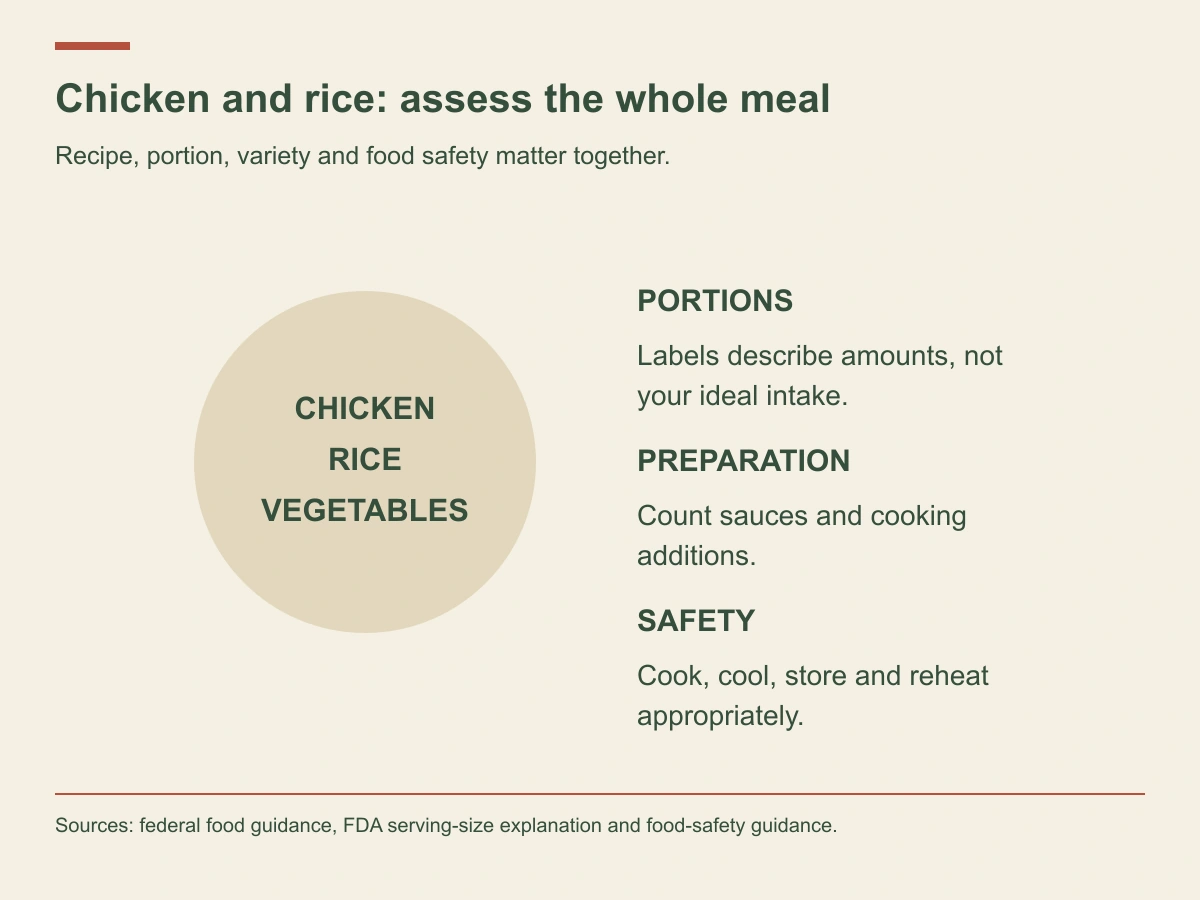
Build a fuller meal
Start with the chicken and rice you enjoy, then consider what is missing. Vegetables can add variety, flavor, and texture. Fruit, dairy, beans, nuts, or other foods elsewhere in the day may also contribute to the broader pattern. You do not need to force every food group into every single bowl.
For example, try roasted chicken with rice and zucchini, a chicken-and-vegetable soup with rice, or a bowl with cabbage, carrots, and a sauce you like. These are meal ideas, not fixed medical portions. Adapt them to food access, preferences, allergies, and any clinical advice.
The balanced-meal guide expands this approach. If a plan requires exactly the same two foods every day, ask whether it is meeting nutritional needs and whether you can realistically sustain it.
White rice or brown rice?
Brown rice is a whole-grain option. White rice can also fit a meal plan, including one shaped by taste, cultural dishes, digestion, or food availability. The overall pattern and individual needs matter more than treating one rice color as universally good and the other as forbidden.
Check the package information for the actual product and whether amounts refer to dry or cooked rice. A small volume of dry rice can become a larger volume after cooking, so mixing those measurements produces an inaccurate comparison.
If you are changing a familiar meal, consider a gradual adjustment: try another grain occasionally, mix vegetables into the bowl, or change the accompanying foods. A dietitian can help if glucose management, gastrointestinal symptoms, or another condition makes the choice more specific.
Portions: distinguish a label from a prescription
FDA explains that a Nutrition Facts serving size reflects amounts people typically consume; it is not a recommendation for how much you personally should eat. A package may also contain multiple servings. FDA serving-size explanation.
That distinction is useful for rice, sauces, and packaged chicken products. Compare the label’s portion with the amount actually used. Include cooking oil, butter, dressing, and other ingredients if you are estimating the whole meal rather than only its main components.
You do not need an obsessive record to understand a recipe. If you choose to track, use a consistent method and recognize its limits. Restaurant portions, home cooking, and estimated spoonfuls introduce uncertainty; the number should inform a discussion rather than become a judgment about your day.
How many calories are in chicken and rice?
There is no single accurate answer without a recipe and amounts. “A bowl” could mean very different portions. Even chicken preparations with similar names may differ in skin, breading, sauce, or cooking fat.
For a practical estimate, list the ingredients and amounts for the full recipe, then account for the number of portions actually made. Use the relevant package or food information consistently, especially whether the item is raw, cooked, dry, or prepared. Do not borrow a calorie value from a photograph of an unrelated meal.
The calorie-intake guide explains why a useful weight-management target needs more than one meal calculation. Energy needs vary, and a recipe estimate cannot establish that your whole day provides adequate nutrition.

Sauces and preparation can change the comparison
Sauces can make a meal enjoyable and sustainable. They can also contribute ingredients you may want to account for, such as sodium, added sugar, or fat. Read the actual label and amount used instead of assuming all sauces share the same profile.
Try several preparations rather than one “diet” recipe. A lemon-and-herb version, a tomato-based stew, or a ginger-and-vegetable bowl can create different flavors. If you need to limit a particular nutrient for a medical reason, compare options with that goal in mind.
| Meal idea | Practical variation | What to check |
|---|---|---|
| Roasted chicken and rice | Add roasted vegetables and lemon | Cooking additions and portions |
| Chicken-rice soup | Include carrots, greens, or other tolerated vegetables | Broth label and total meal adequacy |
| Rice bowl | Add cabbage, beans, or another preferred accompaniment | Sauce amount and relevant dietary needs |
| Leftover lunch | Reuse safely stored components with fresh produce | Cooling, storage, and reheating |
| Family meal | Serve components separately for different preferences | Allergies and each person’s needs |
These examples offer variety. They do not establish measured nutrient values or an ideal portion for every adult.
Does chicken and rice help with weight loss?
It can fit a plan, but the meal does not cause weight loss by itself. The overall pattern, portions, medical situation, treatment when appropriate, and sustainability all matter. Eating the same meal daily is not evidence of a faster or more reliable result.
Consider whether the meal helps you eat regularly, feel satisfied, and meet nutritional needs. If you are always hungry afterward, the answer may involve portions or the broader meal rather than a rule to remove rice. If you repeatedly skip meals to compensate for a dish, discuss that pattern with a qualified professional.
The meal-prep guide offers planning ideas. A practical weekly plan can include several proteins, grains, and vegetables without requiring a perfect menu or turning familiar foods into a reward or punishment.
Is it suitable with diabetes or insulin resistance?
Rice is part of the carbohydrate content of the meal, so the amount and accompanying foods may matter to a personal glucose plan. That does not make a chicken-and-rice dish automatically prohibited or establish a universal portion for everyone with diabetes.
Ask your diabetes clinician or dietitian how to fit the meal into your eating and monitoring plan. If you use medicines that can cause low glucose, coordinate meal changes with the team rather than suddenly restricting intake or changing medicine yourself.
The insulin resistance guide and Ozempic and insulin-resistance article provide related questions. A single meal should not be described as curing insulin resistance or replacing diabetes treatment.
Eating it during semaglutide or tirzepatide treatment
Food tolerance and appetite can change during treatment. A smaller, moist meal may be easier for some people than a large dry portion, but individual experience varies. Report persistent nausea, vomiting, or difficulty meeting food and fluid needs to the treating team.
The semaglutide protein guide and tirzepatide protein guide discuss nutrition and muscle-related questions. Chicken is one possible protein food; it does not need to be the only one, and protein alone does not make an otherwise inadequate eating pattern sufficient.
If you are researching treatment services, CoreAge Rx’s semaglutide and tirzepatide information explain offerings to discuss with a clinician. Neither product page makes a chicken-and-rice recipe a treatment requirement or guarantees that a particular menu will improve medication results.

Meal prep: food safety matters too
Use separate utensils and surfaces for raw poultry and ready-to-eat foods. FoodSafety.gov advises against washing raw meat or poultry because it can spread germs. Wash hands and clean the relevant equipment after handling it. Four steps to food safety.
Cook poultry to an internal temperature of 165°F / 74°C, checked with a food thermometer. Appearance alone is insufficient. The federal temperature chart also lists 165°F / 74°C for reheating leftovers. Safe-temperature chart.
Refrigerate perishable meals promptly: within two hours, or within one hour when exposed to temperatures above 90°F / 32°C. Use shallow containers for quicker cooling and keep the refrigerator at 40°F / 4°C or below. Do not leave cooked rice and chicken on a counter all afternoon because you intend to reheat them later.
Common questions about chicken and rice
Is chicken and rice healthy every day?
It can be part of a regular pattern, but variety and nutritional adequacy still matter. Add other foods and change preparations rather than assuming two ingredients meet every need. Ask for individual advice if a medical condition restricts choices.
Should I stop eating white rice to lose weight?
That is not a universal requirement. Consider the portion, whole meal, overall pattern, preferences, and medical goals. A sustainable adjustment may be more useful than removing a familiar food entirely.
Is chicken breast always the best choice?
The answer depends on your needs, preferences, recipe, and budget. Compare the actual preparation rather than treating a cut name as a complete nutritional judgment. Other protein foods can also provide variety.
Does a package serving tell me my ideal portion?
No. FDA distinguishes label serving sizes from personal intake recommendations. Use the label to understand the amount and nutrients, then consider individual needs and the complete meal.
Can I estimate calories from the article photo?
No. The image is illustrative and not a measured portion. An accurate recipe estimate needs ingredients, amounts, preparation, and the number of servings.
What is one useful improvement to start with?
Choose something you can repeat: add a vegetable you enjoy, make a convenient safe-prep plan, or compare the sauce label and amount. Small practical changes can make the meal easier to fit into a varied eating pattern without promising a fixed weight outcome.
Educational information for adults; individual treatment decisions require a qualified clinician. Sources reviewed October 3, 2026. Original AI-generated article images depict fictional people and objects, not patient outcomes. Other editorial images are illustrative. Graphics summarize the cited sources.