Tylenol contains acetaminophen, a medicine used for pain and fever. Taking Ozempic does not replace the usual acetaminophen checks: the exact product, total amount from every source, liver history, alcohol use, and the reason you need pain relief. Ozempic’s label also cautions about oral medicines because it delays gastric emptying. A pharmacist can review those questions together rather than relying on a blanket combination claim.
If you may have taken too much acetaminophen, seek help immediately even if you feel well. In the United States, Poison Help is available at 1-800-222-1222; call 911 for collapse, breathing difficulty, or another life-threatening emergency. MedlinePlus acetaminophen guidance.
What matters most about the combination?
The reviewed Ozempic label discusses the potential effect of delayed gastric emptying on oral medicines. It notes that the oral medicines assessed in clinical pharmacology trials were not affected to a clinically relevant degree, while retaining a caution about concurrent oral treatment. This is not a complete clearance for every medicine and patient. Ozempic prescribing information, section 7.2.
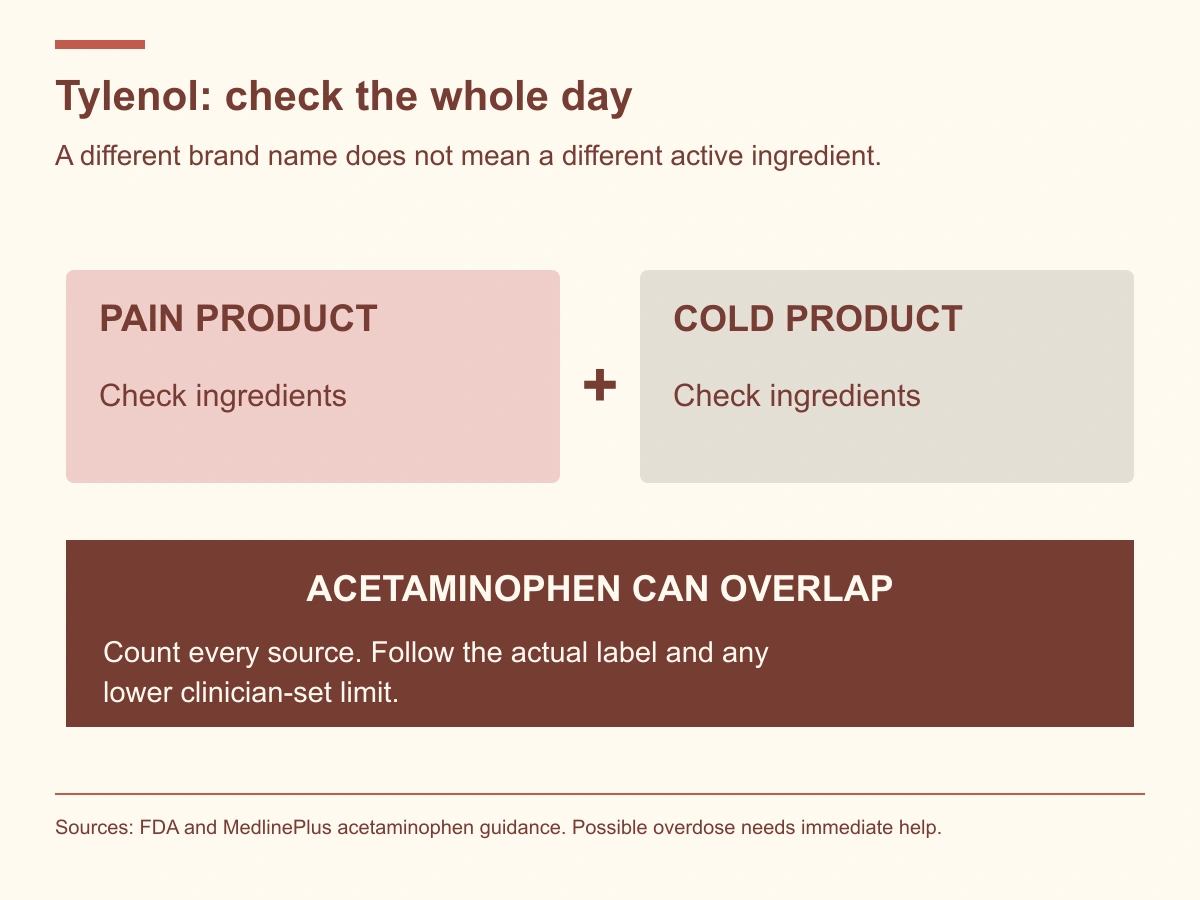
For acetaminophen, a central practical risk is accidentally taking the same ingredient from more than one product. Pain tablets, cold remedies, and some prescription combinations can overlap. FDA emphasizes reading ingredient labels and counting acetaminophen from all sources. FDA acetaminophen consumer guidance.
Ask the pharmacist about your actual product and regimen. “Can I take a painkiller?” leaves more uncertainty than “Can I use this acetaminophen product with these prescriptions and this health history?”
What does semaglutide research involving acetaminophen show?
A small randomized crossover study in 30 adults with obesity used paracetamol—another name for acetaminophen—as a marker to assess gastric emptying. Participants received weekly semaglutide escalated to 1 mg or placebo over treatment periods. First-hour emptying differed, while the overall five-hour measure was not statistically different. Primary semaglutide gastric-emptying study.
That study was not a trial of Tylenol for headaches, and it did not establish a new pain-relief dosing schedule. Its test method helps explain why slower early absorption should not automatically be interpreted as complete failure of an oral medicine.
Do not take extra acetaminophen because relief feels slower than expected. The safe next step is to follow the actual label and ask about persistent symptoms. More medicine is not an appropriate way to compensate for a presumed gastric-emptying effect.
Identify which Tylenol or acetaminophen product you have
The brand name alone is not enough. Products may differ in strength, release characteristics, form, and added ingredients. A tablet, extended-release product, liquid, or combination cold remedy can have different directions.
Read the active-ingredient panel and the directions before use. Check the amount of acetaminophen per tablet, capsule, or measured liquid dose. Confirm the age group and whether the product contains other medicines.
Keep the package. A photograph of the front is useful for identification, but the ingredient and directions panels answer the dosing questions. If you only have loose tablets or an unclear label, ask a pharmacist to identify the product rather than guessing.
| Label detail | Why to check it | Question to ask |
|---|---|---|
| Active ingredient | Another product may contain the same medicine | Is this acetaminophen, and what else is included? |
| Strength per unit | Two products may have different amounts | How much is in one tablet or measured dose? |
| Release type and directions | Intervals and limits may differ | Which instructions apply to this exact product? |
| Warnings | Liver, alcohol, and other risks matter | Does my history change whether I should use it? |
| Other medicines today | Total exposure includes combination products | Am I duplicating the ingredient? |
Why duplicate ingredients can be easy to miss
You might take a cold-and-flu product in the morning and consider a separate pain reliever later. If both contain acetaminophen, the total is the sum of both products, even if their brand names and intended symptoms differ.
Prescription labels may use an abbreviation such as APAP. Ask the pharmacist when the ingredient name is unclear. FDA notes that acetaminophen appears in many prescription and nonprescription products. FDA ingredient-overlap guidance.
Make a simple record of what you took, when, and how much. Include liquids, night-time remedies, and prescription pain combinations. This is particularly helpful during an illness when fatigue and several symptom products make memory less reliable.
Do not use a “different brand” as proof that a second medicine is different. Compare ingredients. If you are unsure whether two products overlap, stop and clarify before adding the second one.
What daily limit should you follow?
Follow the specific package or prescription directions and any lower limit your clinician sets. FDA describes 4,000 mg as the current maximum recommended adult total from all acetaminophen sources; individual product instructions or health circumstances may require less. That maximum is not a target or permission to exceed a product’s directions. FDA acetaminophen limits.
This article does not prescribe a personal dose, interval, or course. Your exact product, age, liver history, other medicines, and reason for treatment matter. Ask the pharmacist if you need help adding amounts from more than one source.
Do not shorten the interval because pain persists. If the usual directions are not controlling symptoms, discuss the problem rather than repeatedly taking more. Persistent pain or fever may also need a diagnosis and a different treatment plan.

Liver history and alcohol belong in the review
MedlinePlus advises telling the clinician about liver disease and reviewing alcohol use before acetaminophen. These concerns remain relevant even if Ozempic and acetaminophen are not the only medicines involved. Acetaminophen important warning.
Describe actual drinking patterns, including a recent episode, rather than assuming a generic internet cutoff answers every situation. Also mention any previous liver injury or advice to limit acetaminophen.
Our Ozempic and alcohol guide discusses separate questions about alcohol, intake, and diabetes care. An answer about one medicine’s alcohol considerations does not settle the other medicine’s liver-risk review.
If you have already taken a concerning amount, do not wait for symptoms or try to correct the situation with food, water, or a supplement. Contact Poison Help or urgent medical care for an event-specific assessment.
Why do you need the pain medicine?
A familiar occasional headache and severe persistent abdominal pain are different problems. The underlying symptom should guide whether self-care is appropriate.
Ozempic’s Medication Guide calls for prompt attention to severe abdominal pain that does not go away, including pain that may extend to the back. Pain relief should not delay evaluation of a possible serious condition. Ozempic Medication Guide.
If you have a sore throat or an infection, our Ozempic sore-throat guide separates common illness questions from urgent swelling or breathing symptoms. If another prescription is added, the Ozempic antibiotics guide helps organize an exact-medicine review.
Tell the clinician whether the pain is new, recurring, worsening, or associated with vomiting, fever, a rash, or difficulty maintaining intake. A symptom label such as “headache” can cover very different situations.
What if you vomit after taking a dose?
Do not automatically repeat the dose. The amount absorbed depends on the product, timing, and event, and a second dose could lead to excessive total exposure. Ask a pharmacist or clinician what to do about that particular episode.
Record the time you took the medicine, the time of vomiting, the product and amount, and any other acetaminophen taken that day. The same principle applies when you are uncertain whether you already took a dose: clarify the uncertainty rather than doubling up.
Persistent vomiting also needs its own review during Ozempic treatment. Our water and drinks guide provides general hydration context, but inability to maintain fluids is a clinical question rather than a reason to follow a fixed online drinking target.
Is Tylenol always preferable to ibuprofen?
Our expanded guide to ibuprofen with Ozempic or Wegovy covers dehydration, kidney disease, bleeding risk and why a timing gap cannot clear an individual combination.
A universal ranking does not account for the person or the symptom. Acetaminophen and NSAIDs such as ibuprofen have different risks, ingredients, and treatment roles. The full medical history and medicine list should guide the choice.
Our ibuprofen, alcohol, and tirzepatide guide describes why pain-relief decisions need context. Its tirzepatide discussion should not be transferred as a personal Ozempic recommendation.
Tell the pharmacist about kidney or liver disease, blood thinners, stomach bleeding history, and other pain medicines. The question is which treatment is appropriate for the present problem, not which product is “safe for everyone on a GLP-1.”
If you think you took too much
Acetaminophen overdose may initially cause few or no symptoms. FDA explains that symptoms can be delayed and may resemble another illness. Feeling well is not proof that an excess amount is harmless. FDA overdose guidance.
Contact Poison Help at 1-800-222-1222 in the United States or seek immediate medical help. Keep the packages and a record of amounts and times available. Call 911 for a person who collapses, has a seizure, cannot be awakened, or has breathing difficulty. MedlinePlus emergency instructions.
Do not use an online calculator to decide that a possible overdose can wait. A professional assessment needs the actual exposure and circumstances.

Questions people commonly ask
Does Ozempic mean I need a higher Tylenol dose?
No higher dose is established here. Delayed gastric emptying is not permission to increase acetaminophen. Follow the actual product directions and ask about pain that remains uncontrolled.
Can I take a cold medicine and Tylenol together?
Check both ingredient panels first. If the cold medicine contains acetaminophen, adding another product can duplicate it. Ask a pharmacist about the full formulation and medicines already taken.
What if I use compounded semaglutide instead of Ozempic?
Identify that preparation explicitly. The compounded GLP-1 guide and CoreAge Rx semaglutide information page can help you organize product questions, but do not establish that branded Ozempic instructions describe every preparation.
Should I separate Tylenol from the weekly injection by several hours?
The reviewed evidence does not establish a universal spacing rule for this purpose. Ask about the actual products and their instructions. A clock-time gap does not address duplicate ingredients or liver risk.
Do I need help if I exceeded directions but feel normal?
Yes. Seek prompt poison-control or medical advice for a possible excessive exposure. Symptoms are not a reliable way to exclude acetaminophen toxicity.
Check the ingredient, amount, and symptom together
Use the exact label, account for every acetaminophen source, and review your history and current symptom with the pharmacist. That gives a practical answer to the combination question while keeping pain care and overdose prevention in view.
Educational information for adults; individual treatment decisions require a qualified clinician. Sources reviewed October 5, 2026. Original AI-generated article images depict fictional people and objects, not patient outcomes. Other editorial images are illustrative. Graphics summarize the cited sources.