
Thai tea can be an enjoyable drink, but its nutrition depends on the recipe and the amount you drink. A black-tea base, a sweet milk tea made at a café, and a packaged mix are different products. There is no single calorie, sugar or caffeine figure that describes every orange glass of Thai iced tea.
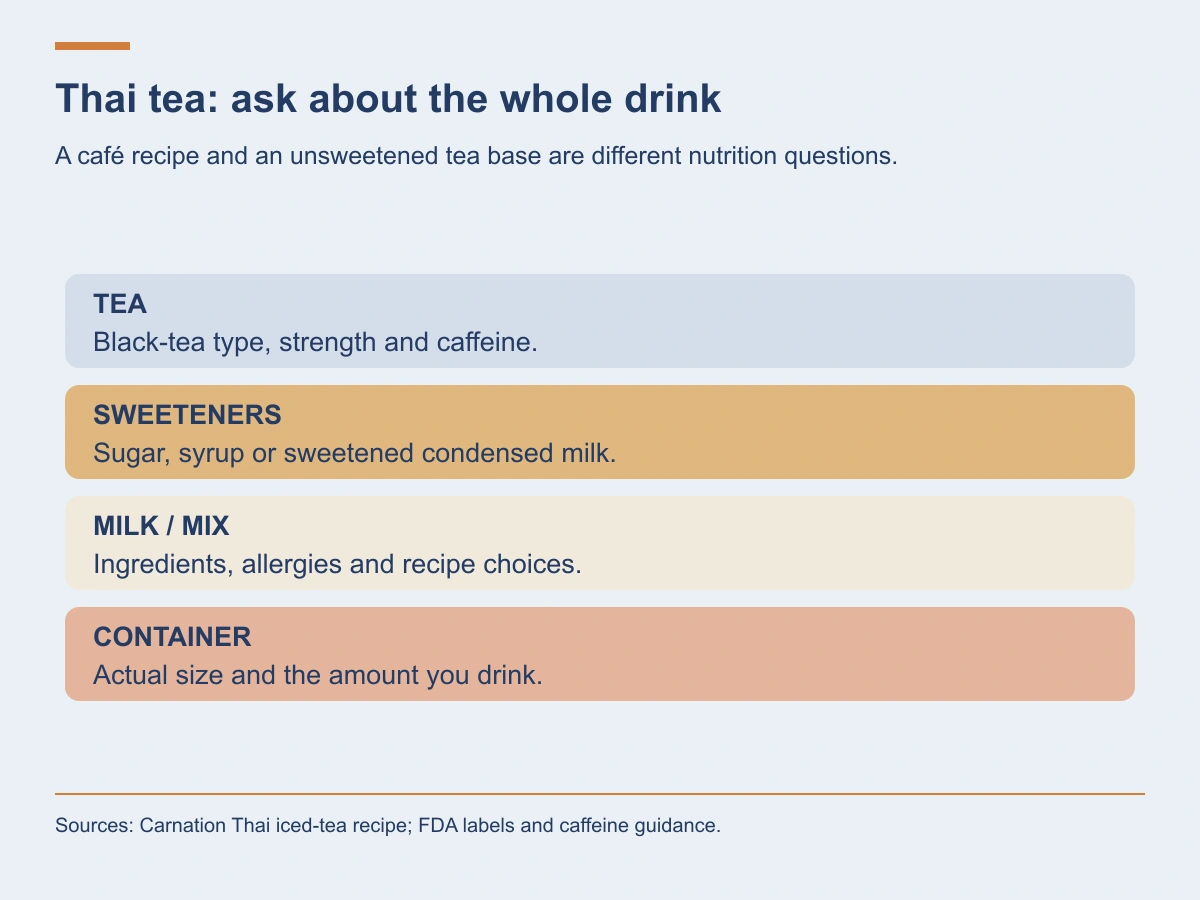
If you are deciding how it fits your routine, ask about the tea, sweeteners, milk or creamer, other ingredients and actual container size. You do not need to treat the drink as forbidden or assume the word “tea” makes the finished recipe a weight-loss beverage.
What is in Thai iced tea?
Recipes vary. Carnation’s official recipe example uses black tea, spices such as star anise or cardamom, sweetened condensed milk and ice. The instructions reviewed do not specify exact ingredient quantities or a finished serving size. Carnation recipe example.
That illustrates why an ingredient description is not enough to produce an accurate nutrition total. A larger spoonful of condensed milk, added sugar or a different milk mixture changes the drink. A café recipe may also differ from what you make at home.
When ordering, ask what is already mixed into the tea base and what is added afterward. If a base is prepared in advance, a request for less syrup may not remove sweetness already present. This is a question for that café, not a claim that every shop uses the same method.
Is the tea itself the same as the finished drink?
No. An ingredient can be part of many different recipes. The nutrient information for unsweetened brewed tea cannot describe a drink after milk, condensed milk, sugar, syrup or other ingredients are added.
Color also cannot tell you the amount of sugar or caffeine. The strength of the tea, the milk ratio and the actual mix belong in the question. A photograph may show an attractive drink but cannot verify its recipe, portion or label.
Our sweet tea and soda comparison applies the same principle to another beverage question. The Bai drinks guide shows why a brand family or familiar drink name should not replace reading the actual product information.
How much sugar and how many calories are in Thai tea?
There is no universal amount established by the sources reviewed here. For a packaged product, use its current Nutrition Facts label and preparation directions. For a home recipe, calculate the ingredients actually used and how the batch is divided.
FDA explains that the number of servings consumed determines the nutrients and calories consumed. A labeled serving is a reference amount rather than a personal recommendation. FDA label guidance.
| Detail | Why it changes the estimate |
|---|---|
| Tea base or mix | The product may have its own ingredients and preparation directions. |
| Sugar or syrup | The amount actually added belongs in the recipe. |
| Sweetened condensed milk | It adds more than the visual effect of making tea creamy. |
| Other milk or creamer | Different products have different labels. |
| Finished batch | Ingredient totals need to be divided according to the portion poured. |
| Container and refill | The amount consumed may differ from the listed serving. |
If a café publishes nutrition information, confirm the drink size and whether it includes standard ingredients and toppings. A custom version may differ. If no reliable information is available, avoid pretending that an unrelated online figure is an exact measurement of your cup.
An estimate can still be useful when its assumptions are clear. For example, measuring the milk and sweetener in your own usual recipe can help compare two preparations. That is more informative than collecting several conflicting “one Thai tea” calorie claims.
Total sugar and added sugar answer different questions
FDA distinguishes total sugar, which includes sugars naturally present in foods as well as added sugars, from added sugar on the label. FDA sugar explanation. The finished drink’s ingredients determine what those categories include.
Do not assume that avoiding a separate spoonful of table sugar makes a sweetened milk mixture sugar-free. Likewise, a “less sweet” description is a preference or preparation request, not a verified zero-sugar amount.
If a medical plan requires attention to carbohydrate or sugars, ask about the actual drink and portion within that plan. A general beverage article cannot set an individual target or authorize changes to glucose-management medicines.
Does Thai tea contain caffeine?
Black tea contains caffeine, but the amount in a particular Thai tea depends on the tea, strength, preparation and portion. The sources reviewed do not measure the caffeine in your café’s drink or establish a universal Thai-tea number.
FDA notes that caffeine varies across products and that restaurants may not provide precise amounts. It encourages asking about caffeine and considering all sources in the diet. FDA caffeine guidance.
Include coffee, other teas, energy drinks, supplements and any relevant medicines in the day’s picture. The decaf tea article explains why decaffeinated and caffeine-free are different descriptions. Our CELSIUS article discusses named energy-drink amounts without treating them as personal caffeine limits.
If caffeine affects your sleep or causes unwanted symptoms, ask about a suitable alternative. Do not assume that adding more milk removes caffeine from the tea already used in the recipe.

What does the FDA’s adult caffeine reference mean?
FDA cites 400 milligrams per day as an amount not generally associated with negative effects for most adults, while emphasizing differences in sensitivity, medicines and health conditions. It recommends individual advice during pregnancy, when trying to conceive or while breastfeeding. FDA adult caffeine context.
That reference is not a target to reach and does not clear a particular Thai tea when its amount is unknown. A person’s unwanted effects may occur below it. Ask the clinician or pharmacist about your own circumstances rather than treating a general adult number as a guarantee.
Report palpitations, sleep disruption, anxiety, nausea or other symptoms when they occur. Severe chest symptoms, breathing difficulty or fainting require appropriate emergency assessment. Do not assume a drink is the cause and overlook an urgent problem; our palpitations and chest-symptom guide explains that boundary.
Milk, mixes and ingredient questions
If you need to avoid an ingredient, ask about the entire recipe. Replacing one milk does not establish that the tea base, condensed milk, creamer or topping no longer contains it. Read packaged ingredient lists and ask the preparer about ingredients that are unclear.
Be specific about the reason for the question when speaking with the care team or café. A preference, a dietary restriction and a diagnosed allergy may require different handling. Do not use a drink’s color or a broad “plant-based option” description to verify every component.
A home recipe can give you more control over the ingredient list, provided you use products that meet your needs. Check each label rather than assuming two creamers or milk alternatives are nutritionally identical. Texture and taste may differ as well, so choose a version you enjoy enough to repeat.
Practical ways to make the choice clearer
Start with one change you actually want. You might choose a smaller container, ask for less added sweetener, use a measured amount in a home recipe, or decide how often the drink fits your routine. None of these is a required rule for everyone.
If you order a smaller drink, confirm what size is being served. If you request less sweetener, ask whether the recipe can be adjusted. If you make a batch at home, note the ingredient amounts before dividing it among several glasses.
Avoid compensating for the drink by skipping a meal automatically. A beverage choice and meal adequacy should be considered together. Our balanced-meals guide and protein breakfast ideas can help you organize meals around a drink you enjoy.
Can Thai tea help with weight loss?
The recipe and FDA label sources reviewed here do not establish a fat-burning benefit from Thai tea. A tea ingredient or spice does not turn the whole drink into a treatment for weight loss.
Consider whether the drink replaces another beverage or is added to the routine. Compare the actual preparations and portions, and think about enjoyment and practicality as well as nutrition. A sustainable choice is more useful than a rule that creates repeated cycles of restriction and compensation.
The water and drinks guide discusses everyday hydration choices without promising a weight-loss effect from a particular drink. NIDDK’s portion guidance also explains why the amount consumed belongs in the decision.

Thai tea during medication-based weight management
There is no required Thai-tea rule for semaglutide or tirzepatide. Give the care team a realistic account of drinks, meals and symptoms if appetite or digestion changes. A sweet milk tea should not become your only response to difficulty eating normally.
Persistent vomiting, difficulty keeping fluids down or severe abdominal symptoms need medical assessment. Do not try to correct a treatment problem solely by changing the milk, using a smaller cup or adding a drink marketed as healthy.
For adults exploring care, the CoreAge Rx semaglutide page describes the service. Eligibility and the actual prescription require an individual consultation. Enjoying Thai tea does not by itself establish a need for medicine or predict a treatment result.
Frequently asked questions
Is Thai tea healthier than soda?
Compare actual drink sizes and recipes rather than choosing by category name. Sweeteners, milk and the amount consumed can change the comparison. Our sweet-tea and soda guide discusses how to make that comparison without assuming that every tea-based drink has less sugar or fewer calories.
Is a less-sweet order sugar-free?
Not necessarily. Ask what the request changes and whether a sweetened base or condensed milk remains. A less-sweet preference does not supply a measured sugar amount. Use reliable product information when available, especially if the distinction matters to a medical nutrition plan.
Does more ice make the recipe healthier?
Ice changes the glass’s appearance and may affect how much liquid is poured, but it does not establish a standardized recipe or nutrient amount. The actual ingredients and liquid portion are still relevant. Do not assign a calorie reduction simply from how much ice you can see.
What is the most useful first question at a café?
Ask what is in the tea base and what is added to the size you plan to order. That identifies which parts can be adjusted and which are already prepared. You can then make a choice that fits your preferences and needs without expecting the server to verify an unrelated internet nutrition estimate.
Educational information for adults; individual treatment decisions require a qualified clinician. Sources reviewed October 3, 2026. Original AI-generated article images depict fictional people and objects, not patient outcomes. Other editorial images are illustrative. Graphics summarize the cited sources.