
There is no single calorie number that makes breakfast right for every adult. Your daily needs, appetite, schedule, medical conditions, and the rest of the day’s food matter. Protein can be one useful component of the meal without turning breakfast into a fixed calorie or protein contest.
A practical starting point is to choose a meal you can reliably eat, then check whether its amount and ingredients fit your plan. This guide explains meal arithmetic, offers flexible food combinations, and covers common questions during semaglutide or tirzepatide treatment.
How many calories should breakfast be?
Start with the daily plan and the problem you want breakfast to solve. Someone eating an early meal before a long work shift may need a different arrangement from someone who prefers a smaller first meal and a later eating opportunity.
A search result recommending one breakfast number cannot account for those differences. Nor does the smallest possible breakfast automatically make a weight-management plan more useful. Consider whether the pattern supports adequate intake, is comfortable, and is feasible in your real day.
Our calorie-intake guide explains estimates and their limits. If a condition or medicine requires a particular eating schedule, follow that individualized plan. NIDDK discusses how diabetes medicines, activity, and other conditions can affect meal timing. NIDDK nutrition guidance.
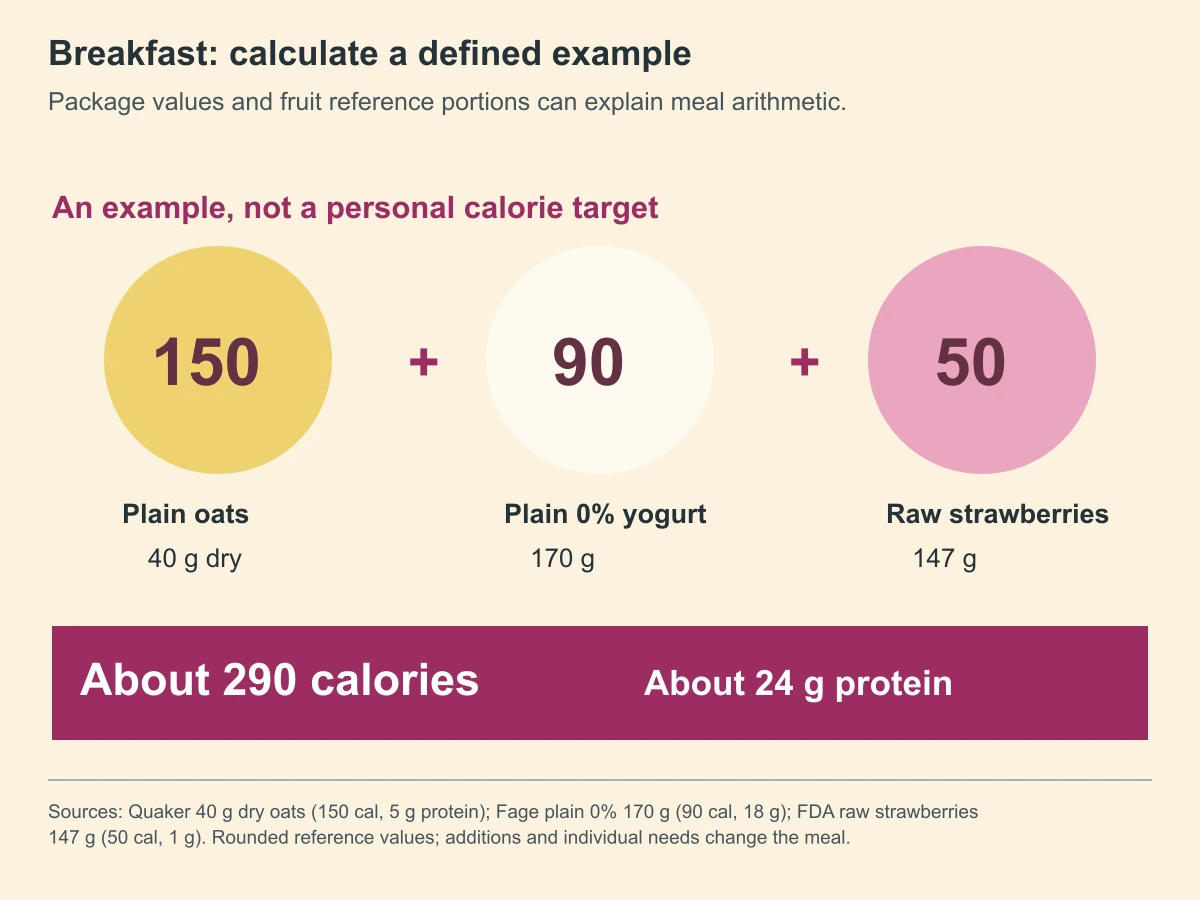
A defined example: oats, yogurt, and strawberries
The example below uses actual manufacturer values and an FDA fruit reference. It illustrates calculation, not a personal breakfast prescription.
| Food and defined amount | Reference calories | Reference protein |
|---|---|---|
| Quaker Old Fashioned Oats, 1/2 cup dry or 40 g | 150 | 5 g |
| Fage Total plain 0%, 3/4 cup or 170 g | 90 | 18 g |
| Raw strawberries, 147 g | 50 | 1 g |
| Illustrative total | About 290 | About 24 g |
Sources: Quaker product nutrition panel, Fage plain 0% label, FDA raw-fruit reference.
Label values are rounded, and brands or amounts can differ. Added milk, nuts, syrup, oil, or other ingredients change the meal. The featured food illustration is not a photograph of these weighed portions.
The oats amount is dry, not half a cup of the finished cooked food. The yogurt value uses the 170 g reference; Fage also lists a separate 150 g container at 80 calories and 16 g protein. Do not combine the calorie value from one serving with the protein value from the other.
Why 290 calories is an example rather than a target
Knowing a meal’s calculated amount can help you compare it with your plan. It does not tell you whether that amount is enough for you. You might need a different portion, additional food, or another option altogether.
Similarly, 24 g of protein in the example is a description of those foods, not a universal breakfast goal. A dietitian can help personalize overall intake and how it is distributed across meals, especially when medical needs are involved.
Use the example to learn a method: identify the actual products, match the portion to the reference, add the ingredients, and retain the uncertainty of rounded numbers. You can then apply the method to a breakfast you prefer instead of copying this bowl every day.
Start with the morning you actually have
Describe your wake time, commute, work demands, appetite, and access to refrigeration or a microwave. A meal that takes 20 minutes to cook does not solve a five-minute morning.
Then choose the first problem to address. If you are hungry soon after eating, review the amount and meal composition. If you skip food because you are rushed, preparation and portability may be more useful. If the same option has become unappealing, a short rotation can help.
These are different planning questions. You do not need a new diet identity to make one improvement. Try a realistic change and notice whether it helps you eat adequately and consistently.
Include protein alongside other foods
Eggs, yogurt, tofu, beans, and other foods can contribute protein. They can be paired with fruit or vegetables, a grain or other starch, and fats or flavorings you enjoy. NIDDK describes a varied eating pattern rather than a requirement to remove other food groups. NIDDK healthy-eating overview.
An egg alone may be part of a meal rather than the full breakfast. A yogurt bowl can include oats and fruit. Beans can contribute carbohydrate and fiber as well as protein. The combination and amount matter more than naming one ingredient as the solution.
Our balanced-meal guide offers more examples. If you have kidney disease or another condition affecting protein or other nutrients, use individual guidance. NIDDK kidney nutrition.
Egg-based breakfasts can stay simple
Try eggs with toast and fruit, a vegetable scramble with a tortilla, or an egg sandwich with a produce side. Safely stored cooked vegetables can reduce preparation time.
Change the bread, vegetables, seasoning, or side rather than learn a new recipe every day. Keep one combination for mornings when you have time and a simpler option when you do not.
If you have an egg allergy or dislike eggs, choose another food. No single breakfast ingredient is required for everyone. A familiar meal you enjoy is usually more practical than a complicated recipe that repeatedly goes uneaten.
Our guide to prepared chia foods and weight questions covers yogurt mixtures and other meal ideas, sufficient hydration, swallowing precautions and the limits of two different randomized trial findings.
Yogurt and similar bowls offer quick assembly
A yogurt bowl with fruit, oats, nuts, or seeds can be assembled quickly. Compare the actual label when protein, added sugar, portion, or another nutrient matters to your plan. Different yogurts and plant-based alternatives are not automatically nutritionally identical.
The defined example above uses plain dairy yogurt. Milk is a major food allergen, and milk allergy and lactose intolerance are different considerations. Read the actual ingredient and allergen information and follow your personal guidance. FDA food-allergy information.
Plan refrigeration when taking a perishable bowl to work. Keep dry additions separate if that makes the texture more appealing. Convenience includes keeping the meal usable and safe until you can eat it.

For a closer look at yogurt labels, protein and meal questions, our yogurt guide compares equal serving sizes from actual manufacturer panels and explains plain versus flavored choices, dairy allergies, and toppings. A label comparison is not a universal brand or portion prescription.
Tofu, beans, and lentils can belong at breakfast
A tofu scramble, beans on toast, or a lentil-based dish can offer a savory alternative. You do not need to reserve them for lunch or buy specialty breakfast products.
For a simple meal, pair tofu with vegetables and a tortilla, or beans with toast and another suitable side. Adjust the amount to the individual plan and appetite. Our pinto-bean guide shows why canned products and portions can have different nutrient totals.
If symptoms repeatedly follow a meal, note the actual ingredients and amount and discuss persistent problems with the care team. Do not assume a single food category explains every digestive concern.
Leftovers can be breakfast too
If traditional breakfast foods do not appeal, a suitable portion of soup, rice with beans, or another familiar meal can work. The time of day does not change its ingredients.
Use the same food-safety care as for other meals. USDA advises refrigerating perishable leftovers within two hours, or one hour above 90°F, keeping refrigerated leftovers for three to four days, and reheating to 165°F. USDA leftovers guidance.
Prepare containers that fit the amount you expect to use. Intentional leftovers can reduce waste and effort, but a perishable meal should not remain in an uncooled bag for the morning.
Build a portable option for rushed days
If a sandwich is your practical portable option, our guide to peanut butter and jelly sandwich questions uses specific product labels, includes bread and portions in the calculation, and considers allergies and the complete meal.
Examples include refrigerated yogurt with fruit and a separate oat container, an egg or tofu sandwich, or a bean wrap. Choose packaging and cooling that fit the actual travel conditions.
Test one option on a normal workday before making a large batch. Did it travel well? Was there enough time to eat? Did its amount fit the day? Those observations can identify a useful adjustment without requiring a perfect breakfast plan.
Keep a backup for an unexpectedly early departure. It can be simple, and it can change with your routine. If there is no refrigeration, select food appropriate for those conditions rather than assume every portable recipe is safe without cooling.
Read labels without turning them into rigid rules
For a packaged-food example, our guide to sausage portions, protein and breakfast meals compares two named panels with different gram weights and considers sodium, saturated fat and the rest of the meal.
FDA explains that the nutrient amounts refer to the stated serving size and that a package may contain several servings. Use the amount you actually eat when calculating. FDA Nutrition Facts guidance.
A “high protein” phrase does not identify the best breakfast for every person. Compare the complete product and consider taste, cost, allergies, convenience, and how it fits the meal.
You can make an informed comparison without chasing the highest protein figure or lowest calorie figure. A modest change to an ordinary meal may be more useful than a specialized product that does not solve your morning problem.
Protein powders, shakes, and other supplements
A powder or shake can be convenient, but it is optional. Read the actual panel and consider whether the drink is one component or intended to serve as the whole meal. Different products have different ingredients and nutrient amounts.
Product category matters too. CoreAge Rx’s Strong Suit creatine product is a creatine supplement, not a protein powder. A greens product such as Green Scene is also a separate supplement to review, rather than a complete breakfast calculation.
Discuss supplements with your clinician or dietitian when a health condition, medication, or restricted diet makes the choice relevant. Ordinary food may be simpler, less expensive, or more enjoyable. The useful question is whether a product addresses an identified need.
What if you are not hungry early in the morning?
Your plan can account for when you can comfortably eat. A smaller first option or later eating opportunity may fit the day, provided it agrees with any medication or clinical instructions.
If appetite is newly low, symptoms persist, or you cannot tolerate food, seek assessment. If skipping the meal regularly leaves you uncomfortably hungry later, review that pattern. Our hunger guide can help you prepare the discussion.
You do not need to force a large meal immediately after waking simply because an online routine specifies it. You do need an overall plan that meets your needs and remains responsive to health concerns.
Breakfast during semaglutide or tirzepatide treatment
Tell the care team if meals have become very small, repetitive, or difficult to tolerate. A calorie calculation does not establish adequacy, and eating as little as possible should not become the goal.
The semaglutide nutrition and muscle guide and tirzepatide nutrition guide cover broader questions about intake and function. Bring a short record of meals, symptoms, and practical barriers to follow-up.
Breakfast also does not function as a metabolism switch or guarantee a particular weight result. Assess the overall routine, treatment, and health goals rather than assign a fat-burning promise to one recipe.

Make a short rotation you will use
Choose one option for a quiet morning, one for a rushed morning, and one backup. A scramble, yogurt bowl, and safely stored sandwich are examples; your rotation can use entirely different foods.
Let ingredients overlap with other meals to reduce waste. After a week, review which options were eaten, which were skipped, and why. That is more useful than collecting dozens of recipes without trying one.
Common breakfast calorie and protein questions
Is 300 or 400 calories the right breakfast?
There is no universal answer. The daily plan, health needs, appetite, and other meals determine whether a particular amount fits.
Does the 290-calorie example mean I should copy it?
No. It teaches calculation from defined portions and rounded reference values. Your foods and needs can differ.
How much protein should breakfast have?
There is no single target appropriate for everyone. A dietitian can help personalize total intake and meal planning.
Can I include bread or fruit?
Those foods can fit a varied meal. Portions and individual medical guidance still matter.
Must breakfast include eggs or dairy?
No. Tofu, beans, other foods, and suitable alternatives can provide options that fit preferences and allergies.
Will a protein breakfast guarantee weight loss?
No. It is one part of an overall pattern, with multiple influences on weight and health.
What is the easiest first change?
Add a practical food to a breakfast you already enjoy or prepare one dependable option for a rushed day. Review whether it is feasible and enough, then adjust with your individual plan in mind.
Educational information for adults; individual treatment decisions require a qualified clinician. Sources reviewed September 30, 2026. Original AI-generated article images depict fictional people and objects, not patient outcomes. Other editorial images are illustrative. Graphics summarize the cited sources.