
Creatine’s effects are usually assessed over days to weeks, not minutes. A loading protocol can raise muscle stores within roughly a week, while regular lower daily intake builds stores more gradually, often over several weeks. Changes in training performance and muscle size follow their own timelines.
Separate three different outcomes
| What changes | What it means | What it does not prove |
|---|---|---|
| Muscle creatine stores | More creatine is available in muscle | A guaranteed visible change |
| Scale weight | Water, food, fat, and other tissues affect the number | That all gain is muscle or fat |
| Training performance | Repetitions, loads, or repeated efforts may improve | That the supplement caused every improvement |
The NIH review describes loading and gradual protocols. The creatine evidence review discusses water changes and training adaptations. These are related processes, but they should not be collapsed into a single promise such as “results in seven days.”
Build a useful starting record
Before beginning, record a normal week of training. Choose a few exercises you can repeat safely, with similar technique and effort. Note the load, repetitions, and how the session felt. Include major changes in meals, sleep, and activity.
If tracking weight is appropriate for you, compare readings under similar conditions and use a trend rather than one number. Avoid taking repeated measurements throughout the day to hunt for an immediate effect. If weighing creates distress, performance and consistency measures can be more useful.

What if you notice nothing?
First check the basics: the actual creatine amount, consistency, and whether your activity matches the best-supported uses. A casual walk may not reveal the kind of repeated high-intensity benefit measured in a lifting or sprint study. Individual responses also vary.
Do not keep increasing the serving because you cannot feel anything. Creatine is not expected to produce a stimulant sensation. Our daily-dose guide can help distinguish serving size from expectations.
Strong Suit and a realistic first month
The product’s pictured label directs one scoop daily, providing 5 g creatine monohydrate. A practical first-month plan is to follow the label, keep your training log, and review tolerance. This is an observation period, not a guarantee that a particular amount of muscle will appear in four weeks.
If you develop persistent digestive symptoms, pause and discuss them rather than waiting for a promised adjustment deadline. If your weight rises early, read the water-weight guide before concluding that your nutrition plan has failed.
Decide what would make it worthwhile
Write down the result you care about: supporting a consistent strength routine, making training progress easier to track, or simplifying an existing supplement plan. Review that goal after several weeks. A product that is hard to tolerate or does not fit your routine does not become necessary simply because it works for someone else.

Define what “working” would look like
The word “results” can mean several different things: more creatine stored in muscle, an additional repetition during a demanding set, a change on the scale, or a visible change in muscle size. Those outcomes are measured differently and do not share one universal deadline.
This matters when a product advertisement promises a change within days. A rapid change in muscle stores is not the same claim as building a particular amount of new muscle tissue. Similarly, a higher scale reading is not proof of improved performance. Ask which outcome is being discussed before deciding whether the promised timeline is meaningful.
For everyday use, choose an outcome you can observe reasonably well. A training record is often more informative than trying to detect a subtle physical sensation. If your goal is maintaining function during a weight-loss plan, comparable strength or activity measures may be more useful than expecting the scale to fall faster.
Use stages without turning them into guarantees
Before starting: establish a baseline. Record a normal week of training, the exercises you use, the loads or repetitions, and major limitations. Note the supplements already in the routine. Starting from a clear record makes later changes easier to interpret.
Early use: focus on following the product directions and noticing tolerance. An early water-related weight change may occur, particularly with a loading approach, but its presence or absence is not a complete verdict. Do not increase the serving simply because the first few days feel ordinary.
After several weeks: review consistency and comparable sessions. A gradual daily routine needs time to raise stores, and training adaptations require repeated exposure to appropriate exercise. Look for the pattern rather than selecting the single best or worst workout.
At a planned review point: ask whether the routine is comfortable, affordable, and relevant to the original goal. Continuing indefinitely should be a choice based on your circumstances, not a rule created by the first purchase. Seek professional guidance if medical factors or persistent symptoms complicate the decision.
These stages organize observation. They are not promises that every reader will achieve a particular result by a particular week.
Build a training comparison that means something
Suppose you are tracking a seated row. Comparing ten controlled repetitions at a familiar load with twelve repetitions several weeks later can be useful if the equipment, range of motion, and effort are similar. Comparing a careful set on one machine with a rushed set on another is harder to interpret.
Keep a few variables reasonably stable: exercise selection, technique, rest intervals, and the way you record effort. You do not need laboratory conditions, but you should know when a change in the program explains a change in the numbers. Record illness, poor sleep, or an unusually demanding workday when those factors clearly affect a session.
Improvement still cannot be attributed entirely to creatine. Practice, a better program, adequate meals, and motivation can all contribute. The purpose of the log is to support a sensible decision about the overall routine, rather than to prove a single cause from one person’s experience.
Why photographs and body-composition scales can mislead
Photographs change with lighting, posture, clothing, and recent exercise. A person may look fuller after starting creatine without having built the same amount of new muscle tissue suggested by the image. Pictures can document appearance, but they do not measure the reason for a change.
Home body-composition scales estimate rather than directly observe each tissue. Hydration can affect the interpretation of those estimates. If you use a device, keep the conditions consistent and avoid treating small day-to-day changes as precise measurements of muscle gained or fat lost.
If body composition is part of a clinical plan, tell the professional performing the assessment about creatine use and the start date. They can explain what the chosen method can and cannot show. The water-weight guide provides more context for the first weeks.
Troubleshoot without escalating the dose
If progress seems absent, check whether the product clearly discloses creatine monohydrate and the amount per serving. Then review whether the routine has been consistent and whether your exercise resembles the activities for which the evidence is strongest. These checks are more useful than immediately adding another scoop.
Next, look at the training plan itself. A program without a clear progression, frequent interruptions, or sessions that are not comparable can make improvement difficult to detect. Low food intake and poor recovery can also affect performance. Creatine is not a substitute for addressing those practical limitations.
Finally, allow for individual variation. A well-organized routine does not guarantee that a supplement will produce an obvious personal benefit. If the product is uncomfortable or does not fit your priorities, discuss whether continuing makes sense rather than treating a larger amount as the only remaining option.
Frequently asked questions
Should I notice an effect after the first scoop?
An immediate stimulant-like effect is not expected from plain creatine. Its role involves changes in stores over time. A strong sensation from a combination product may come from other ingredients and is not a useful test of creatine effectiveness.
Does loading guarantee faster muscle growth?
Loading can raise stores faster, but that does not guarantee an equally fast change in muscle tissue. Exercise, nutrition, time, and individual response still matter. Keep the timeline for store accumulation separate from the timeline for training adaptation.
How long should I wait if I have side effects?
Do not wait for an advertised adjustment deadline when symptoms are persistent, severe, or interfere with food and fluids. Pause and seek appropriate advice. A progress timeline should never be used to explain away a concerning symptom.
Explore Strong Suit™
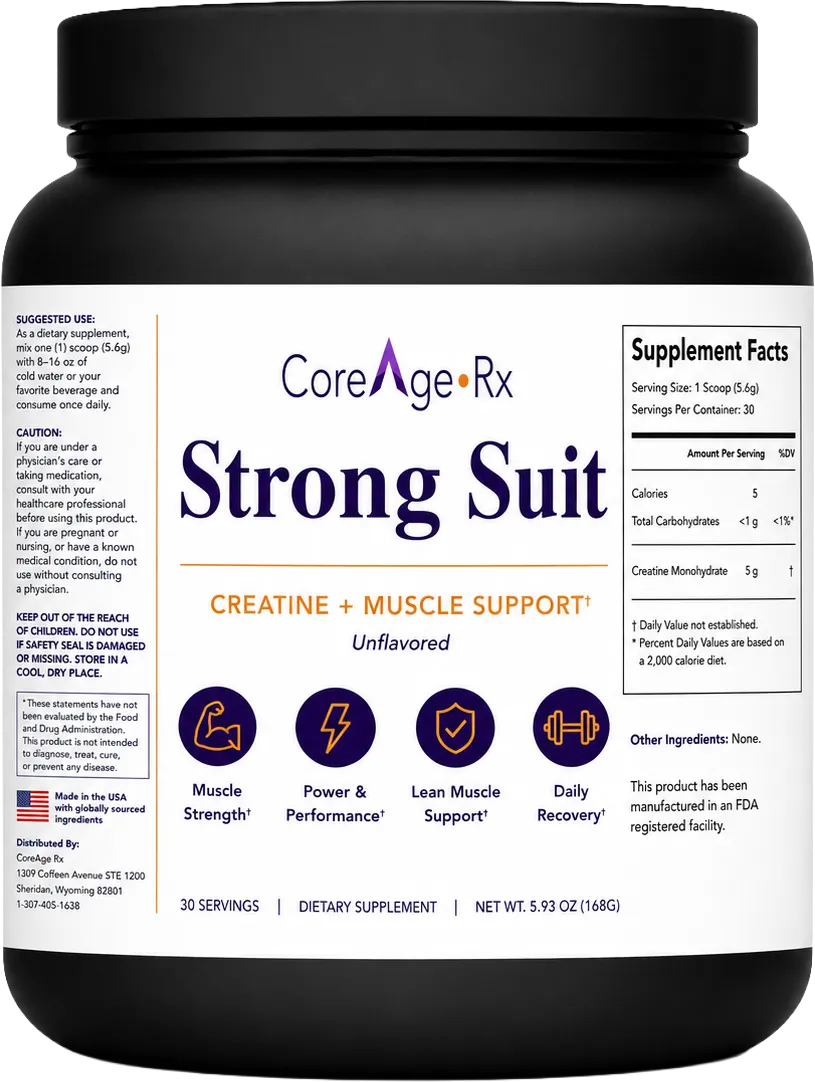
Strong Suit is CoreAge Rx’s unflavored creatine monohydrate powder. The pictured label lists 5 g creatine per scoop and 30 servings. See the current Strong Suit™ page and check the bottle you receive before use.
Related reading
- Creatine Monohydrate: Benefits, Dosing, and What to Expect
- Do You Need a Creatine Loading Phase?
- Creatine and Water Weight: What the Scale Can Tell You
- Nutrition during GLP-1 treatment
Educational information, not individualized medical advice. Product information and linked research checked September 15, 2026. Ingredient research does not establish identical effects for a finished supplement.