
Daily creatine routines usually include rest days. The purpose is to maintain elevated muscle stores over time, so the supplement schedule does not have to stop when the workout schedule pauses. Rest and recovery are part of training, too.
Why the workout calendar is not the whole picture
Muscle creatine stores change over days and weeks. They are not a tank that empties completely after each session or requires a fresh scoop only when you lift. The review of creatine supplementation describes the buildup and maintenance of those stores.
That is why a daily labeled routine is different from taking a stimulant before selected workouts. If you are unsure about the amount, start with how much creatine to take rather than inventing a larger “training day” dose.
Keep the serving consistent
Strong Suit’s pictured directions are one scoop daily. It supplies 5 g creatine monohydrate per scoop and does not list a separate rest-day amount. Taking less because you did not train, or taking more because you trained twice, changes that routine without an established need.
Use the same meal as a cue every day, or create two simple reminders: one for workout days and one for other days. A calendar checkmark can prevent accidentally taking the serving twice. You do not need a complex tracker to make this work.

A missed day is different from a long break
If a serving is missed, return to the usual labeled schedule; do not double up to catch up. The research on gradual loading and maintenance does not support treating one missed serving as a total reset. Longer breaks are a separate planning issue, especially if you stopped because of symptoms or a clinician’s advice.
When returning after illness or an extended pause, review why you are restarting. Do not automatically repeat a loading phase, particularly if your product directs a single daily serving.
What if the rest day follows a stomach bug?
A day without training because of vomiting, diarrhea, or poor fluid intake is not just a normal recovery day. Focus on the illness and contact a clinician when symptoms are significant. There is no need to prioritize a supplement over your ability to eat, drink, and recover.
The NIH exercise-supplement guidance puts supplements within a broader nutrition and training context. Creatine should fit that context, not become a rule you follow regardless of how you feel.
Keep recovery measures separate
Use rest days for your planned recovery activities, meals, and sleep. Taking creatine is not evidence that you can skip those needs. Track progress across comparable training sessions, as explained in how long creatine takes to work, rather than judging a non-training day by whether you “felt” a supplement effect.

Think in weeks rather than isolated workouts
A training week contains both exercise and recovery. The purpose of a daily creatine routine is to support elevated muscle stores across that wider pattern. It is therefore more useful to think about what you do consistently over weeks than whether a particular Tuesday includes squats or a walk.
This is different from a supplement chosen for a short-lived sensation before a session. Creatine is not a reward that must be earned by exercising, and a rest day does not automatically make the serving unnecessary under a daily label. The activity schedule and the supplement directions answer different questions.
The same distinction helps prevent overuse. Two workouts in one day do not automatically mean two daily servings. A demanding session does not provide a reason to estimate how much creatine you “used up” and replace it scoop for scoop. That approach is not how common maintenance routines are organized.
Identify which kind of rest day you are having
A planned recovery day is part of the normal program. You are eating and drinking normally and have simply chosen not to perform a hard session. A usual daily routine can often remain tied to the same meal or cue, subject to the current product directions.
A busy day when training was canceled is primarily an adherence problem. If the supplement was linked only to the gym, you may forget it when the gym visit disappears. A meal-based backup or calendar reminder can make the routine independent of whether the workout happens.
A day off because of illness or symptoms deserves a different response. Vomiting, diarrhea, poor intake, or significant pain are not ordinary recovery conditions. Address the illness and seek clinical guidance when appropriate. Do not prioritize maintaining a supplement streak over hydration, nutrition, or medical advice.
An extended break from training invites a review of your goals. A vacation, injury, or several weeks away from exercise may change whether the routine is useful or convenient. Discuss ongoing use when health circumstances have changed instead of assuming every type of break should be treated identically.
Make a seven-day routine visible
A simple weekly record can include the day, whether you trained, whether you took the labeled serving, and any symptoms. The columns should remain separate. This makes it clear that the serving follows the product schedule, while the workout follows the training plan.
| Day type | Useful cue | Common mistake |
|---|---|---|
| Regular training day | A familiar meal or recovery routine | Taking an extra serving after a second session |
| Planned rest day | The same daily meal | Forgetting because the gym cue is absent |
| Travel or busy day | A planned, practical daily reminder | Using an unlabeled scoop or unknown powder |
| Illness day | Review health needs first | Treating the supplement as more urgent than symptoms |
The record does not need to become a permanent project. A short period of tracking can reveal whether the chosen cue works. Once the pattern is reliable, a less detailed reminder may be enough.
A missed serving does not need a catch-up workout
Some people respond to a missed day by taking extra powder, adding another workout, or restarting a loading phase. These reactions confuse three separate things: supplement consistency, exercise programming, and muscle-store changes. One missed serving does not justify automatically changing all three.
Return to the label-directed routine. If missed days are frequent, examine the cue rather than repeatedly compensating with larger amounts. Perhaps the container is stored far from the place you prepare drinks, the workout schedule is variable, or several people share the same supplement area. Solve the practical issue that actually exists.
If you stopped because a clinician advised you to stop, a calendar reminder is not the answer. Follow up about the reason for the pause and whether restarting is appropriate. The context of the missed days matters more than the number alone.
Use rest days to support the larger plan
Rest days still involve food, fluids, and ordinary movement. Creatine does not provide the protein needed across the day, and it does not make recovery habits unnecessary. A person who takes a scoop perfectly but regularly under-eats or sleeps poorly has not solved those separate needs.
Keep nutrition decisions tied to your training and health goals rather than making abrupt restrictions because you did not exercise that day. If you are following a medical weight-management plan, ask your care team how to maintain adequate intake when appetite is lower. A supplement routine should fit that plan, not drive it.
Progress is best assessed when you return to comparable sessions. Review controlled repetitions, loads, and how reliably you complete the program. The absence of a “creatine feeling” on a rest day tells you little about the usefulness of the routine.
Frequently asked questions
Do I need a smaller rest-day scoop?
Strong Suit’s reviewed directions specify one scoop daily and do not provide a separate rest-day amount. Follow the current label and any individualized clinical instructions. Do not create alternating doses solely because the workout intensity changes.
What if I only train twice a week?
Workout frequency does not change the wording of a daily product label. Whether creatine is worthwhile for your overall goal is a separate discussion. A clinician or sports dietitian can help assess the training plan, nutrition, and reason for supplementation.
Should I restart loading after a vacation?
Do not automatically add a loading phase. Review the length and reason for the break, the current product directions, and any health changes. The loading-phase article explains why loading is optional rather than a mandatory restart procedure.
Explore Strong Suit™
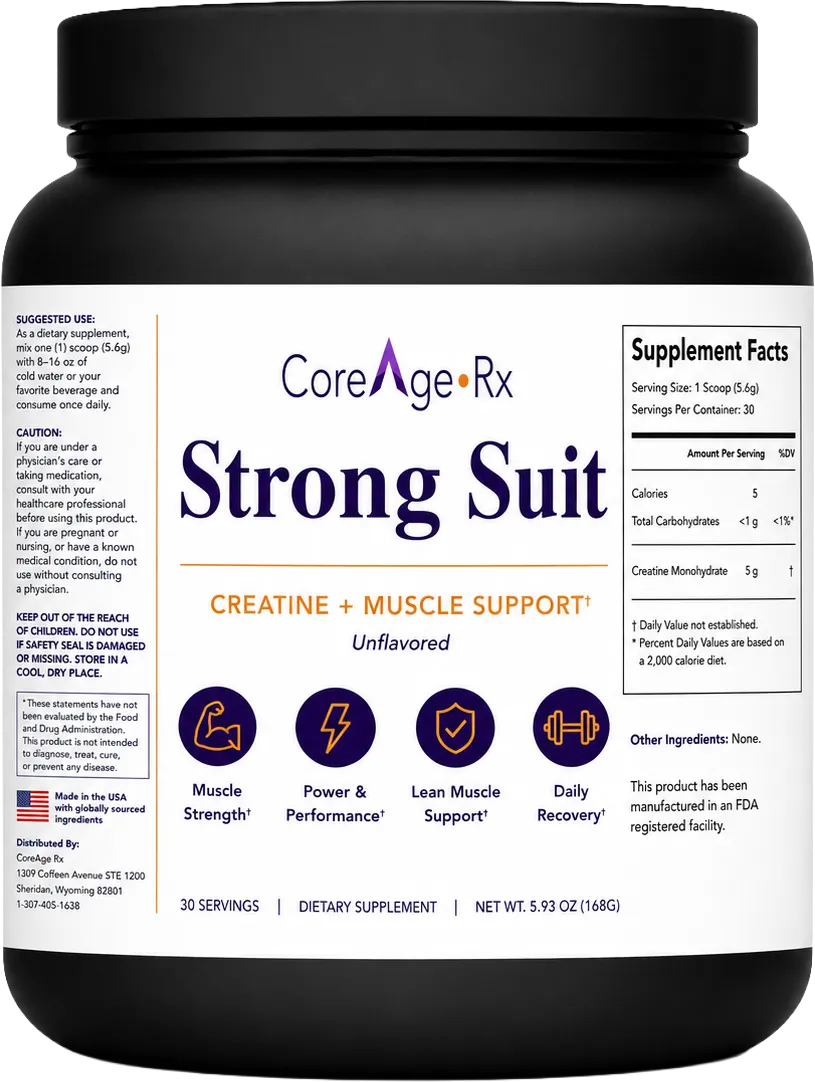
Strong Suit is CoreAge Rx’s unflavored creatine monohydrate powder. The pictured label lists 5 g creatine per scoop and 30 servings. See the current Strong Suit™ page and check the bottle you receive before use.
Related reading
- Creatine Monohydrate: Benefits, Dosing, and What to Expect
- How Much Creatine Should You Take Per Day?
- When Is the Best Time to Take Creatine?
- Nutrition during GLP-1 treatment
Educational information, not individualized medical advice. Product information and linked research checked September 15, 2026. Ingredient research does not establish identical effects for a finished supplement.