
An early increase on the scale after starting creatine can reflect additional water in muscle. It does not automatically mean fat gain, and it should not be counted as an equal amount of new muscle tissue. The scale measures total weight, not its composition.
Why water can change
Creatine is stored in muscle, and increasing those stores can affect the water held there. The review of creatine and common misconceptions describes early water retention, while also noting that longer-term findings are more varied. Not everyone sees the same scale response.
The amount depends on the person and protocol. A loading phase may produce a more noticeable early shift than gradual intake. Avoid promises that everyone gains an exact number of pounds, or claims that no one will gain any water weight.
Water in muscle versus digestive bloating
Water stored with muscle creatine is different from a painful, distended abdomen or diarrhea. Those digestive symptoms need their own assessment. Calling every symptom “water retention” can hide a serving-size issue, another supplement ingredient, or an unrelated condition.
For that distinction, use our creatine and stomach-upset guide. New swelling in the legs, shortness of breath, or a rapid unexplained change should not simply be attributed to a supplement; seek medical evaluation.

Interpret the trend without overreacting
Record when you started creatine and whether you changed the serving or used a loading protocol. Compare similar weigh-ins if you choose to track weight. Also note major changes in salt intake, training, menstrual cycle, bowel habits, and food intake, because the scale cannot separate those influences.
Do not sharply restrict food or fluids to “cancel out” an early change. In a weight-management plan, the goal is to understand the trend while maintaining adequate nutrition. Our creatine during weight loss article explains how to keep strength measures in the picture.
What about body-composition devices?
A home scale’s estimate of muscle or body fat is not a direct measurement of newly built tissue. Hydration changes can complicate interpretation. If body composition is important to a clinical or training plan, ask the professional using the measurement how to account for supplement use and consistency of testing conditions.
Even a favorable-looking number should be interpreted alongside function and training progress. There is no need to turn every small change into a verdict on the product.
Using Strong Suit with clear expectations
Strong Suit supplies 5 g creatine monohydrate per labeled scoop. The NIH review identifies water-related weight gain among the effects reported with creatine. That evidence describes the ingredient and does not predict your personal scale change from this product.
Follow the current directions, tell your clinician about use when relevant, and focus on a trend over time. The timeline guide can help you separate early water shifts from longer-term training changes.

Understand what a scale actually adds together
A bathroom scale reports total mass at that moment. It does not separate water held in muscle, food moving through the digestive tract, body fat, or muscle tissue. This is why a short-term change can be real without meaning what you first assume it means.
Starting creatine creates one more piece of context for interpreting the number. An increase associated with muscle water can coexist with unchanged food intake and an ongoing training plan. That does not mean every increase is harmless or caused by creatine. It means the scale alone cannot identify the cause.
Imagine taking a measurement before breakfast one day and after a large evening meal the next. Even without a supplement, those readings reflect different conditions. Adding a new supplement while also changing meal timing, exercise, and hydration makes the comparison still harder. A useful trend starts with reasonably similar measurement conditions.
Separate an observation from an explanation
“My weight increased after I started creatine” is an observation. “Every pound is water from creatine” is an explanation that the scale cannot prove. Keeping those statements separate helps you avoid both unnecessary alarm and false reassurance.
Write down the start date, the labeled serving, and whether you used a loading approach. Note major changes in training, food intake, bowel habits, and other supplements. You do not need to record every sip of water or every gram of salt. The purpose is to identify obvious changes that could help explain the trend.
If the change is rapid, unexplained, or accompanied by concerning symptoms, share that record with a clinician. New leg swelling or shortness of breath should not be reclassified as a normal training effect simply because creatine appears on the supplement list. The same principle applies to reduced urination or feeling significantly unwell.
A worked example during a training block
Suppose a person starts creatine during the same week they begin a new lifting program. Their weight rises somewhat, and their muscles feel fuller after workouts. Several explanations may overlap: a supplement-related water change, the new exercise routine, ordinary day-to-day variation, and meal differences.
The next step is not to label the entire increase as fat or new muscle. Instead, they can keep the product routine consistent with the label, compare measurements under similar conditions, and follow the training log. If they are following a clinical weight-management plan, they can tell their care team when supplementation began.
After several weeks, the combined record is more informative than the first two weigh-ins. It still will not assign an exact number of pounds to each tissue, but it can support a more sensible conversation about the overall direction, tolerance, and training progress.
Why aggressive compensation can backfire
Trying to “undo” an early increase by skipping meals or deliberately restricting fluids addresses an interpretation rather than a demonstrated problem. It can make the person feel worse and make training harder without clarifying why the number changed.
Creatine should fit within an adequate eating and hydration routine. If weight loss is medically supervised, changes to that routine should remain connected to the care plan. An unexpected reading is a reason to review the context, not an automatic instruction to make the calorie deficit larger.
If tracking weight repeatedly leads to distress or restrictive behavior, discuss a different monitoring approach with a qualified professional. Strength, physical function, consistency, and clinical follow-up can provide useful information without requiring frequent scale checks. The right measure is one that supports your health and the actual goal.
Compare measurement tools honestly
| Tool | What it can help you observe | Important limitation |
|---|---|---|
| Bathroom scale | Total weight trend | Cannot identify which tissue or fluid changed |
| Progress photographs | Appearance under chosen conditions | Lighting, posture, and recent exercise influence the image |
| Home body-composition scale | A device-generated estimate over time | Hydration can affect interpretation |
| Training log | Performance in repeatable activities | Cannot isolate the supplement’s contribution |
| Clinical assessment | Context from history, examination, and selected tests | The method must match the question being asked |
Using several imperfect measures thoughtfully is more useful than treating one number as a precise explanation. Keep the conditions consistent where practical and acknowledge what each tool leaves unknown.
Discuss scale expectations before starting
If scale weight is a major part of your training or treatment plan, raise the possibility of water-related changes before the first serving. This can be especially helpful when a target weight has emotional or practical significance. The conversation should include why you want to use creatine and which measures would demonstrate a worthwhile outcome.
For someone in a weight-class sport, supplement timing and body-weight management deserve guidance from a qualified sports professional. For someone receiving medical weight treatment, the prescriber or dietitian should know about new supplements. Neither situation should rely on a generic promise that creatine causes exactly the same change in everyone.
Frequently asked questions
Does water weight mean creatine is making me fat?
No. Water and fat are different components of body weight. At the same time, a scale cannot prove that all of an increase is water. Interpret the trend alongside the start date, routine, symptoms, and other changes.
Does no weight gain mean the supplement is ineffective?
No. People and protocols vary, and a noticeable scale increase is not required as a personal effectiveness test. Training outcomes and a consistent routine are more relevant than trying to produce a particular water-weight response.
Should I take less water with the powder?
Do not reduce the mixing liquid in an attempt to prevent muscle water changes. Follow the product’s directions. Strong Suit’s reviewed label calls for 8–16 oz of cold water or a favorite beverage; preparation instructions are not a weight-control strategy.
Is abdominal bloating the same thing?
No. Gas, painful distension, or diarrhea are digestive symptoms and need their own assessment. Read the creatine and stomach-upset guide rather than assuming every uncomfortable sensation is water in muscle.
Explore Strong Suit™
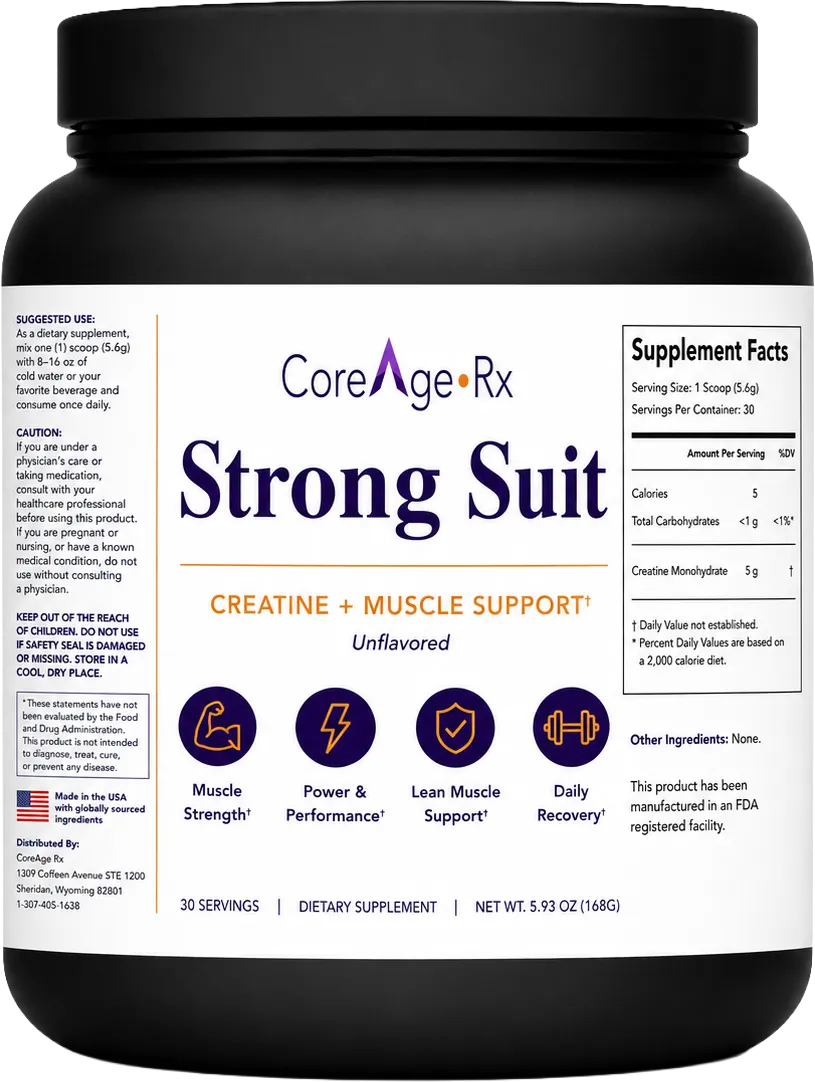
Strong Suit is CoreAge Rx’s unflavored creatine monohydrate powder. The pictured label lists 5 g creatine per scoop and 30 servings. See the current Strong Suit™ page and check the bottle you receive before use.
Related reading
- Creatine Monohydrate: Benefits, Dosing, and What to Expect
- How Long Does Creatine Take to Work?
- Creatine and Bloating: Water Retention vs. Stomach Upset
- Nutrition during GLP-1 treatment
Educational information, not individualized medical advice. Product information and linked research checked September 15, 2026. Ingredient research does not establish identical effects for a finished supplement.