
“Brain fog” is a useful way to describe an experience, but it is not a single diagnosis. People may use it to mean slowed thinking, distractibility, difficulty finding words, memory lapses, or mental fatigue. Those experiences can have different causes and deserve a clearer description before a product is chosen to address them.
NAD+ nasal spray is marketed for mental clarity and focus. The human evidence for those advertised effects remains limited. This guide explains how to prepare for a clinical discussion, interpret the research, and assess changes in a way that keeps the underlying concern visible.
Put the difficulty into everyday terms
Describe what is harder than before. Are you losing track of a conversation, rereading the same paragraph, forgetting planned tasks, or feeling mentally exhausted after a normal work block? Explain how often it happens and whether other people have noticed a change.
A concrete example can be more useful than assigning a broad severity score. “I need several breaks to complete a task that usually takes half an hour” identifies an effect on function. It still leaves the cause open for assessment.
The National Institute on Aging’s cognitive-health guidance treats thinking, learning, and memory as parts of a broader health picture. That perspective helps keep a product discussion connected to the person rather than a single biochemical explanation.
Establish when the change began
A sudden change needs a different response from a gradual, intermittent difficulty. Note whether symptoms began during an illness, after a medication change, with disrupted sleep, or during a demanding period. Include whether the pattern is improving, stable, or worsening.
Also describe the setting. Difficulty during an unusually complex task may mean something different from a new inability to manage familiar daily activities. A clinician needs both the symptom and its context.
Sudden confusion, new weakness, facial droop, speech difficulty, or another acute neurological change requires urgent medical assessment. A nasal product should not be used to delay that evaluation.

Review sleep and daytime alertness
Insufficient sleep and sleep disorders can affect attention and performance. The amount of time spent in bed does not fully describe sleep quality. Frequent awakenings, marked snoring, witnessed breathing pauses, or falling asleep unintentionally during the day are useful details to report.
The NHLBI sleep overview explains the connection between sleep deficiency and daytime functioning. A short record of the usual schedule, awakenings, and daytime sleepiness can help prepare the consultation.
If sleep changes at the same time as a new treatment, record both. An improvement in focus can be real without showing which change caused it.
Include medicines, supplements, and substances
Bring a complete list of prescribed medicines, over-the-counter products, supplements, and recent changes. Some treatments can affect alertness, sleep, or cognition, while combinations can complicate the picture. The treating clinician can review the relevance to the individual situation.
Do not stop a prescribed medicine independently because an article mentions possible cognitive effects. Instead, describe the timing and ask whether a medication review is appropriate. The purpose is a coordinated plan, not a series of unobserved changes.
Include caffeine and alcohol patterns when relevant. A change in either can affect how someone feels during the day and how they sleep at night.
Consider the broader health context
Mood, pain, sensory difficulties, illness, and other health conditions can influence cognitive function. The NIA guidance emphasizes managing physical health and reviewing factors such as hearing, vision, and medicines as part of cognitive care.
A clinician may recommend examination or targeted testing based on the history. That does not mean everyone needs the same extensive laboratory panel or a specialized brain test. The investigation should address plausible questions.
Persistent symptoms should not be dismissed simply because a basic test is normal. Equally, an isolated abnormal result should not be assumed to explain every difficulty without interpretation.

Brain fog after an infection needs its own discussion
The CDC’s Long COVID guidance identifies difficulty thinking or concentrating among possible symptoms. Symptoms may occur with fatigue, sleep problems, or worsening after physical or mental effort. The pattern can be variable and difficult to summarize.
If mental activity produces delayed worsening, report what happens afterward as well as during the task. That information may affect how activity is managed. A generic instruction to push through or intensify training may be inappropriate for the individual.
NAD+ nasal spray should not be presented as an established treatment for Long COVID or ME/CFS. Care should address the condition and symptom pattern using an individualized clinical approach.
What NAD+ research contributes
NAD+ participates in cellular metabolism, making it an interesting subject for neurological research. Animal studies have explored intranasal NAD+ in experimental brain injury. The 2007 rat ischemia study is part of that preclinical literature.
That work does not establish improved human attention or memory from a commercial nasal formulation. An injury model, a tissue measurement, and a day-to-day cognitive complaint are different outcomes in different settings.
The brain-delivery article explains this chain of evidence. A plausible delivery pathway should not be described as demonstrated cognitive effectiveness without appropriate human data.
Read the registered human research carefully
A registered combination gerotherapy pilot includes nasal NAD+ with other medicines and lifestyle interventions. The reviewed record did not contain posted results. It documents a planned study rather than a demonstrated benefit for focus.
The combination design also limits attribution. If multiple interventions are introduced together, a future improvement would not automatically identify nasal NAD+ as the cause. An ingredient-specific claim needs evidence capable of addressing that question.
This distinction is important when a product description says a treatment is “being studied.” Research activity is relevant, but the methods and completed results determine what can be concluded.
Choose a useful baseline for the individual concern
A baseline should describe the task affected and the conditions under which it is performed. Choose a small number of observations that can be repeated without excessive testing. For example, record the need for breaks during a familiar work activity or the frequency of missed routine tasks.
| Observation | Context to include |
|---|---|
| Concentration difficulty | Task, duration, distractions, and need for breaks |
| Memory concern | Type of lapse and effect on daily activity |
| Mental fatigue | When it occurs and how recovery works |
| Sleep | Schedule, awakenings, and daytime alertness |
| Other changes | Illness, medicines, stress, or workload |
A home record cannot diagnose the cause, but it can make a clinical conversation more concrete.
Avoid turning an app score into a diagnosis
Repeatedly performing the same online cognitive test can change performance through familiarity. Distractions, device differences, time of day, and sleep also affect results. A score needs context and may not represent the difficulty that matters most in daily life.
If formal cognitive assessment is appropriate, the clinician can choose a suitable approach and interpret it. Consumer tests should not be used to diagnose a neurological condition or to decide independently that a medication amount should change.
The same caution applies to blood NAD-related testing. The biomarker guide explains why a blood result does not directly measure brain-cell exposure or establish cognitive benefit.
Review benefits and symptoms together
If a clinician and patient decide to try a treatment, define the goal and a follow-up point. Record the actual product and directions, unwanted effects, changes in routine, and what happened to the target activity. A better day is an observation, not a complete causal explanation.
The nasal results guide explains how to summarize progress without chasing a promised day count. If there is no useful change, that should be part of the review rather than a reason to escalate independently.
The side-effects article also explains why nasal irritation or a new generalized symptom should be assessed on its own merits. A sensation is not proof that a desired brain effect occurred.
Keep follow-up connected to the original concern
At the next visit, describe what improved, what persisted, and what became harder. Bring examples rather than only a general impression. If a new pattern or symptom emerged, the evaluation may need to change.
A useful plan may involve further assessment, treatment of a contributing condition, a practical routine change, or reconsideration of an intervention. The goal is better function and appropriate care. NAD+ biology can be part of the conversation while the clinical evidence and the person’s actual experience remain clearly separated.
Explore NAD+ Nasal
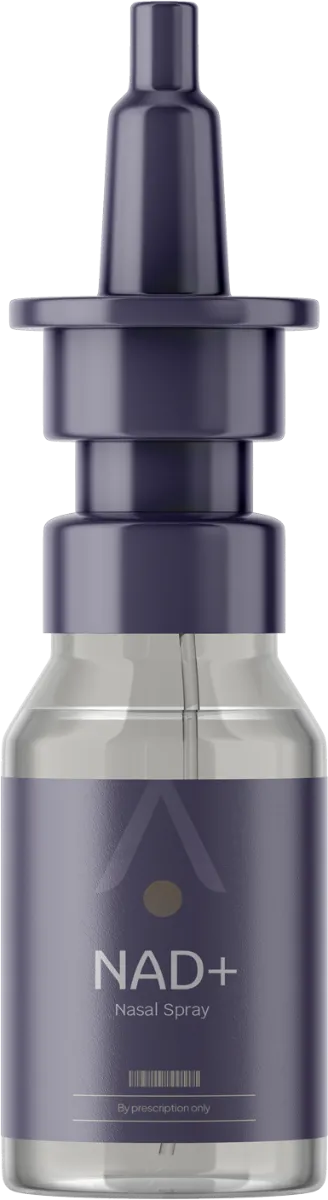
CoreAge Rx lists NAD+ Nasal as a provider-guided compounded nasal spray. The pharmacy’s formulation and pump instructions determine how it is used. Research on oral precursors, IV infusions, or animals does not establish identical benefits from this spray. Review the current NAD+ Nasal page and bring a complete medication and supplement list to the provider discussion.
Related reading
- NAD+ Nasal Spray: How to Understand the Evidence
- NAD+ Nasal Spray Side Effects: Irritation, Symptoms, and Follow-Up
- NAD+ Nasal Spray Storage, Hygiene, and Travel Questions
- NAD+ injections versus oral NMN and NR
Educational information; your prescription and clinician’s instructions guide individual care. Product details and linked sources checked September 15, 2026. Studies of another preparation or delivery route do not establish identical results for a finished compounded product. Photographs are illustrative and do not show treatment outcomes.