NAD+ nasal spray is a formulation intended for administration through the nose. It is marketed for goals such as focus, energy, and healthy aging, but the strength of those claims depends on evidence for the actual ingredient, formulation, and route. A study of an oral precursor or an IV infusion does not establish the same effects from a nasal spray.
CoreAge Rx offers NAD+ Nasal through a clinical evaluation. This guide explains what the product category is, what research has and has not established, and which practical questions belong in the consultation before use.
What NAD+ is
Nicotinamide adenine dinucleotide is a coenzyme used in many cellular reactions. NAD+ and NADH form a pair involved in electron-transfer reactions that support energy metabolism. NAD+ is also consumed by enzymes involved in processes such as DNA repair and cellular signaling.
These functions explain interest in NAD+ as a research target. They do not establish that a nasal product increases a person’s mental clarity, repairs their DNA, or changes their rate of aging. A meaningful benefit requires an outcome demonstrated under relevant clinical conditions.
The NIH niacin fact sheet explains nutritional connections to NAD metabolism. Maintaining adequate nutrition is a different question from evaluating a compounded nasal treatment.
The formulation matters alongside the ingredient
A nasal spray includes more than the headline ingredient. The concentration, liquid formulation, container, and pump affect how it is administered. The amount delivered by one actuation depends on the specific preparation and device.
A generic direction that gives only a number of sprays can be incomplete if it is separated from the actual product. The pharmacy should explain the amount delivered by the supplied pump and the prescribed schedule. Do not copy instructions from another brand or an online forum.
The nasal prescription-label guide covers the information that should be clear before use, including any priming or cleaning instructions for the actual device.

Nasal delivery does not establish a brain benefit by itself
The nasal route is studied for delivering some medicines because of its anatomy and possible pathways of absorption. Whether a particular molecule reaches a target in a useful amount depends on the molecule, formulation, and delivery conditions.
A statement that a spray “bypasses the blood-brain barrier” needs product- and route-relevant support. It should not be assumed from the fact that the medicine enters through the nose. Reaching a tissue and improving an outcome within that tissue are also different questions.
The brain-delivery evidence article explains why animal findings cannot by themselves establish human cognitive benefit from a commercial nasal spray.
What animal studies contribute
A 2007 rat ischemia study investigated intranasal NAD+ in a model of interrupted blood supply to the brain. A separate rat brain-injury study examined neuronal injury under experimental conditions. These studies provide a biological rationale for further research.
They do not establish a human prescription for brain fog, prevention of dementia, or treatment of stroke. The species, injury model, administration conditions, and outcomes differ from a person using a nasal product for general wellness.
Animal doses should not be converted into a personal nasal-spray schedule. The purpose of discussing these studies is to identify the origin and limits of the evidence, not to provide a treatment protocol.
Human research needs careful description
A registered combination gerotherapy pilot includes nasal NAD+ alongside other medicines, supplements, and lifestyle interventions. The record reviewed for this series described a small planned sample and did not contain posted results. A registration documents a study plan; it is not proof that the treatment worked.
Even if such a combination later produces a favorable result, its design may not identify how much of the effect came from nasal NAD+ alone. Several things change together. A standalone claim requires evidence that can address the specific contribution being claimed.
The practical conclusion is that human clinical evidence for the advertised benefits of nasal NAD+ remains limited. This should be stated directly without saying that all research is absent or treating a registered study as a successful trial.

Read claims at the right level
| Statement | Evidence needed to support it |
|---|---|
| The molecule has a cellular role | Appropriate biochemical research |
| The nasal formulation is absorbed | Human formulation-specific exposure data |
| The product improves focus | Clinical outcomes in a relevant human population |
| The product supports long-term healthy aging | Meaningful outcomes and sufficient follow-up |
| The product is well tolerated over time | Adequate safety data for the preparation and use pattern |
These are separate steps in evaluation. A convincing explanation of the first row does not automatically satisfy the remaining rows.
Define the concern before choosing a route
A person seeking better focus may be experiencing sleepiness, distraction, slowed thinking, memory difficulty, or a new medical symptom. Those concerns deserve different questions. A product label cannot identify their cause.
Describe what changed, when it began, and how it affects ordinary activities. Include sleep, medications, illness, mood, food intake, and any change in workload. The focus and brain-fog guide provides a practical way to prepare that history.
Sudden confusion, new weakness, speech difficulty, or other acute neurological changes require urgent assessment. A nasal wellness product should not delay care for an emergency or replace established treatment for a neurological condition.
Understand the compounded-product status
The FDA compounding overview explains that compounded medicines are not FDA-approved finished products. FDA does not review them before marketing in the same way for safety, effectiveness, and quality.
A prescription and pharmacy dispensing provide a framework for individualized care. They do not establish that a particular spray has demonstrated every benefit associated with NAD+ biology. Ask which pharmacy prepares the product and what information accompanies it.
The clinician should discuss the intended goal, relevant uncertainty, medical history, and alternatives considered. A clear decision requires more than a general statement that the ingredient occurs naturally in the body.
Review local tolerance and the surrounding routine
The nose may already be affected by allergies, congestion, dryness, recurrent bleeding, surgery, or another nasal medicine. Explain these circumstances before starting. The complete formulation and device instructions may matter to comfort and use.
A reaction should be described by timing, location, severity, and duration rather than assumed to be a sign of absorption. The side-effects guide addresses irritation and symptoms that need medical attention.
Do not add extra sprays to compensate for congestion or uncertainty about delivery. Ask the pharmacy how to handle the situation with the actual preparation.
Make handling instructions usable
Confirm the prescribed amount, frequency, storage conditions, beyond-use date, and any shorter period after opening. Ask how the pump should be prepared, cleaned, and stored, and what to do if it leaks, clogs, or seems inconsistent.
Keep the original label and avoid sharing the device. Do not transfer the liquid into another bottle or dilute it to change comfort. A different container can change delivery and identification even when the ingredient is unchanged.
The storage and travel guide explains how to plan for delivery, temperature questions, and trips without inventing a stability period for a compounded product.
Track practical outcomes rather than a promised day count
Choose a specific observation before treatment begins: a task affected by concentration, a pattern of daytime symptoms, or another clinician-agreed goal. Record other changes that might influence it. Include unwanted effects and practical burden in the review.
There is no established universal timeline in which every person should experience a nasal NAD+ benefit within a fixed number of days. A better day may be meaningful, but it does not establish a particular brain-delivery mechanism.
The results-tracking article explains how to review progress and make a decision about the plan rather than continuing automatically.
Bring the pieces together at follow-up
A useful follow-up connects the original concern, the actual preparation used, the directions followed, changes in function, and any symptoms. If the result is unclear, say so. Uncertainty is a reason to reassess the evidence and the goal, not to escalate independently.
NAD+ Nasal can be discussed within an individualized clinical evaluation while keeping the evidence limits visible. The most useful conversation identifies what is known about the product, what remains uncertain, and how the next decision will be made.
Explore NAD+ Nasal
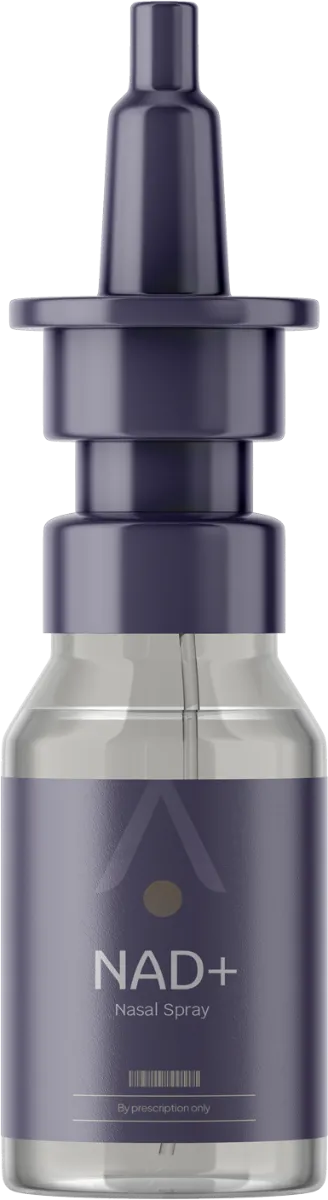
CoreAge Rx lists NAD+ Nasal as a provider-guided compounded nasal spray. The pharmacy’s formulation and pump instructions determine how it is used. Research on oral precursors, IV infusions, or animals does not establish identical benefits from this spray. Review the current NAD+ Nasal page and bring a complete medication and supplement list to the provider discussion.
Explore the complete series
- NAD+ Nasal Spray vs. Injections: Comparing Route, Routine, and Evidence
- Does NAD+ Nasal Spray Reach the Brain? What Research Shows
- NAD+ Nasal Spray for Focus and Brain Fog: A Practical Evidence Review
- NAD+ Nasal Spray Side Effects: Irritation, Symptoms, and Follow-Up
- Understanding an NAD+ Nasal Spray Prescription and Pump Label
- NAD+ Nasal Spray Storage, Hygiene, and Travel Questions
- NAD+ Nasal Spray Results: Setting Expectations and Reviewing Progress
- NAD+ and Healthy Aging: Biomarkers, Human Research, and Daily Function
- CoreAge Rx NAD+ Nasal: A Product and Evidence Guide
- NAD+ injections versus oral NMN and NR
Educational information; your prescription and clinician’s instructions guide individual care. Product details and linked sources checked September 15, 2026. Studies of another preparation or delivery route do not establish identical results for a finished compounded product. Photographs are illustrative and do not show treatment outcomes.