
NAD+ nasal spray and NAD+ injections offer different administration routines, but choosing between them requires more than comparing convenience. The routes differ in formulation, delivery, handling, and the research available to support their advertised effects.
CoreAge Rx lists both NAD+ Nasal and NAD+ Injectable. A clinical discussion should identify the person’s goal, the actual product and route being considered, and the evidence relevant to that choice. There is no reliable general conversion that makes a spray count equivalent to an injection amount for the same clinical result.
Identify the routes precisely
A nasal product is administered through a spray device intended for the nose. A subcutaneous injection places medicine beneath the skin, while an intramuscular injection places it into muscle. An intravenous infusion is a further distinct route and should be named separately when discussing studies.
The public NAD+ Injectable page describes intramuscular or subcutaneous use, with the individual route determined by the prescription. A patient should not choose between those routes or change from spray to injection independently.
The nasal guide and injection guide explain the categories in more detail. In each case, the directions must match the preparation actually dispensed.
Absorption is only one part of the comparison
A route can affect how a compound is absorbed and processed. That does not establish the amount reaching a specific cell, the duration of a biological change, or the size of a clinical benefit. These are measurements that require appropriate studies.
A statement that one route has greater bioavailability should identify the compound measured, the sample, the time points, and the formulation. Without those details, the term can sound more precise than the evidence behind it.
Similarly, a claim of greater potency may describe concentration or an assumption about delivery rather than a demonstrated difference in patient outcomes. Ask what comparison supports the wording.

Nasal research and injection research have different gaps
Published animal studies have explored intranasal NAD+ in experimental brain injury. The 2007 rat ischemia paper is one example. It provides a rationale for further investigation rather than proof of improved human focus from a commercial spray.
Human injection evidence includes an April 2026 preprint with very small NAD+ groups across routes, focused on short-term safety and tolerance. A 2019 IV pilot studied metabolite handling during an infusion. Neither establishes a direct nasal-versus-injection comparison for everyday energy or cognition.
This means the evidence should be presented side by side with its limitations. It should not be assembled into a ranking that the studies were not designed to produce.
A registered combination trial does not resolve the choice
The registered gerotherapy pilot that includes nasal NAD+ uses several interventions together. Its record is relevant to the direction of research, but it does not isolate the nasal ingredient’s effect or compare it with an NAD+ injection.
No posted results were present in the record reviewed for this series. Even a future favorable combination result would need to be interpreted according to that design. It would not automatically show that nasal NAD+ was the active component or superior to another route.
The same caution applies to testimonials about switching. A change in route often comes with changes in frequency, amount, formulation, expectations, or other care.
Compare the practical responsibilities
| Practical issue | Nasal preparation | Injectable preparation |
|---|---|---|
| Device | Product-specific pump and delivery instructions | Route-specific measuring and administration supplies |
| Local concerns | Nasal irritation, congestion, or device problems | Injection-site symptoms and technique questions |
| Handling | Label-specific storage, hygiene, and use period | Label-specific storage, sterile handling, and use period |
| Waste | Product and container disposal instructions | Sharps containment and disposal as well as medicine disposal |
| Support | Pharmacy and clinician clarification | Pharmacy and clinician clarification plus injection training |
These differences affect daily life. They are legitimate considerations after the clinical suitability and evidence have been discussed.

A needle-free route still needs clear directions
A spray can feel familiar because many people have used other nasal medicines. That familiarity does not establish how the NAD+ pump works, whether priming is needed, or how much is delivered by one actuation. Those details depend on the supplied product.
A blocked or inconsistent device should be discussed with the pharmacy. Do not take extra sprays to replace an uncertain amount or transfer the liquid to a different bottle. The nasal label guide explains the information to confirm.
Congestion, recurrent nosebleeds, recent nasal procedures, and other nasal products also belong in the clinical history. Convenience does not remove local tolerability questions.
An injection routine requires training and supplies
A home injection prescription needs a clear route, concentration, amount, schedule, and device. The patient should understand the taught technique and know whom to contact if a supply is missing or a direction is unclear.
The FDA sharps guidance covers safe containment of used needles. Disposal and storage are part of the routine, including during travel. A person should consider whether they can follow those requirements reliably in their actual home and schedule.
The injection label guide explains why syringe markings cannot be separated from the concentration. Previous experience with another injectable medicine does not establish the directions for this one.
Product quality belongs in both discussions
Both products are described as compounded treatments. The FDA’s compounding overview explains the distinction from FDA-approved finished medicines. The patient should know which pharmacy prepares the product and how to obtain formulation-specific instructions.
Injectable products add requirements for sterile preparation and administration. Nasal products still require appropriate quality, identification, handling, and a functioning delivery device. A comparison should not imply that one route removes all product-quality concerns.
Ask how damaged shipments, uncertain storage, unexpected appearance, or suspected reactions are handled. A useful answer identifies a practical contact and next step for the actual prescription.
Keep the clinical goal central
If fatigue is the concern, describe how it affects function and what else may contribute. If focus is the concern, distinguish sleepiness, distraction, slowed thinking, and memory problems. A route preference cannot diagnose the cause.
The focus and brain-fog article provides a way to prepare that history. A clinician may identify a need for another assessment or treatment that is more directly supported for the problem.
Neither product should be treated as established care for stroke, dementia, or another neurological disease on the basis of animal research. Urgent neurological symptoms need urgent evaluation.
Compare the complete cost and burden
A fair comparison includes the prescribed quantity and frequency, supplies, appointments, follow-up, shipping, and allowable use period. A monthly product price does not necessarily describe the same amount of treatment or support across routes.
Ask what happens if the plan is paused because of a reaction, travel, or a damaged shipment. Clarify refill procedures and whether a supplied quantity can be used within its labeled period. Do not extend a beyond-use date to improve the apparent value of a purchase.
The goal is a realistic understanding of the plan. A speculative cost-per-absorbed-milligram calculation cannot replace missing clinical equivalence data.
Discuss the reason for considering a change
A person may want to switch because of discomfort, difficulty following the routine, cost, or an unclear response. Those are different problems and may call for different solutions. Changing the route may not address the underlying concern, especially if the original goal was never defined or another condition explains the symptoms.
Bring the specific difficulty to the clinician rather than requesting a stronger version by default. The review can consider whether the formulation or instructions need clarification, whether the goal needs reassessment, or whether continued treatment is justified. A route change should have a reason that can be evaluated later.
Treat a switch as a new plan to verify
If the clinician recommends changing routes, obtain new written instructions and confirm what happens to the previous prescription. Do not continue both unless that combined plan has been explicitly reviewed.
Record the date of the change and any other differences in treatment. The nasal results guide explains how to review practical outcomes while keeping these confounding changes visible.
A useful decision identifies why the chosen route fits the person, what evidence supports the expected benefit, and how tolerance and progress will be assessed. It avoids declaring a universal winner where direct comparative outcome evidence is limited.
Explore NAD+ Nasal
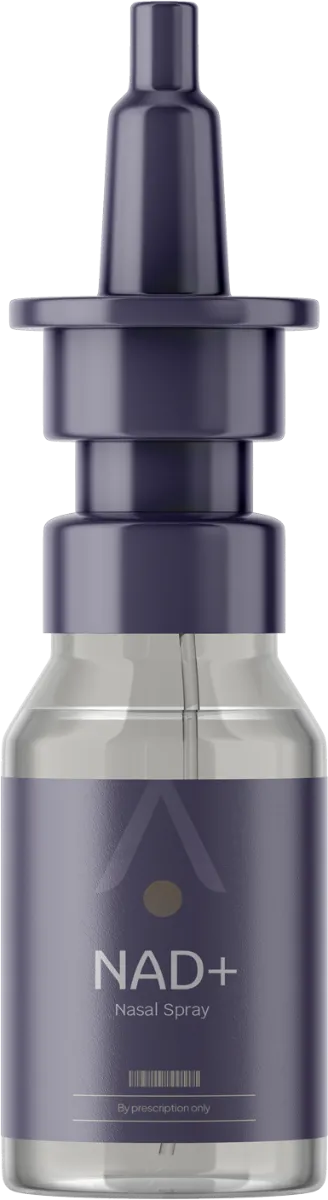
CoreAge Rx lists NAD+ Nasal as a provider-guided compounded nasal spray. The pharmacy’s formulation and pump instructions determine how it is used. Research on oral precursors, IV infusions, or animals does not establish identical benefits from this spray. Review the current NAD+ Nasal page and bring a complete medication and supplement list to the provider discussion.
Related reading
- NAD+ Nasal Spray: How to Understand the Evidence
- NAD+ Nasal Spray Side Effects: Irritation, Symptoms, and Follow-Up
- CoreAge Rx NAD+ Nasal: A Product and Evidence Guide
- NAD+ injections versus oral NMN and NR
Educational information; your prescription and clinician’s instructions guide individual care. Product details and linked sources checked September 15, 2026. Studies of another preparation or delivery route do not establish identical results for a finished compounded product. Photographs are illustrative and do not show treatment outcomes.