
NAD+ injections are often discussed as a way to support energy and healthy aging. Understanding them starts with separating three questions: what NAD+ does inside a cell, what happens after a particular preparation is injected, and whether that treatment improves something meaningful for the person receiving it. Evidence that answers one question does not necessarily answer the others.
CoreAge Rx offers NAD+ Injectable through a clinical evaluation. Its public page describes intramuscular and subcutaneous administration. Your own prescription must specify the route and formulation. This guide explains the biology, the human research, and the practical information needed to discuss that product with a clinician.
What NAD+ does in the body
Nicotinamide adenine dinucleotide, abbreviated NAD+, is a coenzyme involved in many chemical reactions. A coenzyme helps enzymes carry out their work. NAD+ and its reduced form, NADH, participate in reactions that transfer electrons and support the production of usable cellular energy. NAD+ is also used by enzymes involved in processes such as DNA repair and cellular signaling.
That biology explains scientific interest in NAD+ metabolism. It does not establish that supplying extra NAD+ will increase a person’s stamina, repair a particular injury, or slow their biological aging. The body makes and recycles NAD+ through several pathways, and those pathways differ among tissues. A blood measurement captures only part of this system.
Vitamin B3 contributes to these pathways. The NIH niacin fact sheet explains the nutritional relationship. Meeting a nutrient requirement and evaluating an injected treatment are different clinical questions; an injectable prescription should not be treated as a substitute for adequate food intake.
What kind of injection is being discussed?
The word “injection” can hide important differences. A subcutaneous injection places a preparation under the skin. An intramuscular injection places it into muscle. An intravenous infusion delivers a preparation into a vein over a controlled period. The route changes the administration process and can affect exposure and tolerance.
CoreAge Rx’s product is described as an injectable treatment, with the individual route determined by the prescription. Research conducted with a prolonged IV infusion cannot simply be used as a dosing or effectiveness guide for a small injection at home. Our injections versus IV guide explains this distinction in more detail.
Route is only one part of the formulation. Concentration, ingredients, delivered amount, preparation method, and frequency also matter. Two containers that both say NAD+ may not be interchangeable.

What human studies have measured
The human evidence is still developing and should be read by study design. A 2019 IV pilot enrolled 11 men, with eight receiving NAD+ and three serving as controls. Investigators followed blood and urine metabolites during and after a six-hour infusion. This helped describe the metabolic handling of infused NAD+; it did not establish a lasting improvement in fatigue, cognition, or lifespan.
More recently, an April 2026 preprint reported small pilot studies of injectable nicotinamide riboside, or NR, with NAD+ comparison groups in one trial. That first trial included only four to six people in each NAD+ route group. Its focus was short-term safety and tolerability, and the report had not been certified by peer review in the version reviewed here. It is useful preliminary information, with clear limits on what it can establish about repeated treatment.
A study can be informative without being definitive. Small, short studies may identify common experiences and help design larger trials. They have much less ability to identify uncommon harms or demonstrate durable benefits in a broad population.
Match the claim to the outcome
A practical way to assess an advertisement or study is to ask what was actually measured. These examples show why the distinction matters.
| Finding or claim | What it may help answer | What still needs evidence |
|---|---|---|
| A blood metabolite changes | How the preparation is handled under study conditions | Whether daily function improves |
| Participants complete a brief study | Short-term feasibility and tolerance | Long-term safety in different patients |
| An animal model improves | A possible biological mechanism | Benefit from the same route in humans |
| A person reports feeling better | An experience worth discussing | Whether treatment caused the change |
A useful treatment goal should be recognizable outside the laboratory. Being able to complete a normal afternoon without an unusual decline in function is easier to evaluate than a broad promise of “cellular rejuvenation.” The goal also needs to be appropriate to the cause of the symptom.

Energy complaints deserve a broader assessment
Persistent tiredness does not identify a specific NAD+ deficiency. Sleep problems, inadequate intake, medication effects, mood, anemia, and other medical conditions can affect energy. The history helps a clinician decide whether examination or targeted testing is needed.
Describe what “low energy” means for you: sleepiness, reduced exercise capacity, mental effort, weakness, or a need to rest after ordinary activity. Explain when it began and what changed around that time. This makes the consultation more useful than arriving with a single proposed explanation.
Our energy and fatigue article focuses on this assessment. Continuing to investigate an unexplained symptom remains important even if a person chooses to discuss NAD+ therapy.
Understand the compounded-product context
A compounded medicine is prepared for particular clinical needs rather than supplied as an FDA-approved finished drug product. The FDA’s compounding overview explains that compounded drugs do not undergo the same FDA premarket review for safety, effectiveness, and quality as approved products.
A prescription, licensed pharmacy, and clear directions are important parts of care. They do not turn an ingredient mechanism into proof of the finished product’s benefits. Ask which pharmacy will dispense the preparation, how to contact it, and what instructions accompany delivery.
The consultation should identify the expected benefit, the uncertainty around it, the risks relevant to your health, and the decision that follow-up will address. Consent is more useful when those points are specific.
Product quality and symptoms require attention
FDA has issued an alert about ingredients used in sterile compounding, including reports of severe reactions after NAD+ injectable drugs. The alert describes concerns about unsuitable food-grade ingredients and possible endotoxin contamination. It does not establish that every NAD+ product has this problem or identify the quality of your individual prescription.
The practical lesson is to take the source and handling of an injectable preparation seriously. Do not inject material sold for research, use a product through an unprescribed route, or try to correct an unexpected appearance or reaction by diluting it yourself. Severe chills, shaking, persistent vomiting, breathing difficulty, chest pain, or fainting require prompt medical attention according to their severity.
The side-effects guide explains how to distinguish local symptoms, systemic symptoms, and questions about the preparation.
Read the dispensed directions as a complete set
Before use, confirm the drug name, concentration, route, amount, schedule, storage conditions, and beyond-use date. If the instruction uses syringe “units,” ask the pharmacy to connect that marking to the supplied syringe and the prescribed amount. A marking alone does not identify milligrams of NAD+.
Do not copy another person’s schedule or rely on a generic website example. A refill can have a different concentration or device. The prescription-label guide covers the information that should agree before administration.
If training or supplies are missing, contact the dispensing team before the first use. A short clarification is preferable to making assumptions about a needle, vial, or route.
Plan a review that can lead to a decision
Choose a small number of observations before treatment begins. Record the relevant symptom, the practical activity affected, sleep, and any major medication or routine changes. Include unwanted effects and treatment burden alongside perceived benefits.
Agree on when the clinician will review the plan and what findings would support continuing, changing, or stopping it. There is no evidence-based universal rule that every person should feel a particular effect by day three or month one. Avoid escalating on your own to chase such a deadline.
A useful discussion ends with a defined goal, understandable directions, and a follow-up decision. Those are the foundations for evaluating NAD+ Injectable while the clinical evidence continues to develop.
Explore NAD+ Injectable
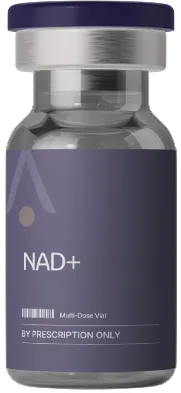
CoreAge Rx lists NAD+ Injectable as a provider-guided compounded treatment. The dispensed label must identify the concentration, route, and individual directions; clinical findings from another NAD+ preparation do not establish the same result for this product. Review the current NAD+ Injectable page and bring a complete medication and supplement list to the provider discussion.
Explore the complete series
- NAD+ Injections vs. IV Infusions: Why the Route Matters
- NAD+ Injections vs. NMN and NR: Comparing Different Approaches
- NAD+ Injections for Energy and Fatigue: What to Evaluate
- NAD+ Injection Side Effects and Product-Quality Questions
- Reading an NAD+ Injection Label: Milligrams, Milliliters, and Units
- How Long Do NAD+ Injections Take to Work? Tracking Meaningful Changes
- Storing and Traveling With Prescribed NAD+ Injections
- NAD+ Testing: What Blood Biomarkers Can and Cannot Tell You
- CoreAge Rx NAD+ Injectable: A Product and Evidence Guide
- NAD+ nasal spray versus injections
Educational information; your prescription and clinician’s instructions guide individual care. Product details and linked sources checked September 15, 2026. Studies of another preparation or delivery route do not establish identical results for a finished compounded product. Photographs are illustrative and do not show treatment outcomes.