
NAD+ injections and NAD+ IV infusions share an ingredient name, but they involve different delivery routes and different practical decisions. An IV study may describe exposure during a long infusion. A prescription for a subcutaneous or intramuscular injection uses a different process, often with a different concentration, volume, and schedule.
The comparison therefore starts with the actual preparation and intended goal. It should not be reduced to which option sounds stronger or more direct. This article explains how to compare the routes, interpret the available studies, and identify the information needed before treatment.
Three routes, three administration settings
A subcutaneous injection places medication into tissue beneath the skin. An intramuscular injection places it into muscle. An intravenous infusion introduces it into a vein, commonly through a line managed by clinical staff. Each requires route-appropriate formulation, equipment, and instructions.
The difference affects logistics. An infusion involves an appointment, venous access, an infusion period, and monitoring in that setting. A prescribed home injection may involve delivery, storage, training, disposable supplies, and sharps disposal. Home use still requires an individualized prescription and a plan for problems.
Changing between these routes is a prescribing decision. A vial intended for one route should not be repurposed for another because an online comparison suggests a benefit.
“Direct to the bloodstream” is not the whole biological story
Intravenous administration avoids the initial absorption step through skin or muscle tissue. That does not answer how much intact NAD+ enters a particular cell, how quickly it is metabolized, or whether a person’s symptoms improve. Blood exposure, tissue uptake, and clinical benefit are separate measurements.
In the 2019 human infusion study, investigators followed plasma and urine metabolites rather than assuming that an infusion produced a simple immediate rise in every measured compound. The work illustrates why the metabolic handling of NAD+ must be measured. It cannot be inferred solely from the position of a needle.
A more direct route can also introduce different burdens and adverse experiences. Route comparisons should include these alongside any proposed advantages.

What the IV pilot tells us
The 2019 study involved eight men receiving NAD+ and three controls. It used a six-hour infusion and collected samples during and after it. The small sample, selected participants, and short observation period limit the conclusions.
For a patient reading that study, the most relevant distinction is its purpose: it characterized metabolite changes under a particular protocol. It was not a trial demonstrating that IV NAD+ improves work performance, prevents neurodegeneration, or provides a specific duration of energy benefit.
The amount administered in a research infusion is not a conversion chart for a home injection. The study’s formulation, rate, and monitoring conditions are part of the intervention being evaluated.
Newer evidence focuses on tolerance
A 2026 retrospective study compared commercial NAD+ and NR infusions over four treatment days, with short follow-up. Participants receiving NAD+ reported gastrointestinal symptoms, increased heart rate, and chest pressure during infusions. Because the study was retrospective and conducted in a commercial setting, its findings need to be interpreted with those design limitations in mind.
Those observations help identify experiences that deserve monitoring. They do not provide reliable percentages for side effects after a different subcutaneous preparation. They also do not establish that a person should tolerate chest symptoms because a study participant’s symptoms later resolved.
The 2026 injection preprint adds preliminary comparisons across IV, intramuscular, and subcutaneous routes, but its NAD+ groups were very small. Short-term feasibility is useful information; it is not a demonstration that one route is best for long-term healthy-aging care.
Compare the actual evidence, not the route’s reputation
When a route is described as more effective, identify the endpoint behind the statement. Was it a blood concentration, the time required to administer treatment, a symptom score, or a functional result? Ask whether the comparison used the same ingredient and an appropriate control.
| Comparison question | Information needed |
|---|---|
| Which route raises a measured marker? | The sample type, time points, assay, and study formulation |
| Which route is more tolerable? | The actual symptoms, observation period, group size, and administration conditions |
| Which route improves a symptom? | A controlled trial measuring that symptom in a relevant population |
| Which route fits a patient? | Clinical suitability, practical burden, instructions, and follow-up |
A single favorable number cannot answer all four questions. A route can be easier to administer without having stronger evidence for a particular clinical outcome.

A clinic visit and home use have different responsibilities
An infusion setting should provide clear information about who is administering treatment, how the person is assessed, what monitoring occurs, and how reactions are handled. The appointment length is part of the total burden, alongside travel and recovery time if needed.
For home injections, the preparation must arrive with understandable directions and appropriate supplies. The patient needs training for the prescribed route and a contact for missed doses, damaged shipments, unexpected symptoms, or label discrepancies. These details determine whether a routine can be followed safely.
Convenience is a valid consideration, but it should be assessed after the treatment itself has been discussed. It cannot establish suitability on its own.
Compare the total course, not one appointment price
A meaningful cost comparison includes the prescribed schedule, quantity supplied, required appointments, laboratory work if ordered, supplies, shipping terms, and follow-up. A monthly listing and a per-infusion listing may describe very different amounts of care.
Ask what happens if treatment is paused because of a reaction or a shipping problem. Clarify how refills are requested and whether unused medicine may reach its beyond-use date before it is finished. These are practical questions about the actual plan, not reasons to extend a product beyond its instructions.
You do not need a speculative “cost per absorbed milligram” calculation when reliable route-specific absorption and outcome data are unavailable. Compare the services and prescription you would actually receive.
Quality standards matter across routes
An injectable product must be appropriate for sterile use. FDA’s sterile-compounding alert describes NAD+ concerns related to unsuitable ingredients and reported adverse reactions. The general issue is product quality, not a guarantee that changing routes removes risk.
The ingredient source, preparation process, container, handling, and storage all matter. “Compounded,” “prescribed,” and “pharmaceutical-grade” are different descriptions; none should be used as a substitute for asking about the dispensing pharmacy and the specific product.
Do not purchase research material and attempt to prepare an injection or infusion yourself. Do not add other drugs or diluents to a dispensed preparation without explicit instructions from the treating team.
Ask how an interruption would be handled
Before comparing routines, discuss what happens when normal use is interrupted. An infusion appointment may be delayed by illness or scheduling. A home prescription may be affected by travel, a damaged shipment, or uncertainty about storage. The next step should come from the treating team rather than a personal decision to combine missed amounts.
This question is also useful for comparing the real burden of care. Identify who answers administration questions, whether the pharmacy can clarify the label directly, and how urgent symptoms are handled outside routine office hours. The route that sounds easiest in an advertisement may require more planning in an individual’s circumstances. A workable support process is part of a complete treatment plan.
A change in route needs a new set of instructions
If a clinician recommends switching, confirm the new route, concentration, delivered amount, schedule, equipment, and storage. Previous syringe markings or injection routines may no longer apply. The label-reading article explains why volume and milligrams should remain connected to the actual preparation.
A change also complicates outcome tracking. Note when it occurred and what else changed, including frequency, product source, and the goal of treatment. Avoid attributing a difference entirely to the route if several parts of the plan changed together.
Neither an IV-to-injection switch nor the reverse should be treated as a simple upgrade in strength. It is a different treatment plan that needs its own rationale.
Keep symptom evaluation independent of the comparison
Someone considering NAD+ because of fatigue or reduced concentration still needs the underlying concern evaluated. A preference for injections over an infusion cannot identify the cause of the symptom. The fatigue guide offers a structured way to describe it.
If new chest pain, breathing difficulty, fainting, or a severe generalized reaction occurs, obtain urgent medical care rather than waiting for the route comparison to be resolved. For less urgent symptoms, record the timing and contact the prescribing team before changing the regimen.
The best comparison ends with an understandable reason for the chosen route, realistic evidence expectations, and a workable monitoring plan. That is more useful than declaring one form of NAD+ universally superior.
Explore NAD+ Injectable
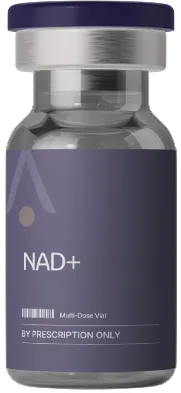
CoreAge Rx lists NAD+ Injectable as a provider-guided compounded treatment. The dispensed label must identify the concentration, route, and individual directions; clinical findings from another NAD+ preparation do not establish the same result for this product. Review the current NAD+ Injectable page and bring a complete medication and supplement list to the provider discussion.
Related reading
- NAD+ Injections: Evidence, Uses, and Questions to Ask
- NAD+ Injection Side Effects and Product-Quality Questions
- CoreAge Rx NAD+ Injectable: A Product and Evidence Guide
- NAD+ nasal spray versus injections
Educational information; your prescription and clinician’s instructions guide individual care. Product details and linked sources checked September 15, 2026. Studies of another preparation or delivery route do not establish identical results for a finished compounded product. Photographs are illustrative and do not show treatment outcomes.