
Melasma, sunspots, and post-acne marks can all create darker areas on the face, but the similarities in color can hide important differences. The cause, pattern, likelihood of recurrence, and appropriate treatment may differ. A prescription should follow the diagnosis rather than use uneven tone as a catch-all explanation.
This guide helps you organize what to notice and what to ask. It cannot identify a lesion from a description alone. A new, changing, bleeding, or otherwise uncertain spot should be examined before it is treated as a cosmetic pigment concern.
Melasma: a pattern with multiple influences
Melasma commonly involves patches of facial pigmentation, often in a fairly symmetrical distribution. Sunlight and other influences can contribute, and the condition may persist or recur. A clinician considers the pattern and history before choosing a treatment plan.
The AAD’s melasma treatment guidance describes individualized care that considers skin tone, pigment depth, and triggers. Treatment is not simply a matter of removing one isolated spot and assuming the tendency is gone.
If patches became more noticeable during pregnancy or after a medication change, include that history. Do not stop a prescribed medication on your own because it might be associated with pigmentation; discuss the connection and available options with the prescriber.
Sunspots: confirm what the spot is
People often use sunspot or age spot for a discrete brown area on sun-exposed skin. That description can be useful, but it should not be treated as a diagnosis for every new mark. Some lesions that look like ordinary pigment need a different evaluation.
The AAD’s mature-skin guidance recommends assessment before treating presumed age spots because a concerning lesion can resemble one. A cream that fades color does not establish that the original spot was harmless.
Tell the clinician if the lesion is new, changing in size or shape, bleeding, crusting, or unlike your other spots. A stable photograph can help show change over time, but it should not delay an examination when the lesion is concerning.

Post-acne marks: follow the inflammation history
Post-inflammatory hyperpigmentation can remain after acne or another inflammatory event settles. A flat dark mark where a pimple used to be is different from the active lesion itself. It is also different from an indented or raised scar.
The history is often useful: did the mark appear exactly where a breakout or irritated patch occurred? Are new acne lesions continuing to form? Is picking or a harsh routine adding more inflammation?
The AAD’s dark-spot guidance emphasizes addressing the cause alongside pigment care. If acne remains active, treating only the old marks leaves the process that creates new ones unresolved.
Compare the concerns without overdiagnosing
| Question | Melasma discussion | Sunspot discussion | Post-acne mark discussion |
|---|---|---|---|
| Typical pattern to describe | Patches, often on both sides of the face | Discrete spots on exposed areas | Marks at sites of prior inflammation |
| Key history | Sun, hormonal changes, medications, recurrence | Sun exposure and whether a lesion changed | Acne, rash, picking, or irritation |
| Ongoing issue | A tendency to recur may remain | The lesion needs correct identification | New inflammation can create new marks |
| Treatment planning | Trigger management and maintenance | Diagnosis before cosmetic treatment | Coordinate acne control and pigment care |
Patterns guide questions; they do not prove a diagnosis. More than one condition can coexist. A person can have melasma, post-acne marks, and ordinary freckles at the same time, which is another reason to avoid treating all color differences as one problem.
Color and texture need separate attention
A flat brown mark, a red or purple post-acne mark, and a depressed scar can all remain after a breakout. They do not necessarily respond to the same ingredient. A pigment-focused cream should not be presented as a reliable way to fill an indentation or treat every vascular color change.
Describe both color and shape to the clinician. Is the area level with the surrounding skin? Does light create a shadow that makes it look darker? Does the appearance change when the angle changes? These observations can help clarify what the treatment goal actually is.
The dark spots after acne guide explains how to separate active acne, flat marks, and scars. A more precise goal prevents disappointment from using the right ingredient for the wrong feature.

Sun protection is relevant across the comparison
Sun protection is a common part of pigment care, but the details matter. The AAD’s melasma self-care guidance discusses broad-spectrum SPF 30 or higher and tinted sunscreen with iron oxide for visible-light protection in melasma.
Choose a formulation that blends with your skin tone and feels comfortable enough to use. Shade and protective clothing also matter. Do not rely on a treatment cream as sunscreen unless it carries the relevant tested label.
The tinted sunscreen guide explains the label discussion. If sunscreen stings, review the skin condition and formula rather than repeatedly introducing other brightening actives to compensate for inconsistent protection.
Why treatment duration may differ
A clinician-directed pigment plan should define the review point and any treatment window. A product containing hydroquinone is not automatically an indefinite maintenance moisturizer. The diagnosis and response influence what happens after the initial course.
Melasma’s tendency to recur can make maintenance an ongoing discussion. Post-acne marks may continue to appear if acne remains active. A presumed sunspot that changes or fails to behave as expected may need reassessment of the diagnosis.
Do not turn those differences into a universal cycling schedule. The hydroquinone duration guide explains how to ask for a specific plan without borrowing instructions from a different prescription.
Where Spot On may be discussed
Spot On lists hydroquinone, kojic acid, and niacinamide. Its public ingredient summary does not disclose individual strengths. A provider should determine whether the preparation fits the diagnosed concern and provide the application area and duration.
Ask whether it is intended for particular patches or another defined area. Do not spread it onto every freckle, mole, or newly noticed spot. The same bottle can be inappropriate for a lesion whose diagnosis has not been established.
The Spot On ingredient guide distinguishes the formula’s disclosed components from broader ingredient studies. A product description covering several pigment concerns does not remove the need to identify which one you have.
Avoid irritation that complicates the picture
Adding a peel, scrub, retinoid, acid toner, and brightening prescription can create a difficult routine to tolerate. If inflammation develops, it may lead to additional color changes and obscure whether the original treatment is helping.
Keep a product timeline and introduce changes deliberately with the provider. If the skin burns or develops a spreading rash, stop the newly introduced product and seek advice. Do not interpret increasing irritation as proof that pigment is being removed.
The dark-spot treatment irritation guide offers a practical review. Unexpected blue-gray darkening during hydroquinone use also needs assessment rather than more aggressive application.
Prepare for a useful consultation
Bring photographs showing the pattern over time, if available, and a list of current products. Note when the discoloration started, any preceding acne or rash, relevant hormonal or medication changes, and treatments already tried.
Ask the clinician to name the diagnosis and explain which findings support it. Then ask what result is realistic, how progress will be assessed, and what should happen if the pigment returns. A clear maintenance discussion can be especially useful when the condition tends to recur.
Include pregnancy, breastfeeding, known allergies, and other prescriptions in the history. Those details can change treatment options even when the visible pigment looks similar to another person’s.
Let the diagnosis guide the goal
The most useful comparison is not which condition is easiest to erase. It is what process is causing the change and which part of that process the plan addresses. Acne prevention, melasma management, and evaluation of a discrete lesion have different priorities.
Once the diagnosis is clear, the routine can become more focused. You can track the relevant outcome, avoid unnecessary products, and know when a change deserves reassessment. That is a stronger foundation for pigment treatment than choosing a cream from color alone.
Keep the diagnosis and treatment area in your written instructions so later product changes remain tied to the original assessment.
Explore Spot On™
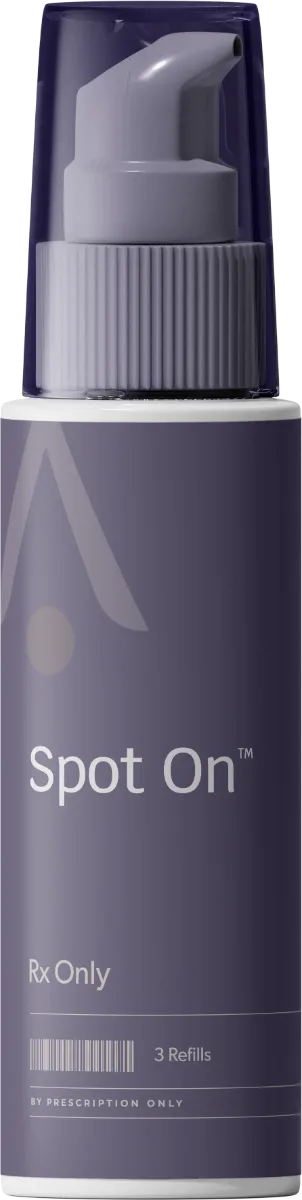
Spot On lists hydroquinone, kojic acid, and niacinamide. Confirm the dispensed strengths, treatment area, and planned treatment duration with your provider. A new or changing dark spot should be assessed before cosmetic treatment. Review the current Spot On™ page and bring your existing skin-care products to the provider discussion.
Related reading
- Hyperpigmentation Treatment: Dark Spots, Diagnosis, and Daily Care
- Dark Spots After Acne: Treating Marks While Preventing New Breakouts
- Prescription Hydroquinone for Dark Spots: What to Discuss
- Sunscreen for Dark Spots: Broad-Spectrum Protection and Tinted Options
- A gentle routine for acne-prone skin
Educational information; your prescription and clinician’s instructions guide individual care. Product details and linked sources checked September 15, 2026. Ingredient research does not establish identical results for a finished compounded formula. Photographs are illustrative and do not show treatment outcomes.