Prescription hydroquinone can be part of a clinician-directed plan for certain pigment concerns, including melasma. It should be used for an identified condition with clear directions for the treatment area, strength, duration, and follow-up. It is not an all-purpose cream for every brown spot or a product to use indefinitely without review.
Before starting, make sure you understand what is being treated and why hydroquinone was chosen. If a spot is new, changing, bleeding, or uncertain, it needs assessment before cosmetic lightening. The ability to fade color does not establish that a lesion is harmless.
What hydroquinone is intended to do
Hydroquinone is used to reduce excess pigmentation in selected treatment plans. The AAD’s melasma guidance lists it among clinician-directed options. Its role depends on the diagnosis rather than on a general desire for lighter skin.
A useful goal is to address unwanted patches or marks while preserving the person’s natural skin tone. A clinician should explain the expected limits and the possibility that some conditions recur. Pigment treatment does not remove every cause of future discoloration.
It also does not treat every visible change left by acne. A depressed scar, a raised scar, or a primarily red mark raises different questions from a flat brown post-inflammatory mark. The treatment should match the feature.
Prescription use and over-the-counter products are different discussions
The FDA’s skin-product safety information states that hydroquinone-containing skin-lightening products are not approved for over-the-counter sale in the United States and warns about reported harms. Hydroquinone may be supplied through a prescription skin product, but that does not make every preparation identical.
Avoid unlabeled or informally repackaged brightening products. If you do not know what a cream contains, you cannot compare its exposure with your prescription or give a clinician a useful ingredient history.
Keep the original packaging and contact information for the dispensing pharmacy. If a product source or instruction is unclear, resolve that uncertainty before using it. Do not assume that a familiar brand name or a prescription process establishes FDA approval of a compounded combination.

Confirm the diagnosis before selecting the strength
Melasma, post-inflammatory hyperpigmentation, and discrete sun-related spots have different histories and management considerations. The hyperpigmentation overview explains why the term dark spot is not one diagnosis.
Ask the clinician what findings support the diagnosis and whether any area needs an in-person examination. Mention changes in shape, size, color, bleeding, crusting, pain, or a lesion that looks unlike the others.
Once the diagnosis is clear, ask why the chosen preparation fits it. The strength should come from the prescribed plan and the pharmacy label. Do not assume that the percentage used in an online article is the one you have or the one you need.
Get an application map you understand
The treatment area should be explicit. Ask whether the cream is intended for particular patches, a defined facial zone, or another specified area. Do not automatically spread it over normal skin, freckles, moles, or every newly noticed mark.
Confirm which areas to avoid, especially around the eyes, lips, and irritated or broken skin. The direction to use a thin layer still needs a clear location and frequency. If instructions seem vague, ask the prescriber or pharmacist to make them concrete.
| Instruction | What should be clear |
|---|---|
| Product and strength | The exact preparation supplied |
| Amount | The prescribed application guidance |
| Area | Which patches or zones are included |
| Timing | When and how often to use it |
| Duration | The planned course and review point |
| Problems | Which changes require stopping or contacting the clinician |

Plan the treatment window from the beginning
Hydroquinone should not become an indefinite step merely because a container remains partly full. Ask for the planned course, the follow-up date, and what happens if improvement is incomplete. The answer depends on the preparation and diagnosis.
Do not copy a cycle from another person’s prescription. A fixed on-and-off pattern can sound reassuring while ignoring differences in strength, area, tolerance, and medical history. The hydroquinone duration guide explains how to turn the timeline into a reviewable plan.
Also ask about maintenance. Some conditions can recur after improvement, but recurrence does not mean you should automatically restart an old prescription without review. A maintenance strategy may differ from the initial treatment.
Sun protection is part of the treatment context
The AAD’s melasma self-care guidance emphasizes sun protection and tinted sunscreen containing iron oxide when visible light is relevant. Choose broad-spectrum SPF 30 or higher and follow the label, alongside shade and protective clothing.
The sunscreen should fit your skin tone and daily routine. If it feels unpleasant or pills with the treatment, discuss a practical adjustment. Inconsistent use can make the overall pigment plan harder to assess.
Do not mix sunscreen with hydroquinone cream to create one step. Each product should be applied according to its directions. The tinted sunscreen guide explains the label features and the role of visible-light protection.
Review other actives before combining them
Tell the provider about retinoids, acne medications, exfoliating acids, vitamin C products, peels, and any other brightening preparations. Some combinations are deliberately prescribed, but an unplanned stack can increase irritation and make a reaction difficult to trace.
Do not add a steroid or another prescription ingredient to imitate a combination you read about. Different hydroquinone combinations are different medicines with their own directions. A three-ingredient product is not automatically the same as every other triple combination.
If the skin is already burning or scaling, review that problem before adding another active. Irritation can complicate pigmentation and obscure whether the original condition is improving.
Where Spot On fits
Spot On lists hydroquinone, kojic acid, and niacinamide. Its public ingredient summary does not disclose the individual concentrations. The dispensing pharmacy and provider should confirm the exact formula, treatment area, and duration.
The product should not be described as a different branded hydroquinone combination or as a formula containing ingredients that are not listed. Read the Spot On ingredient guide for a component-by-component discussion.
Compounded drugs are not FDA-approved. The FDA’s compounding explanation describes the difference from approved products. Ingredient evidence and a prescription do not establish that the finished compounded cream underwent FDA premarket review.
Know which changes need attention
Hydroquinone can be associated with irritation and, in some circumstances, unwanted pigment changes. FDA safety information includes reports of rashes, facial swelling, and permanent discoloration called ochronosis. Unexpected blue-gray darkening should be assessed rather than treated with more cream.
Stop a newly introduced product that causes persistent burning, a spreading rash, marked swelling, or blistering and seek advice. Severe facial swelling or breathing difficulty requires urgent medical care. A reaction should not be dismissed as proof that pigment is lifting.
Discuss pregnancy, breastfeeding, allergies, relevant medical history, and other medications before use. Ask what to do if those circumstances change during the treatment course.
Keep follow-up evidence practical
If you are comparing two prescriptions, make a side-by-side list of the active ingredients, strengths, base ingredients, treatment area, and planned duration. Two creams can both contain hydroquinone while differing in every other important detail. A lower-priced or more conveniently packaged option is not automatically an equivalent substitution. Ask the provider or pharmacist whether the alternatives are intended to be interchangeable and what directions would change. This also helps if an old container remains at home: clearly identify which preparation belongs to the current plan so it is not accidentally alternated with a previous formula. Keep the original labels available rather than relying on the bottle’s color or shape.
Take comparable photographs without filters and record the start date, application pattern, and any other routine changes. Track the original patches separately from new marks caused by acne or irritation.
At review, ask whether the expected concern is improving, whether the routine is tolerable, and whether the treatment should continue or change. Do not extend use or increase the amount because progress looks slow in one photograph.
Prescription hydroquinone is easiest to use responsibly when the plan is specific from the beginning. A defined diagnosis, application area, treatment window, and response to problems are more useful than an open-ended promise to brighten skin.
Explore Spot On™
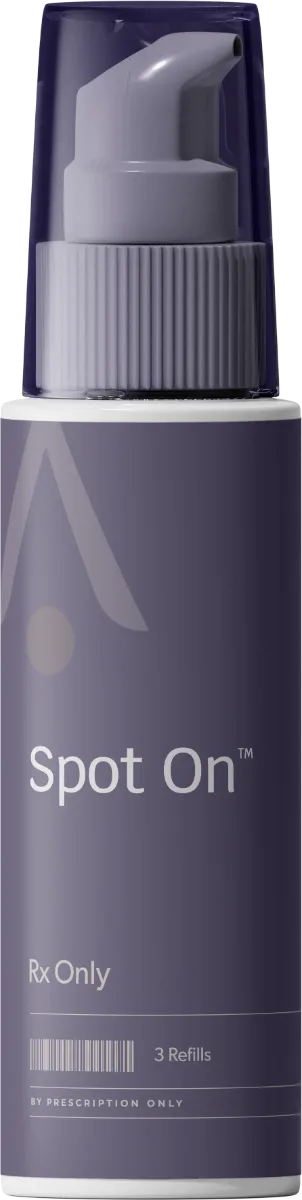
Spot On lists hydroquinone, kojic acid, and niacinamide. Confirm the dispensed strengths, treatment area, and planned treatment duration with your provider. A new or changing dark spot should be assessed before cosmetic treatment. Review the current Spot On™ page and bring your existing skin-care products to the provider discussion.
Related reading
- Hyperpigmentation Treatment: Dark Spots, Diagnosis, and Daily Care
- How Long Should Hydroquinone Be Used? Follow a Defined Plan
- When Dark-Spot Treatment Irritates Skin: What to Review
- Spot On Ingredients: Hydroquinone, Kojic Acid, and Niacinamide
- A gentle routine for acne-prone skin
Educational information; your prescription and clinician’s instructions guide individual care. Product details and linked sources checked September 15, 2026. Ingredient research does not establish identical results for a finished compounded formula. Photographs are illustrative and do not show treatment outcomes.