
NAD+, nicotinamide mononucleotide, and nicotinamide riboside are related terms in cellular-metabolism research. They are not three names for the same treatment. NAD+ is a coenzyme; NMN and NR are compounds involved in pathways that the body can use to make NAD+. The formulation and delivery route add further differences.
This matters when an injection advertisement cites an oral supplement trial. A study may be well designed and still answer a different question from the one a patient is asking. The comparison below explains what can reasonably be carried across these categories and what needs direct evidence.
Start with the ingredient’s identity
NAD+ stands for nicotinamide adenine dinucleotide. NR stands for nicotinamide riboside, and NMN stands for nicotinamide mononucleotide. Although these molecules are connected through metabolism, they have distinct chemical structures and may be handled differently after administration.
“Vitamin B3” also covers terminology that deserves attention. The NIH niacin fact sheet describes niacin’s nutritional role and forms. A product containing niacin or nicotinamide should not be assumed to be an NR or NMN product, and none is automatically equivalent to injected NAD+.
Read the ingredient name on the actual label. Marketing terms such as “NAD booster” describe a proposed purpose without fully identifying what is supplied.
Add the route to the name
A useful comparison names both the compound and the route: oral NR, oral NMN, subcutaneous NAD+, or intravenous NAD+, for example. Without the route, the reader can easily confuse a capsule study with injection evidence.
Oral use involves the digestive system and metabolic processing after absorption. An injection avoids some of that pathway but introduces its own handling, administration, and quality requirements. Avoiding digestion does not by itself demonstrate better cellular uptake or a better patient outcome.
The route comparison guide discusses why blood delivery and clinical benefit are separate questions. The same principle applies when comparing injections with oral precursors.

What an oral NR trial demonstrated
A 2018 randomized crossover trial studied oral NR in healthy middle-aged and older adults. Twenty-four participants completed the trial, which compared six-week periods of NR and placebo. It found that NR increased measured NAD+ metabolism and was well tolerated under the study conditions.
The study also explored physiological outcomes, but these exploratory observations were not a general proof that NR prevents cardiovascular disease or extends life. Small trials can reveal signals worth testing while leaving important clinical questions unanswered.
For someone considering an NAD+ injection, the result is evidence about oral NR in that population. It does not establish the injected product’s optimal amount, frequency, or effect on energy.
What an NMN trial adds
A 2021 trial of oral NMN involved postmenopausal women with prediabetes who were overweight or obese. Over ten weeks, investigators assessed metabolic function, including muscle insulin sensitivity. The findings were specific to the population, intervention, and measurements used.
This is more informative than a vague statement that a precursor “improves metabolism,” because it identifies what changed and in whom. It also leaves limits: a change in muscle insulin sensitivity is not the same as demonstrated weight loss, diabetes prevention, or improved focus in a healthy adult.
An NMN result should therefore be described by its actual outcome. It should not become a blanket claim for every NAD-related preparation.
Some trials measure daily function
Research is also examining functional outcomes. The NICE trial studied oral NR in people with peripheral artery disease and assessed walking performance over six months. That population has a specific medical problem affecting walking, so the result cannot be assumed to apply to every healthy person seeking more energy.
Other trials illustrate why the primary endpoint matters. A 2025 NR and exercise pilot did not show that adding NR improved its primary daytime blood-pressure comparison over exercise with placebo. Interesting secondary patterns remained hypotheses for further study.
Taken together, these examples support a careful reading of the evidence: identify the population and primary endpoint, then distinguish that result from exploratory analyses or marketing summaries.

Direct NAD+ injection evidence remains preliminary
Human studies of administered NAD+ are not absent, but the type and depth of evidence differ by route. The 2019 IV metabolome pilot focused on how an infusion was handled over several hours. It did not measure sustained improvements in ordinary fatigue or cognition.
An April 2026 preprint included very small NAD+ comparison groups across injection routes within a broader NR research program. That report provides preliminary short-term tolerance information. Its small groups, brief exposure, and preprint status limit conclusions about ongoing use.
This evolving research should be included honestly. Saying that there is no human work at all would miss new studies; describing early pilot data as established long-term effectiveness would go beyond them.
Use a comparison that preserves these distinctions
| Category | Common research question | Important limitation |
|---|---|---|
| Oral NR | Blood or tissue markers and selected clinical outcomes | Findings depend on population, duration, and formulation |
| Oral NMN | Metabolic or functional measurements in defined groups | One endpoint does not establish all advertised benefits |
| IV NAD+ | Metabolite handling and infusion tolerance | Results do not automatically transfer to home injections |
| Subcutaneous or intramuscular NAD+ | Early safety, tolerance, and feasibility | Robust long-term outcome data remain limited |
No row is a universal winner. A treatment decision needs a specific clinical question before the evidence can be compared meaningfully.
Milligrams are not an equivalence scale
A milligram amount describes mass. Equal masses of different molecules are not necessarily equivalent in the number of molecules delivered, the metabolic path followed, or the clinical effect. Route and formulation introduce further differences.
For that reason, a capsule label and an injection label should not be converted into a personal substitution schedule. There is no general clinical conversion rule that lets a reader replace a particular NR amount with an NAD+ injection amount for the same result.
If a clinician recommends changing products, obtain new instructions. The NAD+ label guide focuses on understanding the prescribed preparation rather than calculating an unvalidated cross-product equivalence.
Safety and quality questions differ
Oral supplements raise questions about ingredient identity, label accuracy, other ingredients, and interactions. Injectable preparations add sterility, administration, sharps, and route-specific handling. A product’s familiar ingredient does not remove these requirements.
The FDA’s compounding overview explains why a compounded injectable is not an FDA-approved finished product. That distinction should be part of the discussion even when a pharmacy prepares it under a prescription.
Tell the treating clinician about all NAD-related supplements and other treatments you use. Taking several products together can make total exposure, symptoms, and response harder to interpret. A “stack” should not be assumed effective because each ingredient has a separate biological rationale.
Read a study’s result in the order it was planned
A trial may measure many outcomes and then highlight the most interesting ones. Start with the primary outcome, the main question selected before the analysis. Next consider secondary outcomes and whether statistical comparisons accounted for testing many possibilities. A favorable exploratory result has a different evidentiary role from a successful primary comparison.
Then check the size of the effect and whether it matters to everyday life. A change can be measurable without being noticeable or useful. Conversely, a patient-important effect may deserve further research even when a small pilot cannot estimate it precisely. The appropriate conclusion depends on the uncertainty around the result.
Finally, look at funding and investigator relationships. Commercial sponsorship does not automatically invalidate a study, but it belongs alongside the methods and limitations when assessing confidence. The central question remains whether the design and results support the specific claim being made for the product under consideration.
Compare the goal before comparing convenience
Write down the concern being addressed. If it is fatigue, define the effect on ordinary tasks and investigate plausible causes. If it is a laboratory result, ask what clinical decision the result is intended to support. If it is healthy aging, identify the function or health outcome that matters.
Then consider practical details: ongoing cost, daily burden, storage, administration, follow-up, and what would lead to stopping. A simpler routine may be easier to sustain, but convenience alone does not establish benefit.
The most useful comparison avoids turning biochemical relationships into interchangeable prescriptions. NR and NMN research helps explain the broader field, while the decision about CoreAge Rx NAD+ Injectable needs evidence and instructions relevant to the actual product and route.
Explore NAD+ Injectable
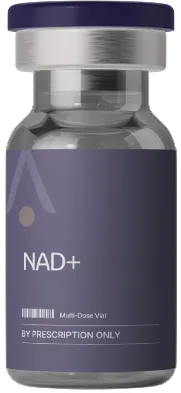
CoreAge Rx lists NAD+ Injectable as a provider-guided compounded treatment. The dispensed label must identify the concentration, route, and individual directions; clinical findings from another NAD+ preparation do not establish the same result for this product. Review the current NAD+ Injectable page and bring a complete medication and supplement list to the provider discussion.
Related reading
- NAD+ Injections: Evidence, Uses, and Questions to Ask
- NAD+ Injections vs. IV Infusions: Why the Route Matters
- CoreAge Rx NAD+ Injectable: A Product and Evidence Guide
- NAD+ nasal spray versus injections
Educational information; your prescription and clinician’s instructions guide individual care. Product details and linked sources checked September 15, 2026. Studies of another preparation or delivery route do not establish identical results for a finished compounded product. Photographs are illustrative and do not show treatment outcomes.