
CoreAge Rx’s NAD+ Injectable page describes a provider-guided compounded treatment intended for people interested in energy, recovery, and healthy aging. Evaluating the product means reviewing the actual prescription, the evidence relevant to its route, and the clinical concern being addressed.
This guide brings those pieces together. It identifies what the public page tells a prospective patient, what the dispensing team still needs to clarify, and how to discuss benefits and uncertainty without assuming that every NAD+ study tested this finished product.
What the public product page identifies
The current page names nicotinamide adenine dinucleotide, or NAD+, as the ingredient and describes intramuscular or subcutaneous administration. It presents an online clinical evaluation followed by dispensing if a prescription is granted. Those details describe the service and broad product category.
The public description does not provide the complete individualized formulation and label needed to administer the medicine. The prescribed route, concentration, delivered amount, and schedule must be established for the person receiving it.
Treat the product photograph as identification and illustration. It should not be used to infer the amount to administer or the storage period for a particular shipment.
Understand the biology behind the interest
NAD+ participates in cellular reactions involved in energy metabolism and is used by enzymes involved in other processes, including DNA repair and signaling. Those roles explain why researchers investigate NAD-related interventions.
A molecule’s essential role does not mean that adding more through every route improves every related function. The body synthesizes, uses, and recycles NAD+, and measurements vary by tissue and circumstance. The NIH niacin fact sheet provides nutritional context for related pathways.
The main NAD+ guide explains this biology in accessible terms. Product evaluation then requires a separate look at human outcomes and the actual preparation offered.

Separate the offered routes from IV infusion evidence
The product page describes injections into muscle or beneath the skin. An IV infusion is a different route with different administration and monitoring. Although all may involve NAD+, a result from one cannot automatically establish the effect or optimal schedule of another.
A 2019 IV study followed metabolites in a small group during and after a prolonged infusion. It helped describe the handling of infused NAD+, rather than proving a broad improvement in energy or longevity.
The injections versus IV article explains why an infusion protocol is not a conversion chart for a home prescription. The clinician should specify why the chosen route fits the individual plan.
Include newer evidence without overstating it
An April 2026 preprint reported small pilot studies within an injectable NR research program. One trial included NAD+ comparison groups administered through different routes, with only a few participants in each group. The report focused on early safety and tolerance, and its reviewed version had not been certified by peer review.
This is relevant emerging information, but it does not establish long-term effectiveness for CoreAge Rx’s finished preparation. The second trial in that report studied NR rather than providing an additional NAD+ treatment group.
A useful evidence discussion names the ingredient, route, population, duration, and outcome. That keeps new research visible while preserving the limits that matter to a patient.
Evaluate advertised benefits one at a time
Energy, mental clarity, exercise recovery, and healthy aging are different outcomes. An article should not treat them as a single package proven by a change in a blood marker. Ask which benefit is being considered for you and what evidence supports that specific expectation.
| Product discussion | Clarification needed |
|---|---|
| Energy or stamina | Which symptom or daily task is the goal? |
| Mental clarity | What concern has been assessed and how will change be reviewed? |
| Recovery | Recovery from what activity, under what workload? |
| Healthy aging | Which meaningful health or functional outcome is intended? |
| Fast absorption | What exposure data exist for the prescribed route and preparation? |
A clear goal makes the consultation more useful and provides a basis for follow-up. Broad claims are harder to assess because they do not identify a result that could be confirmed or questioned.

Persistent symptoms need their own evaluation
A product consultation should include why the person is seeking treatment. Fatigue, difficulty concentrating, or reduced activity tolerance can have several causes. The history and examination, with targeted testing where appropriate, help identify what needs attention.
Describe when the concern began, how it affects ordinary activities, and what changed around that time. Include sleep, medication, food intake, illness, and stress. The energy and fatigue guide offers a practical structure.
A decision about NAD+ should remain connected to this assessment. It should not prevent investigation of an unexplained symptom or replace established treatment for a diagnosed condition.
Review the compounded-product status
The FDA’s compounding questions and answers explain that compounded drugs are not FDA-approved finished products. FDA does not review them before marketing in the same way for safety, effectiveness, and quality.
A clinical prescription and pharmacy dispensing are important parts of the process. They do not establish that the finished NAD+ product has demonstrated every benefit discussed on a marketing page. Ask which pharmacy dispenses it, how the formulation is identified, and whom to contact for questions.
The patient should receive understandable information about the expected benefit, uncertainty, relevant risks, and alternatives considered in the clinical discussion.
Ask about quality and reaction support
FDA’s sterile-compounding alert describes NAD+ concerns involving unsuitable ingredients and reported severe reactions. The alert does not determine the quality of this individual product, but it makes the source and handling of a sterile injectable important questions.
Ask how the dispensing team handles damaged shipments, visible changes, storage excursions, and suspected reactions. Confirm how to contact clinical support and the pharmacy, including when a problem occurs outside a routine appointment.
The side-effects article covers local and systemic symptoms. Severe symptoms such as trouble breathing, chest pain, fainting, or significant generalized illness after an injection need prompt medical attention rather than reassurance based on an expected adjustment period.
Obtain directions for the actual preparation
Before use, the label should connect the concentration, prescribed amount, route, device, and schedule. If instructions use syringe units, the pharmacy should explain how the marking relates to the supplied concentration and prescribed amount.
Do not adopt a generic dose from the public page, an online forum, or a research protocol. A refill may use a different concentration or device. The label-reading guide explains the information that should agree.
If any preparation step is required, obtain instructions for the exact product and supplies. Do not add a diluent or another medicine to change comfort, concentration, or convenience without explicit clinical directions.
Review other NAD-related products together
Tell the clinician whether you already use NR, NMN, niacin, or another preparation marketed as an NAD booster. These are different compounds and routes, and their research cannot be combined into a single promise of benefit. Reviewing them together helps avoid an unnecessarily complicated routine and makes the source of any new symptom easier to assess. Do not assume that adding products creates a proven synergistic effect.
Make the practical routine concrete
Clarify the quantity supplied, allowed use period, storage conditions, and the plan for refills. Ask which supplies are included and what training is provided. If traveling, discuss transport and destination requirements before the trip.
The storage and travel guide covers the questions that depend on the pharmacy’s instructions. A beyond-use date should not be extended because medicine remains or appears unchanged.
The total burden of care includes time, supplies, storage, follow-up, and cost. These are relevant to whether a prescribed plan is workable, even when the clinical discussion has already addressed suitability.
Set a review point instead of assuming a timeline
Agree on a practical goal and how it will be assessed. Record relevant symptoms, ordinary function, unwanted effects, and major changes in routine. A clinician may order testing for a particular purpose, but the reason for each test should be clear.
There is no established universal schedule in which every patient should experience a specific NAD+ benefit by a particular day or month. The results guide explains how to track progress without independently increasing exposure to meet an advertised deadline.
A useful review leads to a decision about continuing, changing, stopping, or investigating further. CoreAge Rx NAD+ Injectable is best discussed through that complete clinical process: product identity, relevant evidence, individual directions, and meaningful follow-up.
Explore NAD+ Injectable
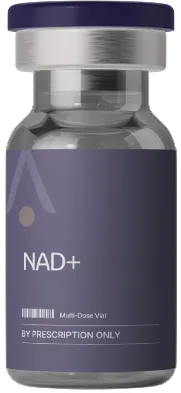
CoreAge Rx lists NAD+ Injectable as a provider-guided compounded treatment. The dispensed label must identify the concentration, route, and individual directions; clinical findings from another NAD+ preparation do not establish the same result for this product. Review the current NAD+ Injectable page and bring a complete medication and supplement list to the provider discussion.
Related reading
- NAD+ Injections: Evidence, Uses, and Questions to Ask
- NAD+ Injection Side Effects and Product-Quality Questions
- NAD+ Testing: What Blood Biomarkers Can and Cannot Tell You
- NAD+ nasal spray versus injections
Educational information; your prescription and clinician’s instructions guide individual care. Product details and linked sources checked September 15, 2026. Studies of another preparation or delivery route do not establish identical results for a finished compounded product. Photographs are illustrative and do not show treatment outcomes.