
NAD+ testing can sound like a direct way to decide whether a person needs treatment or whether a treatment is working. In practice, a laboratory result is a measurement from a particular sample, collected at a particular time and analyzed by a particular method. It is not a complete inventory of NAD+ in every organ.
Understanding that distinction helps a patient ask better questions. This guide explains what a biomarker can contribute, why different results may not be interchangeable, and how to connect testing to a clinical decision rather than simply pursuing a higher number.
A biomarker measures one part of a biological process
A biomarker is a measurable characteristic used to describe a biological state or response. It might help with diagnosis, monitoring, or research. Its usefulness depends on what has been established about that particular measurement and the decision it is intended to support.
NAD+ is involved in cellular energy reactions and other processes. Related compounds include NADH and metabolites produced through synthesis, use, and recycling. A test may measure NAD+ itself, a related compound, a ratio, or a combination of markers.
Before interpreting a report, identify exactly what was measured. A heading such as “cellular health” or “NAD score” may summarize several assumptions that deserve explanation.
Ask what sample the laboratory analyzed
Whole blood, plasma, and isolated blood cells are different materials. A result from one should not be assumed equivalent to a result from another. Even when the same chemical name appears, the sample and reporting units matter.
Research demonstrates this distinction. The 2018 oral NR trial assessed NAD-related measurements in peripheral blood mononuclear cells, a specific group of blood cells. The 2019 IV NAD+ pilot examined plasma and urine metabolites during and after an infusion. Those studies did not measure the same compartment in the same way.
Neither type of blood result directly describes the concentration inside every brain or muscle cell. A claim about a particular tissue requires evidence connecting the measurement to that tissue.

Timing is part of the result
A measurement taken soon after an intervention may answer a different question from one taken before the next administration or after a long period without treatment. Study protocols often specify collection times because the biological situation changes over time.
The IV pilot followed multiple time points rather than treating one sample as the entire response. That design helps illustrate why a single before-and-after comparison can miss the pattern of change.
Ask the clinician and laboratory whether preparation instructions apply, including the timing of medicines or supplements. Follow the instructions provided for your actual test. Do not stop a prescribed medicine or impose a fast based on a generic NAD testing article.
Sample handling and methods also matter
Laboratories use defined collection, transport, processing, and analysis procedures. These procedures are part of a test’s performance. If a home collection or mail-in kit is used, its instructions should be clear about the sample, timing, packaging, and conditions for return.
A laboratory should be able to explain the measurement’s validation and limitations. Useful questions include what the assay measures, how reproducible it is, and which conditions might affect the result. The answer may determine whether a change is large enough to interpret confidently.
A technical-looking report is not, by itself, evidence that the marker has been validated to guide an anti-aging prescription. Analytical reliability and clinical usefulness are related but different issues.
A reference interval is not automatically a treatment target
A reference interval describes results in a defined reference population under a particular testing method. A treatment target requires an additional clinical rationale: evidence that aiming for that value improves a relevant outcome with an acceptable balance of benefit and risk.
Ask how the laboratory established its interval and how the treating clinician intends to use it. A number labeled low should not automatically be converted into a diagnosis explaining fatigue. A number labeled high should not automatically be interpreted as better health.
The same caution applies to a comparison with “young adult” values. A difference from a younger group does not establish that changing the value will reproduce the group’s health or function.

Keep the clinical question visible
Before ordering a test, ask what decision would change because of the result. Possible questions include whether a prescribed intervention changes a measured marker under standardized conditions or whether a separate safety test is needed for an individual’s health situation.
If no clear decision follows from the measurement, consider whether testing will add useful information. The cost and attention devoted to a biomarker can distract from an unresolved symptom or an established health need.
The fatigue guide explains why common symptoms require a broader history. A NAD-related result should not replace evaluation for relevant sleep, medication, nutritional, or medical contributors.
Distinguish a biological response from a clinical benefit
An intervention may change a laboratory marker without improving the outcome the patient cares about. Conversely, a person may feel better because several aspects of care changed, while the marker does not identify which change helped.
A study’s endpoint should therefore remain attached to its conclusion. The oral NMN trial in women with prediabetes examined a defined metabolic question in a selected population. It did not establish that every NAD-related blood increase produces a general improvement in energy or healthy aging.
For individual care, record both the test result and the relevant function or symptom. Treating one as a substitute for the other can create an incomplete picture.
Compare repeat tests carefully
A repeat measurement is easier to interpret when the sample type, laboratory method, reporting units, and collection circumstances are reasonably consistent. If any of those change, the clinician may need to account for the difference before concluding that the biology changed.
Keep the full reports rather than only a screenshot of the headline number. The report may contain reference information and method notes that are important later. Record the timing relative to treatment and other relevant instructions.
Do not repeatedly test at different times in search of the most favorable number. A planned comparison is more informative than a collection of results selected after the fact.
Use a report-reading checklist
| Report detail | Question to ask |
|---|---|
| Analyte | Is this NAD+, NADH, a metabolite, or a calculated score? |
| Sample | Was whole blood, plasma, or a specific cell fraction analyzed? |
| Method | What is validated about the assay and its repeatability? |
| Timing | When was the sample collected relative to treatment? |
| Interpretation | Is the range a reference interval or a validated clinical target? |
| Action | What would this result change in the care plan? |
These questions are useful even when the laboratory is reputable. A good test can still be used to answer a question for which it has not been established.
Avoid a cycle of automatic escalation
If the only goal is a higher number, a person may feel pressure to add more products or increase exposure whenever the result seems disappointing. That approach can separate treatment from the original clinical concern.
The NAD+ prescription-label guide explains why the amount and route must follow the individualized prescription. Do not change either in response to a biomarker without discussing the result with the treating clinician.
A useful review may conclude that the marker changed but the person has no meaningful benefit, that another cause of symptoms needs evaluation, or that the test cannot answer the intended question. Those are valid outcomes of assessment.
Healthy-aging claims need longer and broader evidence
A change in a single biomarker cannot establish longer life, prevention of multiple diseases, or restoration of every aspect of cellular function. Such claims require appropriate clinical outcomes and follow-up, not only a plausible biochemical story.
The NIH clinical-research overview explains how studies use planned outcomes and comparison groups. These design features help determine whether an intervention caused a useful change. They also show why a person’s isolated laboratory report cannot provide the same level of evidence.
The healthy-aging article discusses the difference between biomarkers and outcomes such as function, independence, and disease risk.
Bring the result back to the person
The most useful follow-up combines the actual report, the original goal, changes in daily function, unwanted effects, and other changes in treatment or routine. A laboratory value should add information to that discussion rather than dominate it.
Ask for the conclusion in plain language: what the test showed, what it could not show, and what happens next. NAD+ testing is most meaningful when its limitations are understood and its role in care is specific.
Explore NAD+ Injectable
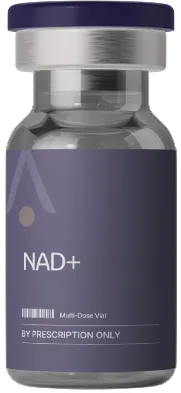
CoreAge Rx lists NAD+ Injectable as a provider-guided compounded treatment. The dispensed label must identify the concentration, route, and individual directions; clinical findings from another NAD+ preparation do not establish the same result for this product. Review the current NAD+ Injectable page and bring a complete medication and supplement list to the provider discussion.
Related reading
- NAD+ Injections: Evidence, Uses, and Questions to Ask
- NAD+ Injections vs. NMN and NR: Comparing Different Approaches
- CoreAge Rx NAD+ Injectable: A Product and Evidence Guide
- NAD+ nasal spray versus injections
Educational information; your prescription and clinician’s instructions guide individual care. Product details and linked sources checked September 15, 2026. Studies of another preparation or delivery route do not establish identical results for a finished compounded product. Photographs are illustrative and do not show treatment outcomes.