
CoreAge Rx lists NAD+ Nasal as a provider-guided compounded nasal spray. Understanding that product involves three separate questions: what the dispensing pharmacy actually supplies, whether it fits the individual’s clinical situation, and what evidence supports the hoped-for outcome.
A product page can introduce the offering and the consultation process. The dispensed prescription and pharmacy instructions determine individual use. This guide connects those practical details with the current evidence so a reader can prepare a more focused discussion before starting or renewing treatment.
Identify the product and the intended concern
NAD+ means nicotinamide adenine dinucleotide in its oxidized form. It participates in cellular metabolism and other processes, but it is not a peptide. Related names such as NADH, NR, and NMN identify different substances.
Start by stating the concern in ordinary language: persistent fatigue, difficulty concentrating, or interest in healthy aging. Those goals require different clinical questions. A broad desire for “optimization” is harder to evaluate unless it is connected to an observable problem or outcome.
The main NAD nasal guide explains the scientific category. For a purchase or prescription decision, the finished preparation and personal goal both need to be clear.
Know what compounded status means
Compounded drugs are prepared for particular clinical needs, but they are not FDA-approved finished products. FDA does not review each compounded preparation for safety, effectiveness, and quality before marketing in the same way as an approved drug.
The FDA compounding overview explains this distinction. It does not mean that every compounded medicine is inappropriate, nor does it establish that a particular preparation is effective for every use described online.
Ask which pharmacy will dispense the medicine, what prescription details will be provided, and how product-specific questions are handled. The identity of the finished product matters alongside the biological interest in its ingredient.

Read benefit claims at the right level
Statements about energy metabolism or cellular processes describe why NAD+ is scientifically interesting. A claim that a nasal spray improves a person’s energy, focus, or long-term health requires clinical evidence for that preparation and use.
Distinguish a proposed mechanism from an observed human outcome. “May support” language does not remove the need to ask what was studied. Testimonials can describe individual experiences but cannot establish the usual response or identify the cause of a change.
The healthy-aging evidence review offers a practical filter for these claims. Look for the exact compound, route, population, comparator, and outcome rather than relying on the familiarity of the NAD name.
Understand the nasal research gap
Intranasal NAD+ has been studied in animal models, including rat brain ischemia research. These experiments can explore biological effects under controlled conditions. They do not establish a cognitive benefit, human brain exposure, or a consumer treatment protocol.
A registered human combination pilot includes nasal NAD+ alongside other medications and lifestyle measures. The reviewed record had no results posted. Because multiple interventions are combined, the design also limits what could be attributed specifically to NAD+.
The evidence supports further investigation. It does not supply a reliable promise that this finished nasal product improves memory, reverses aging, or treats neurological disease.
Compare routes without assuming a winner
A nasal spray may fit someone’s routine differently from an injection or infusion. Handling, device use, comfort, and clinical supervision can all affect that practical comparison.
Effectiveness is a separate question. The 2019 intravenous NAD+ pilot studied metabolite changes during an infusion in a small group, not a head-to-head comparison showing whether nasal or injected NAD+ improves daily function more.
Use the nasal-versus-injection guide to organize the decision. Do not switch routes or attempt to calculate an equivalent amount from another preparation without a new, explicit clinical instruction.
Prepare a complete clinical history
Tell the provider about the main symptom, its duration, prior evaluations, diagnoses, allergies, current medicines, supplements, and other nasal products. Include pregnancy, breastfeeding, or plans that may affect treatment decisions when relevant.
For nasal use, describe recurring congestion, bleeding, irritation, recent procedures, and any difficulty using a pump. These details may influence suitability or indicate a separate issue that needs assessment.
Persistent fatigue or cognitive changes should not automatically be attributed to low NAD. The fatigue overview illustrates the broader evaluation such symptoms can require. Bring existing test results and a clear account of what has already been tried.

Confirm what the pump delivers
Ask for the exact ingredient, concentration, and amount delivered per actuation for the supplied device. Concentration alone does not tell the reader how much one spray delivers without information about the pump’s metered volume.
The individual directions should clearly explain the prescribed amount and schedule, along with any preparation or priming instructions. Generic numbers on a website should not be combined with a different pharmacy label.
The prescription-label guide provides a check-back framework. Before first use, the patient should be able to describe the routine in plain language while referring to the actual labeled bottle.
Clarify the handling plan before it arrives
Obtain written instructions for storage, cleaning, the beyond-use date, and any limit after opening. Ask how the medicine should arrive and what to do if a delivery is delayed or the container looks damaged.
Do not assume that all compounded nasal sprays share a refrigeration requirement or the same usable period. A new bottle or pump may have different instructions even when the product name remains familiar.
The storage and travel article covers home placement, transport planning, and uncertain temperature exposure. The dispensing pharmacy should resolve preparation-specific questions using information for the actual product.
Make follow-up part of the initial decision
Before starting, identify the clinician responsible for follow-up and the most appropriate contact for routine questions, device problems, and symptoms. Know how an issue will be handled outside normal office hours.
Ask what the follow-up will evaluate and whether any testing has a defined purpose. A test should help answer a clinical question or guide a decision, rather than simply create a number to track indefinitely.
If the desired outcome is better focus, decide how that would appear in daily life. If it is less fatigue, clarify which aspect of fatigue matters. The review will be more useful when the original goal is specific.
Discuss symptoms without assuming cause
Ask what local or generalized symptoms should prompt contact and what should happen to the treatment routine while the issue is assessed. Limited human research means precise adverse-event rates for this finished nasal preparation are not established by the sources reviewed here.
Record symptoms with their timing, actual use, other medicines, and any device or storage issue. That information helps the care team assess possibilities without treating every sensation as either proof of benefit or proof of harm.
The side-effects guide describes a practical reporting approach. Severe breathing difficulty, fainting, or other sudden serious symptoms require immediate medical attention.
Set realistic expectations about progress
No established evidence-based schedule guarantees that a reader will notice an improvement after a certain number of sprays or days. An immediate sensation does not establish durable benefit, and a study’s planned duration is not a validated time to result.
Agree on a review point with the clinician. Track the selected outcome, relevant symptoms, and major changes in sleep, illness, workload, or other care. Keep the record simple enough to use consistently.
The results and follow-up article explains how to compare patterns with baseline. A useful review can conclude that benefit is uncertain or insufficient; it does not have to justify automatic continuation.
Understand the full commitment
Ask the care team to explain the current price, what it includes, refill arrangements, consultation access, and any laboratory or supply costs. Those details can change, so confirm them directly before deciding.
Consider practical demands as well as the purchase price. Storage, travel, recurring reviews, and troubleshooting all form part of the treatment burden. A preparation that is convenient in one respect may still require a reliable handling routine.
Avoid purchasing around an assumed long-term course before the clinical review plan is clear. The decision should connect ongoing expense and effort to a meaningful, reassessed goal.
Bring this checklist to the discussion
| Area | Question to resolve |
|---|---|
| Clinical goal | What problem are we evaluating, and what alternatives fit it? |
| Evidence | What human findings apply to this route and preparation? |
| Product | Which pharmacy, concentration, pump, and prescription directions apply? |
| Handling | How will I store, clean, transport, and track its usable period? |
| Review | How will benefit, symptoms, cost, and continuation be assessed? |
The current CoreAge Rx NAD+ Nasal page is the starting point for product availability and consultation information. A well-informed next step is a discussion that connects those details to the actual prescription, the limits of the research, and the outcome that matters to the individual.
Explore NAD+ Nasal
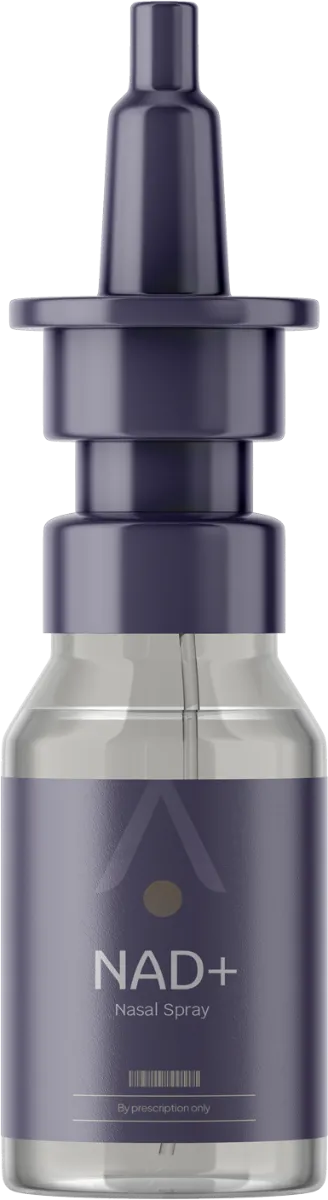
CoreAge Rx lists NAD+ Nasal as a provider-guided compounded nasal spray. The pharmacy’s formulation and pump instructions determine how it is used. Research on oral precursors, IV infusions, or animals does not establish identical benefits from this spray. Review the current NAD+ Nasal page and bring a complete medication and supplement list to the provider discussion.
Related reading
- NAD+ Nasal Spray: How to Understand the Evidence
- NAD+ Nasal Spray Side Effects: Irritation, Symptoms, and Follow-Up
- NAD+ and Healthy Aging: Biomarkers, Human Research, and Daily Function
- NAD+ injections versus oral NMN and NR
Educational information; your prescription and clinician’s instructions guide individual care. Product details and linked sources checked September 15, 2026. Studies of another preparation or delivery route do not establish identical results for a finished compounded product. Photographs are illustrative and do not show treatment outcomes.